The California voting arrests announced October 19 move a federal-state election dispute from the lawsuit stage into criminal cases. AP reports that authorities arrested more than two dozen people in an operation alleging unlawful registration and voting. An arrest announcement is a news development. It is not a verdict, even when delivered with enough official branding to launch a cable-news franchise.
According to the Justice Department, the people arrested in Operation Protect the Vote are lawful permanent residents rather than citizens. The reported charges include fraudulent registration and false statements in naturalization applications. Those are allegations to be tested, not findings this article can make. AP also notes that noncitizen voting is exceptionally rare and has not been shown to change election outcomes.
The new development follows last week’s federal lawsuit against California and warnings directed at election workers. Today’s arrests are distinct from that earlier dispute: they concern accused individuals and alleged conduct. Whether prosecutors can prove a particular charge is a different question from whether a politician can fit the announcement into a campaign speech. The second task generally requires fewer exhibits.
Our take: the public deserves the actual evidentiary trail. Which acts are alleged? What records support them? What does the defense dispute? A large-sounding operation name answers none of those questions. Neither does a photograph of someone being escorted by agents. The visual drama of an arrest cannot substitute for the less cinematic business of proving the elements of an offense.
Readers should also separate an individual voting-related case from a claim about an entire election. Evidence of one offense, if established, does not automatically quantify a statewide problem or demonstrate that a result changed. Conversely, a rare offense is still something authorities can investigate. Both points can coexist without requiring anyone to surrender a preferred party-colored coffee mug.
The next meaningful updates will be case-specific: filed allegations, responses, hearings and findings. For now, the confirmed development is the announced sweep, with accusations still accusations. We will keep the courtroom vocabulary attached. It tends to disappear precisely when a political story needs it most.
Sources and photograph
Associated Press, October 19 arrest report.
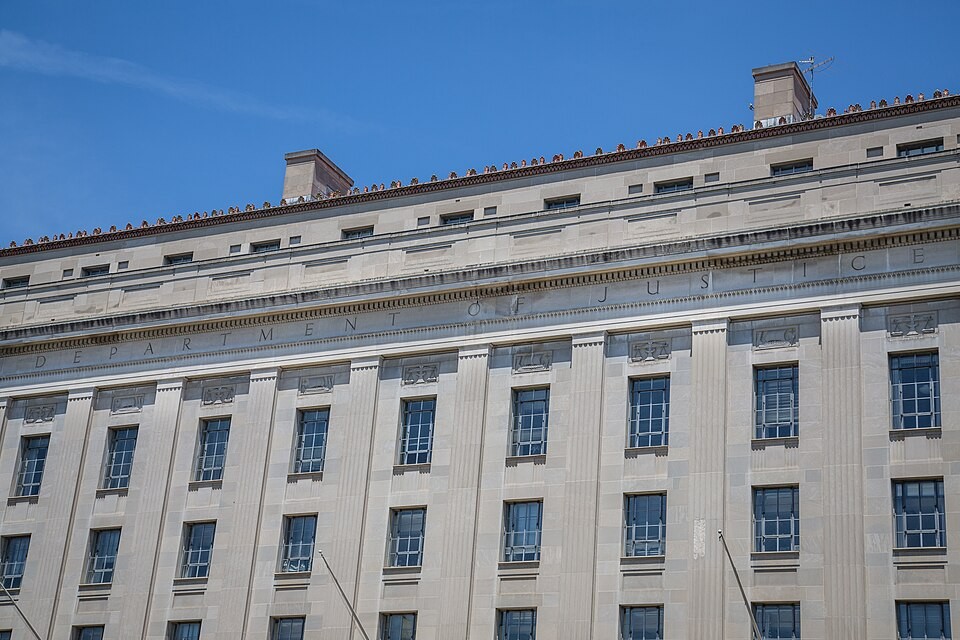
Archival headquarters photograph, June 2014. Not the California operation, its officers or any accused person. Photo: Tony Webster; CC BY 2.0. Display copy resized. Where applicable, the resized photograph retains the stated ShareAlike license. Original photograph and rights record. Image-use terms.

More from this Daily Junk Food section.
Facts first. Side-eye included.
DJF separates what is confirmed from what is claimed—and tells you why this particular mess is worth your time.

Dana Side-Eye
Receipts, Rumors & Internet NonsenseDana reads the fine print, checks the timeline, and keeps one eyebrow permanently raised. She covers viral claims, internet pile-ons, and suspiciously convenient explanations.
“Screenshots are forever. So is the side-eye.”