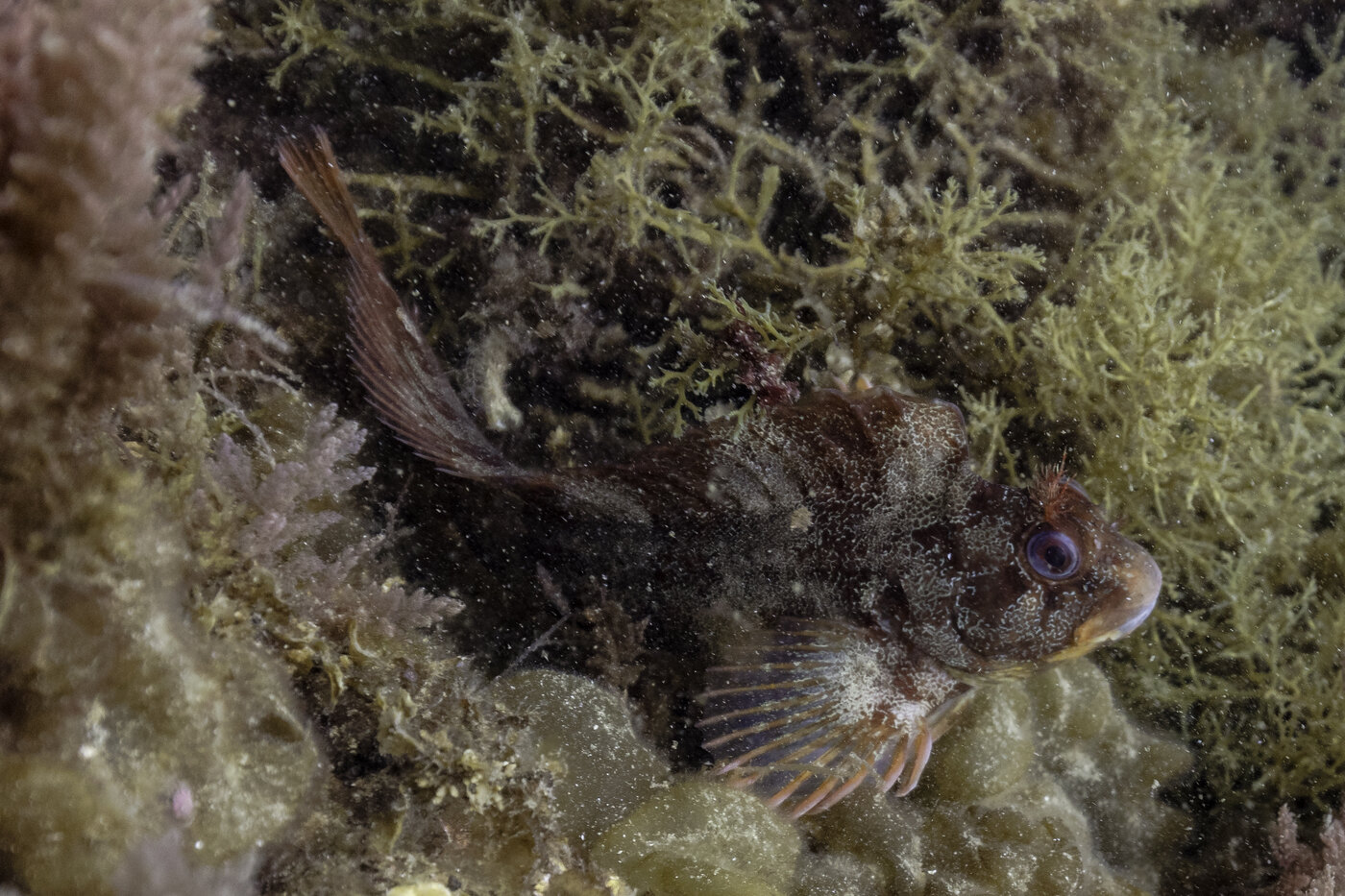
NEW — Aug. 23, 2026: New underwater footage from England's Cromer Shoal chalk beds shows marine species considered unusual for the Norfolk coast, including spiny spider crabs and tompot blennies.
Diver Rob Spray recorded the animals on the reef as sea temperatures along England's east coast ran up to 4°C above normal during summer heatwaves, according to the Met Office figure reported by the BBC.
The reef has some unfamiliar residents
Spray's footage includes a long-legged spiny spider crab moving across the chalk and a tompot blenny occupying the rocky seabed. In earlier BBC reporting, he said spider crabs of roughly two feet across had not previously been seen on that coast, while tompot blennies had gone from rare visitors to fish competing for territory.
Sea hares—large marine slugs—have also appeared in much greater numbers in recent years. The observations are notable because the Cromer Shoal Chalk Beds form an extensive undersea habitat just off Norfolk, in places roughly eight meters below the surface.
The new footage demonstrates that the animals are present. It does not, by itself, prove that a particular temperature change caused every arrival. The careful conclusion is that their appearance coincides with unusually warm water, making the reef look a little more like the North Sea opened a southern branch office.
The chalk reef is remarkable without the new arrivals
The Cromer Shoal formation is described by conservation groups and the BBC as the world's longest chalk reef. Its gullies, arches and chalk surfaces support fish, crabs, lobsters, anemones and other marine life across a large stretch of the Norfolk coast.
Spray, who chairs the Marine Conservation for Norfolk Action Group, has also called for greater protection from damaging fishing practices and cable construction. That conservation debate predates Sunday's video, but shifting species add urgency to understanding how the habitat is changing.
For beachgoers, this is not an invasion warning. Nobody needs to cancel a paddle because a blenny has moved in. It is a vivid, camera-ready example of how a few degrees of ocean warmth can coincide with noticeable changes below the surface—changes divers see long before the rest of us remember where we left the goggles.
Sources: BBC video, published Aug. 23, 2026 at 6:33 a.m. BST; BBC reef report, published Aug. 21, 2026.
Facts first. Side-eye included.
DJF separates what is confirmed from what is claimed—and tells you why this particular mess is worth your time.