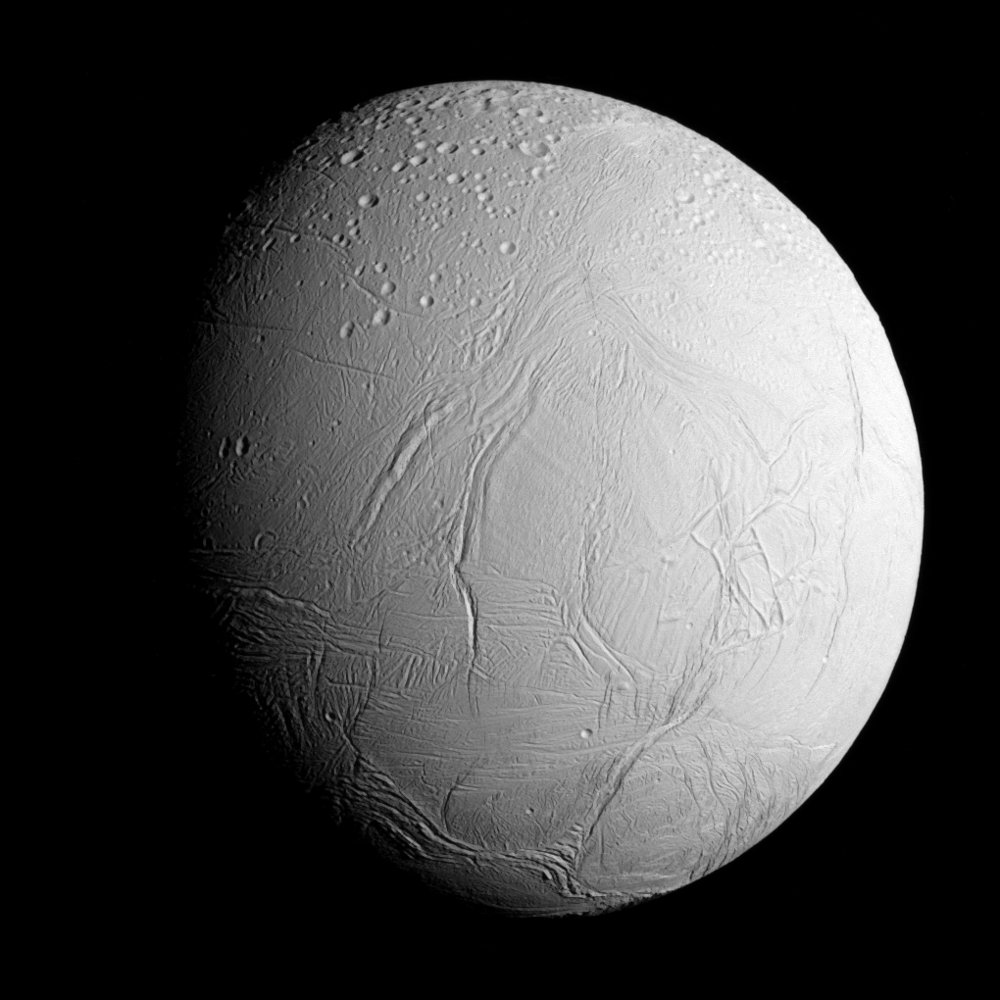
Earth microbes survived laboratory conditions designed to resemble the ocean beneath Saturn’s moon Enceladus. This is encouraging for astrobiology and inconvenient for anyone who had already printed “ALIENS CONFIRMED” across a folding table.
Researchers exposed microorganisms to cold, pressure and chemistry modeled on the moon’s subsurface sea. The organisms remained viable, suggesting that at least some known life could tolerate an environment once considered brutally hostile.
Habitability is not habitation
The experiment does not show that Enceladus contains life. It demonstrates that physical conditions there may not automatically prevent organisms with Earth-like biochemistry from surviving.
NASA’s Cassini spacecraft detected water vapor, salts, hydrogen and organic compounds in plumes erupting through the moon’s icy crust. Those ingredients make Enceladus one of the solar system’s leading targets for life-detection missions, but none is biological proof.
The plume offers an unusual shortcut
Because ocean material sprays into space, a spacecraft could sample it without drilling through miles of ice. Scientists would still need multiple independent biosignatures and rigorous contamination controls before making an extraordinary claim.
The Guardian reported the experiment and its carefully limited implications.
For now, Enceladus remains a potentially habitable ocean world, not a confirmed microbial subdivision. Science has opened the door a little wider; it has not introduced the neighbors.
Facts first. Side-eye included.
DJF separates what is confirmed from what is claimed—and tells you why this particular mess is worth your time.

Wade Crowley
Strange News & Small-Town WeirdWade collects stories that begin with “You are not going to believe what happened at the Walmart.” He covers odd crime, local legends, UFOs, and reality losing the plot.
“Somewhere, a police report is already getting weirder.”