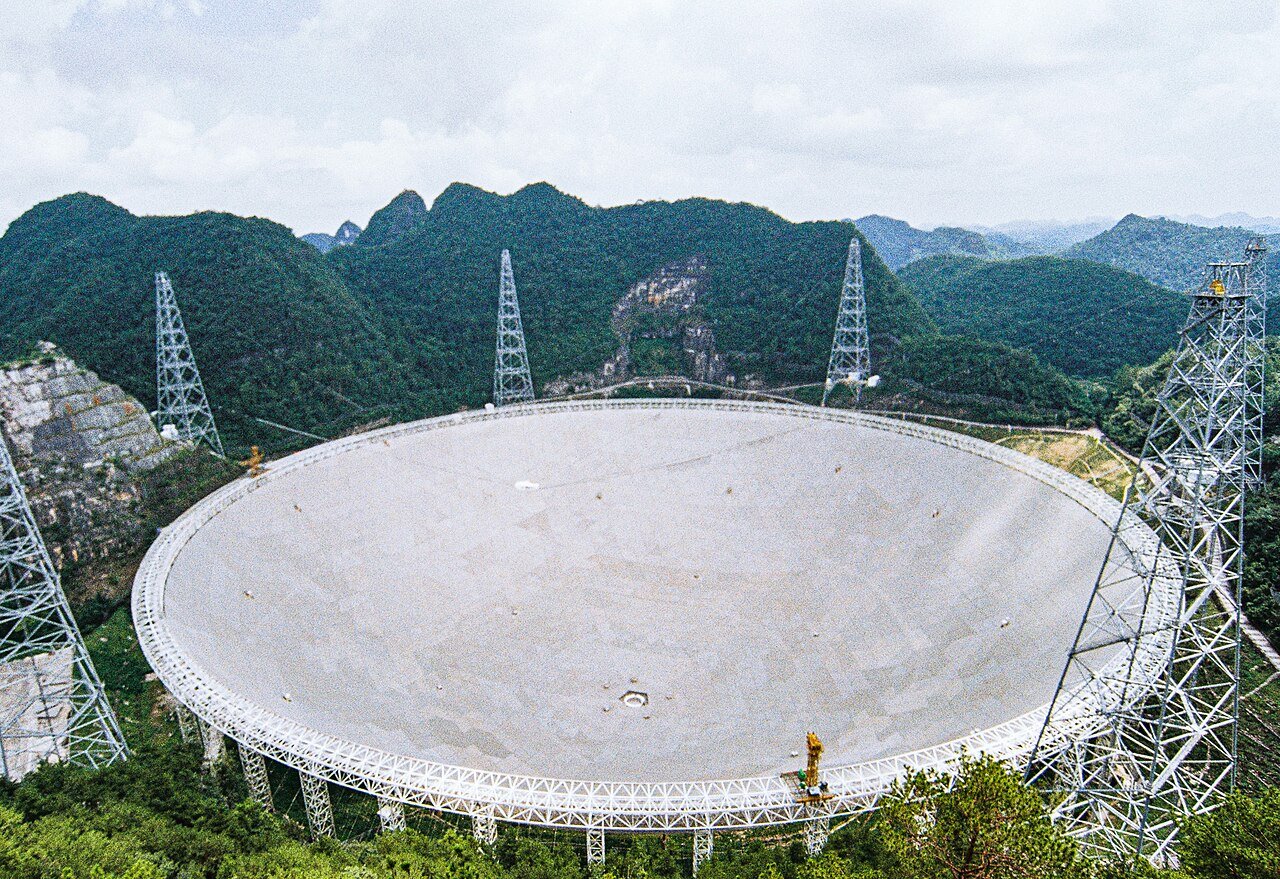
A new analysis of radio observations from 33 planetary systems found one signal interesting enough to survive the first rounds of filtering. Then the researchers did what responsible SETI scientists do: they kept testing it until Earth’s own technology wandered back into the room holding the metaphorical car keys.
The study used data from China’s Five-hundred-meter Aperture Spherical Telescope, better known as FAST, and a new wavelet-assisted pipeline designed to identify faint narrowband signals that conventional searches may miss.
Narrowband signals are interesting, not automatically extraterrestrial
Natural cosmic objects usually emit radio energy across wider frequency ranges. A very narrow drifting signal can resemble the kind of structured transmission technology might produce, which makes it worth investigating.
It also makes human radio interference the usual suspect. Satellites, aircraft, transmitters and electronics generate signals that can mimic the features researchers seek. Multiple telescope beams and follow-up observations help determine whether a candidate comes from the sky or from our own noisy neighborhood.
One candidate stood out before failing the alien test
The pipeline highlighted a signal associated with observations toward the Kepler-438 system. Its properties initially looked compatible with a possible technosignature, but comparison across the dataset indicated terrestrial radio-frequency interference.
That is not scientific failure. Eliminating false positives is the work. The updated method may help future searches find weaker candidates while rejecting interference more efficiently.
No alien transmission was confirmed. No civilization phoned home, collect or otherwise. What scientists gained was a sharper listening tool—and in SETI, learning exactly how Earth keeps impersonating extraterrestrials is progress.
Facts first. Side-eye included.
DJF separates what is confirmed from what is claimed—and tells you why this particular mess is worth your time.

Wade Crowley
Strange News & Small-Town WeirdWade collects stories that begin with “You are not going to believe what happened at the Walmart.” He covers odd crime, local legends, UFOs, and reality losing the plot.
“Somewhere, a police report is already getting weirder.”