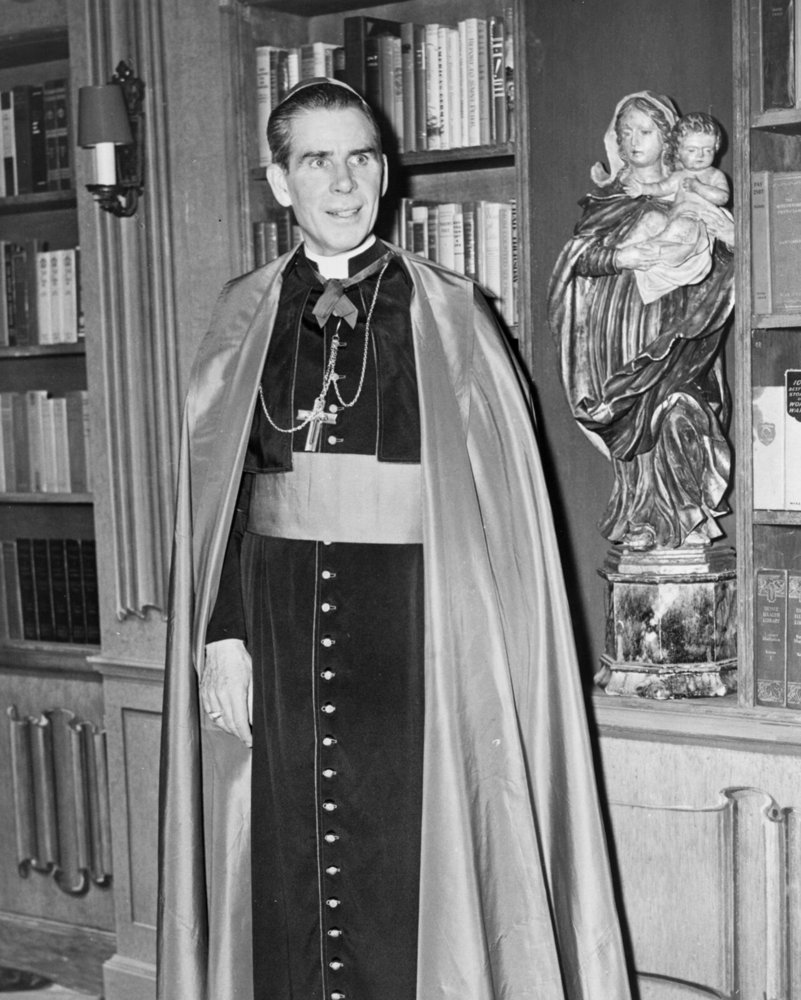
Vatican voices are revisiting Archbishop Fulton J. Sheen’s pioneering media ministry, a career built when “going viral” meant millions of families voluntarily turning the television dial to a bishop standing beside a chalkboard.
Sheen used radio and television to discuss theology, morality and everyday life in language designed for broad audiences. His programs reached well beyond regular churchgoers and made him one of the most recognizable Catholic figures of the twentieth century.
He understood the medium before churches had media teams
Sheen’s presentation was theatrical without abandoning instruction. He worked with timing, gesture, stories and silence—the analog tools of attention before algorithms began measuring every pause.
His legacy also invites scrutiny of religious celebrity. Media can bring spiritual teaching to isolated people, but it can also concentrate authority around a personality. The lesson is not that charismatic communication is suspect; it is that popularity must never replace accountability or careful theology.
The modern platform is faster and less forgiving
Today’s faith leaders speak through livestreams, podcasts and short videos that can reach millions instantly. The opportunity is enormous, as is the temptation to simplify every moral question into content engineered for outrage.
Sheen’s enduring relevance is not merely that he mastered television. It is that he treated communication as part of ministry itself. The platform changed. The obligation to tell the truth without turning faith into a brand mascot did not.
Facts first. Side-eye included.
DJF separates what is confirmed from what is claimed—and tells you why this particular mess is worth your time.