The Holy See space weapons statement asks governments to consider what an orbital arms race would put at risk. Archbishop Christophe Z. El Kassis, the Vatican’s permanent observer to the United Nations, addressed the General Assembly’s First Committee October 21. OSV News highlighted the speech October 23. He called for binding measures, greater transparency and confidence-building to prevent military competition from making space more dangerous.
The primary text distinguishes existing restrictions on nuclear and other weapons of mass destruction in orbit from the absence of a comprehensive ban on other kinds of space weapons. It warns that systems capable of disabling or destroying satellites could disrupt essential civilian services and produce lasting debris. This is a diplomatic appeal about security and the common good, not an announcement that a new treaty has been adopted.
Our take: humanity discovering another enormous domain and immediately debating how to break the useful equipment in it is an extremely on-brand development. The more serious point is that space infrastructure supports activities people on Earth actually depend on. Strategic advantage can sound wonderfully abstract until the systems underneath ordinary life become bargaining chips or targets.
The faith dimension is explicit in the speech’s insistence on shared responsibility and benefits extending beyond powerful states or private actors. A religious diplomatic mission is making an ethical argument in an international forum. Readers can evaluate that argument without assuming it carries legal force merely because the venue is the U.N. A statement can set out a principle; governments still have to negotiate and implement measures.
There is a practical reporting distinction here as well. A warning about an arms race does not establish that a specific attack has occurred. A call for a broader prohibition does not mean the existing legal framework is empty. The speech itself makes a more careful claim: current rules leave gaps, and new capabilities increase the stakes. That is enough to debate without adding imaginary orbital battles.
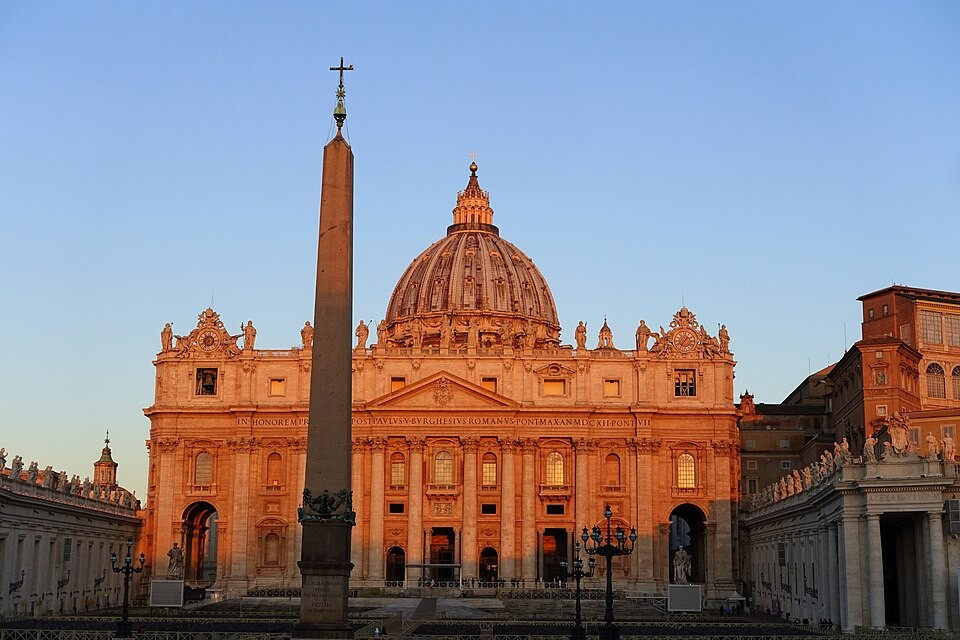
The photograph is an archival Vatican view. It illustrates the institution behind the appeal, not a weapon or the speech in progress. The next substantive evidence would be a negotiated proposal, an agreed measure or an identifiable change in state behavior. Until then, the confirmed story is the Holy See’s published position. The request is fairly straightforward: perhaps do not turn the satellite neighborhood into the next place everyone has to clean up.
Sources and photograph
Holy See Mission to the United Nations, October 21 primary statement. OSV News, October 23 reporting on the statement.
Archival Vatican photograph; not the United Nations speech or an image of any space weapon. Photo: Daderot; CC0 1.0. Display copy resized. Where applicable, the resized photograph retains the stated ShareAlike license. Original photograph and rights record. Image-use terms.

More from this Daily Junk Food section.
Facts first. Side-eye included.
DJF separates what is confirmed from what is claimed—and tells you why this particular mess is worth your time.

Dana Side-Eye
Receipts, Rumors & Internet NonsenseDana reads the fine print, checks the timeline, and keeps one eyebrow permanently raised. She covers viral claims, internet pile-ons, and suspiciously convenient explanations.
“Screenshots are forever. So is the side-eye.”