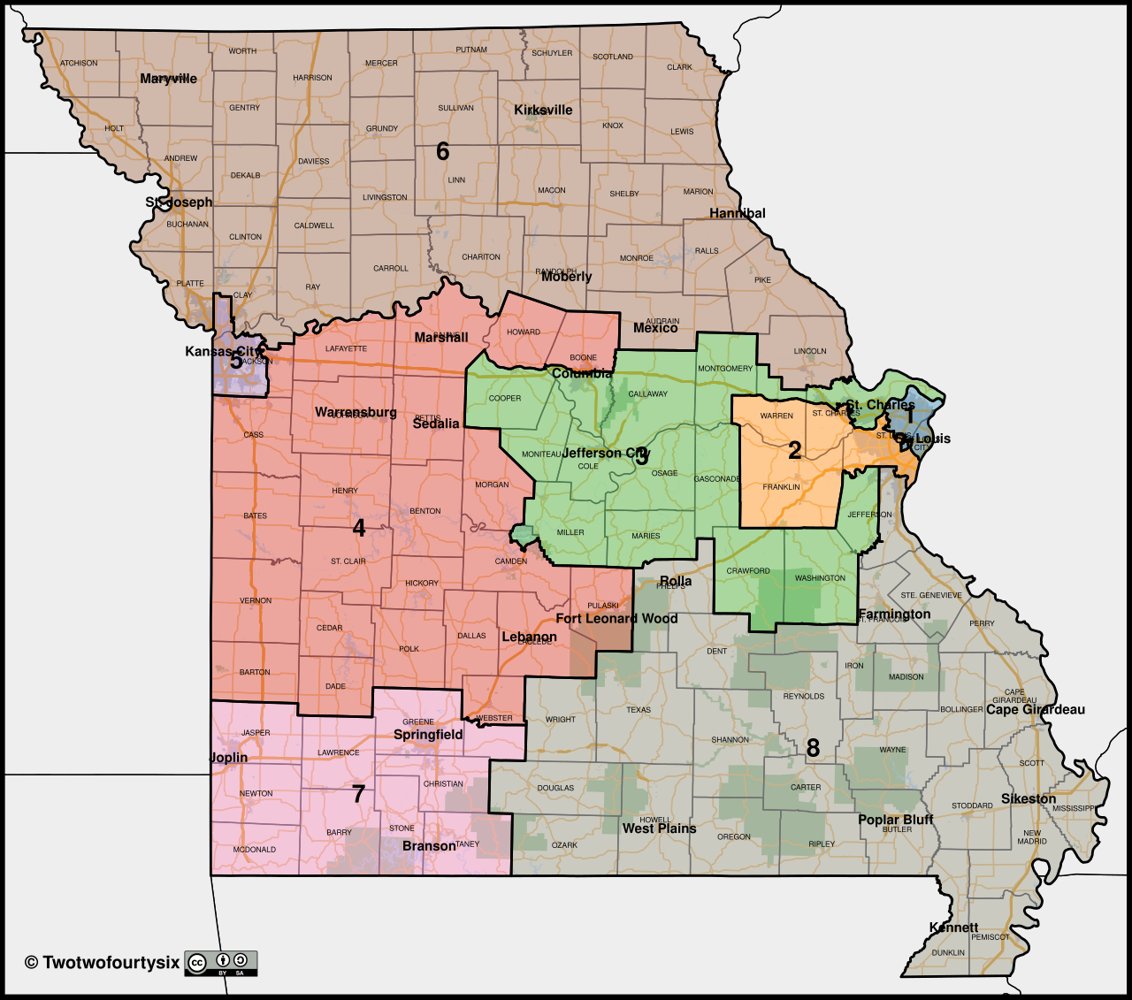
Missouri’s congressional map is headed toward another Supreme Court showdown after a federal appeals court backed Republican-drawn districts that could give the party seven of the state’s eight House seats. Election officials, meanwhile, have already sent absentee ballots based on the older map, because democracy apparently needed a midseason costume change.
The new map dismantles much of Democratic Representative Emanuel Cleaver’s district and emerged from a Trump-backed mid-decade redistricting push. Opponents gathered signatures for a statewide referendum, and the Missouri Supreme Court ruled that voters should decide before the map takes effect.
Federal and state rulings collided
A federal appeals court said returning to the old boundaries after the new map was used in an August primary could violate the Constitution. The U.S. Supreme Court had previously blocked a lower federal order allowing the new map, leaving election administrators with rapidly changing instructions.
The appellate ruling was paused briefly to allow another Supreme Court appeal. The practical question is now as urgent as the legal one: which districts can be used without disrupting ballots already being cast?
Redistricting is power drawn with a marker
District lines determine which voters are grouped together and can heavily influence representation before a single ballot is counted. Changing them mid-decade for partisan advantage may be legal in some circumstances, but it is not politically neutral.
Reuters detailed the competing rulings and expected Supreme Court appeal.
Missouri voters deserve stable rules and districts that are not treated like movable campaign furniture. Courts now have to decide quickly, which is usually how carefully considered constitutional law gets made—under a deadline with ballots already in envelopes.
Facts first. Side-eye included.
DJF separates what is confirmed from what is claimed—and tells you why this particular mess is worth your time.

Dana Side-Eye
Receipts, Rumors & Internet NonsenseDana reads the fine print, checks the timeline, and keeps one eyebrow permanently raised. She covers viral claims, internet pile-ons, and suspiciously convenient explanations.
“Screenshots are forever. So is the side-eye.”