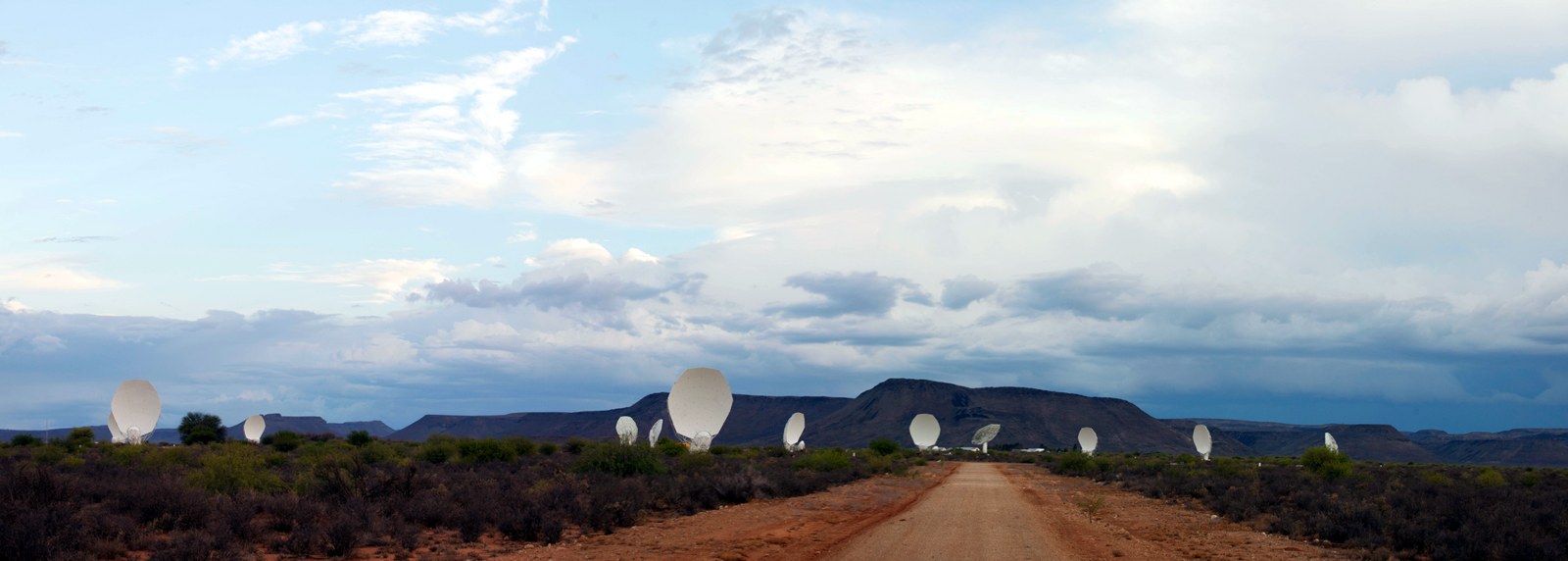
Astronomers have traced the most distant fast radio burst yet recorded to a small galaxy more than 10 billion light-years away. The signal, designated FRB 20240304B, was detected by South Africa’s MeerKAT radio telescope and its host galaxy was identified with the James Webb Space Telescope. It began its trip when the universe was roughly 3 billion years old, which makes your unanswered text from Tuesday look refreshingly recent.
Fast radio bursts are immensely energetic flashes of radio waves that last milliseconds. Since the phenomenon was recognized in 2007, researchers have catalogued thousands of them. Some repeat; others appear once and vanish into the cosmic filing cabinet. Their exact origins are still being studied, but magnetars—neutron stars with extraordinarily powerful magnetic fields—are a leading explanation.
The newly identified host is young, low in heavy elements and forming stars rapidly. That environment strengthens the idea that at least some bursts come from magnetars born after massive young stars collapse. It also gives researchers a glimpse of how the phenomenon behaved much earlier in cosmic history, before the universe had accumulated the chemical complexity found in later galaxies.
FRBs are useful even before scientists settle every detail of what creates them. As the radio waves cross intergalactic space, matter along the route disperses different frequencies by measurable amounts. Researchers can use that effect to estimate otherwise difficult-to-detect material between galaxies—the universe’s missing inventory, found with the astronomical equivalent of tracking how badly a signal buffers on the way home.
Now for the part the internet will ignore: researchers have not identified this burst as a message, beacon or evidence of extraterrestrial technology. Nothing in the published observations confirms aliens. A natural, compact stellar source remains the leading scientific framework, and “unexplained in every detail” is not a synonym for “somebody from Zeta Reticuli called collect.”
That distinction does not make the discovery less thrilling. Finding a millisecond flash from the early universe, locating its galaxy and using it to map invisible matter is magnificent science. The responsible alien beat is not about stapling little green men onto every mystery. It is about following evidence until nature gives us an answer—even when the answer turns out to be stranger than the bumper sticker.
Sources and image information
The Guardian, Oct. 9, 2026: https://www.theguardian.com/science/2026/oct/09/astronomy-fast-radio-bursts-frb-radio-waves; Space.com, Oct. 9, 2026: https://www.space.com/astronomy/galaxies/james-webb-space-telescope-helps-detect-the-most-distant-fast-radio-burst-ever-seen-and-scientists-are-surprised-by-its-source
Photograph: Square Kilometre Array Organisation (SKAO) / South African Radio Astronomy Observatory (SARAO); CC BY 3.0. Original file and rights record: Wikimedia Commons.

Facts first. Side-eye included.
DJF separates what is confirmed from what is claimed—and tells you why this particular mess is worth your time.