The Parolin AI law argument starts with a remarkably unfashionable technology question: who benefits? Vatican News reported October 21 that Cardinal Pietro Parolin called for law to guide artificial intelligence toward justice and the common good. Apparently a product launch, a reassuring adjective and a slide saying “trust us” do not constitute an entire moral framework.
The Vatican secretary of state spoke October 20 at the Pontifical Gregorian University in Rome, opening meetings marking the canon-law faculty’s 150th anniversary. Drawing on Pope Leo XIV’s encyclical Magnifica humanitas, he discussed the duties of jurists and developers and the risks of technological power widening inequality or excluding vulnerable people.
Parolin’s address treated technology as capable of supporting participation or increasing control, rather than assuming innovation automatically produces social improvement. Vatican News describes his concern about concentrated private power and his call for regulatory protections. These are ethical and political arguments from a senior Church official. The speech itself does not enact a law, establish a regulator or announce an enforcement action.
That distinction leaves plenty to discuss. Efficiency is a measurable feature of a system, but it does not tell us whether the task should be automated, who can challenge the result or whose interests were omitted. A process can become faster while becoming harder for the affected person to understand. The spinning loading icon is not the only possible form of exclusion.
Our take: religious institutions enter the AI debate most usefully when they ask concrete questions about human agency, accountability and access. You do not need to share every theological premise to examine those questions. It is possible to argue about the proposed framework while recognizing that “the algorithm decided” is a poor answer to someone trying to understand a consequential decision.
The follow-through will matter more than the podium language: what rules are proposed, who is protected and whether powerful actors accept meaningful limits. For now, the development is a public intervention linking faith, legal responsibility and digital infrastructure. The Vatican has entered the group chat, and its first request is to read the terms before clicking agree.
Sources and photograph
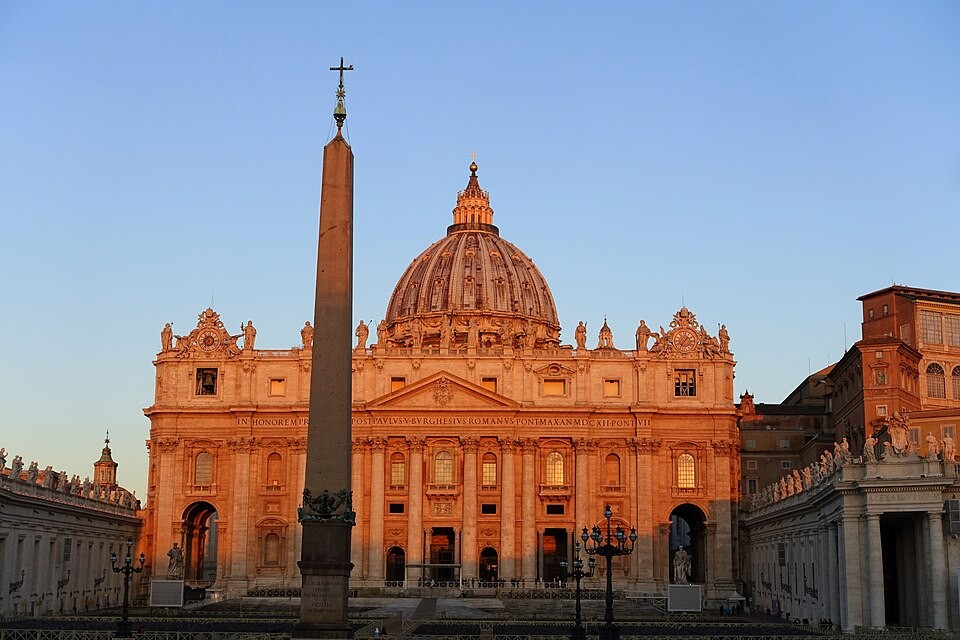
Archival photograph of Saint Peter’s Square; not the Gregorian University meeting. Photo: Daderot; CC0 1.0. Display copy resized. Where applicable, the resized photograph retains the stated ShareAlike license. Original photograph and rights record. Image-use terms.

More from this Daily Junk Food section.
Facts first. Side-eye included.
DJF separates what is confirmed from what is claimed—and tells you why this particular mess is worth your time.

Dana Side-Eye
Receipts, Rumors & Internet NonsenseDana reads the fine print, checks the timeline, and keeps one eyebrow permanently raised. She covers viral claims, internet pile-ons, and suspiciously convenient explanations.
“Screenshots are forever. So is the side-eye.”