The International Theological Commission appointments announced October 19 change who is sitting at one of the Vatican’s doctrinal discussion tables. Pope Leo XIV named 24 new members and renewed six for the 2026–2031 term. The commission now has 30 members, including eight women rather than five. Eight members are laypeople, twice the previous total. The seating chart has moved; the theological universe has not been rewritten in an afternoon.
Vatican News reports increased representation from Asia, Africa and South America. Msgr. Piero Coda continues as secretary general. The commission helps the Holy See, especially the Dicastery for the Doctrine of the Faith, examine important doctrinal questions. Its usual plenary session is scheduled for November 23–27.
These are appointments, not a newly issued doctrinal document. Nor does the announcement establish how any individual will vote, argue or influence a future study. It tells us something concrete about participation. What the new term produces will require reading the work that emerges, an unfashionable method with the advantage of involving actual evidence.
Our take: representation in a room and authority within an institution are related questions, not identical ones. More women and lay scholars can broaden the experience brought to an argument without changing the formal nature of the body. Readers can consider that meaningful without pretending the announcement answers every criticism of who gets heard in the Church.
The interesting next question is intellectual rather than photographic: which problems receive attention, what perspectives shape the discussion, and how clearly the resulting work speaks to believers outside specialist circles. A group picture cannot supply those answers. Neither can the reflexive insistence that an institutional change must be either a revolution or absolutely nothing.
For anyone who has survived a committee, the existence of more chairs does not guarantee a better conversation. Expertise needs room to matter, and disagreement needs enough precision to be useful. That is our editorial standard here, not a claim about what these newly appointed theologians will do. We will judge published work by its substance, rather than award results in advance.
The October 19 news is therefore a measurable membership shift ahead of a five-year term. It deserves attention on its own terms: more women, more lay participation and a somewhat different geographic balance. Faith reporting can cover institutional machinery without pretending every appointment is a sign of the apocalypse. Sometimes the meaningful story really is who has been invited into the discussion.
Sources and photograph
Vatican News, October 19 appointments report.
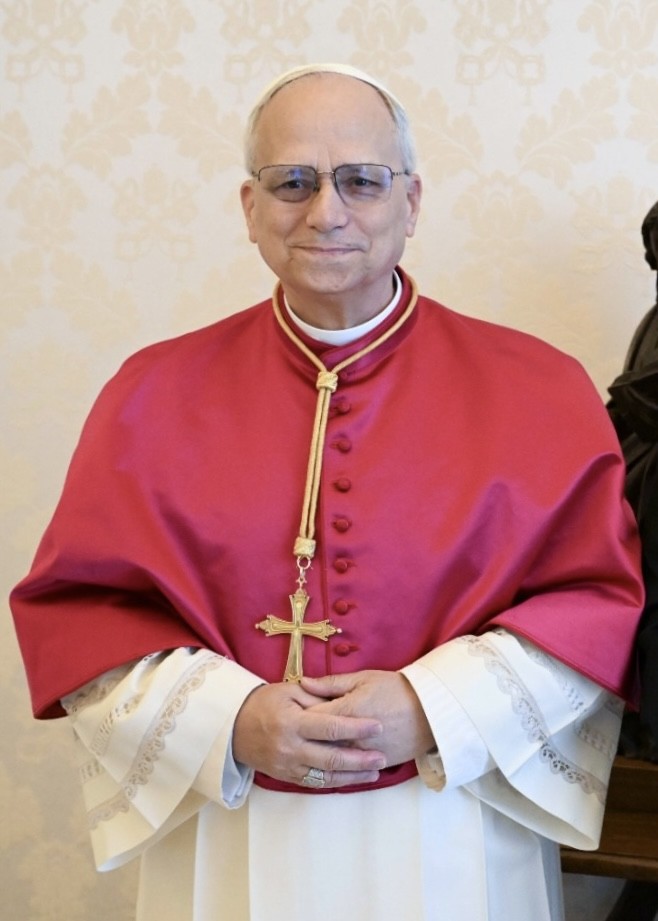
Archival photograph of Pope Leo XIV, June 7, 2025. Not the October 19 commission appointments or a commission meeting. Photo: Gobierno de la República Argentina / Argentine State portal; CC BY 4.0. Display copy resized. Where applicable, the resized photograph retains the stated ShareAlike license. Original photograph and rights record. Image-use terms.

More from this Daily Junk Food section.
Facts first. Side-eye included.
DJF separates what is confirmed from what is claimed—and tells you why this particular mess is worth your time.

Dana Side-Eye
Receipts, Rumors & Internet NonsenseDana reads the fine print, checks the timeline, and keeps one eyebrow permanently raised. She covers viral claims, internet pile-ons, and suspiciously convenient explanations.
“Screenshots are forever. So is the side-eye.”