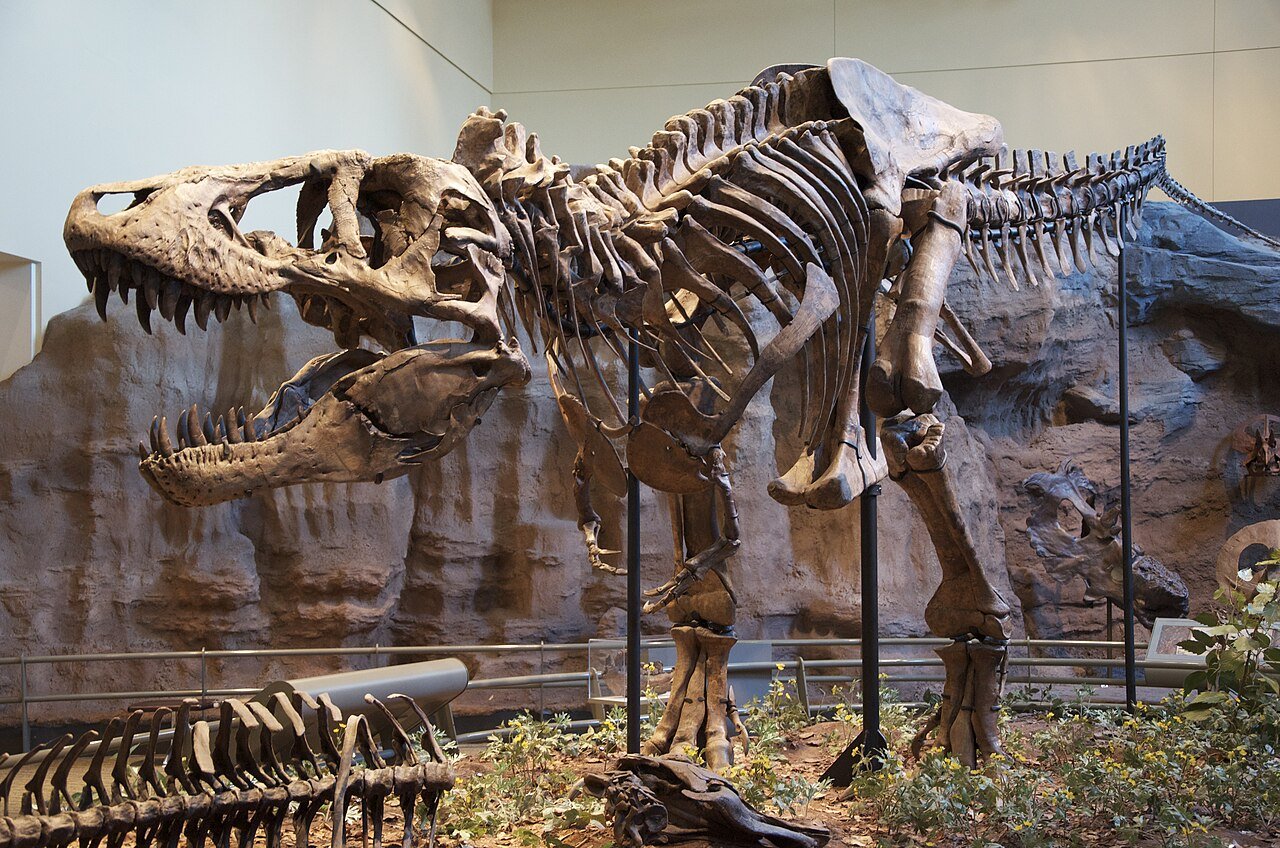
Researchers in North Dakota have uncovered what they describe as the first continuous sequence of footprints showing a Tyrannosaurus rex running. This confirms an important scientific point: if the giant teeth were moving toward you quickly, pretending not to notice was not a viable plan.
The four three-toed tracks stretch across roughly 23 feet of the Hell Creek Formation. Each stride measured about 3.3 feet, preserving a moment from approximately 66 million years ago.
Tracks reveal behavior that bones cannot
Fossil skeletons show anatomy, but trackways record motion. A sequence can help scientists estimate speed, gait and how an animal distributed its enormous weight while moving.
Individual tyrannosaur footprints have been found before. A connected set consistent with running is exceptionally rare because tracks require precisely the right surface and rapid burial to survive erosion across millions of years.
A schoolteacher noticed what others might have walked past
Colorado educator Kent Hups found the tracks and later co-authored research on the discovery. The site also yielded T. rex skeletal material, strengthening its scientific value.
The New York Post reported the find on September 13, 2026. The tracks are expected to be moved for study and preservation at the Denver Museum of Nature & Science.
The discovery is spectacular because it is not merely evidence that a dinosaur existed. It is evidence that one particular animal moved across one particular landscape at speed—and left the world’s most alarming Fitbit record behind.
Facts first. Side-eye included.
DJF separates what is confirmed from what is claimed—and tells you why this particular mess is worth your time.

Wade Crowley
Strange News & Small-Town WeirdWade collects stories that begin with “You are not going to believe what happened at the Walmart.” He covers odd crime, local legends, UFOs, and reality losing the plot.
“Somewhere, a police report is already getting weirder.”