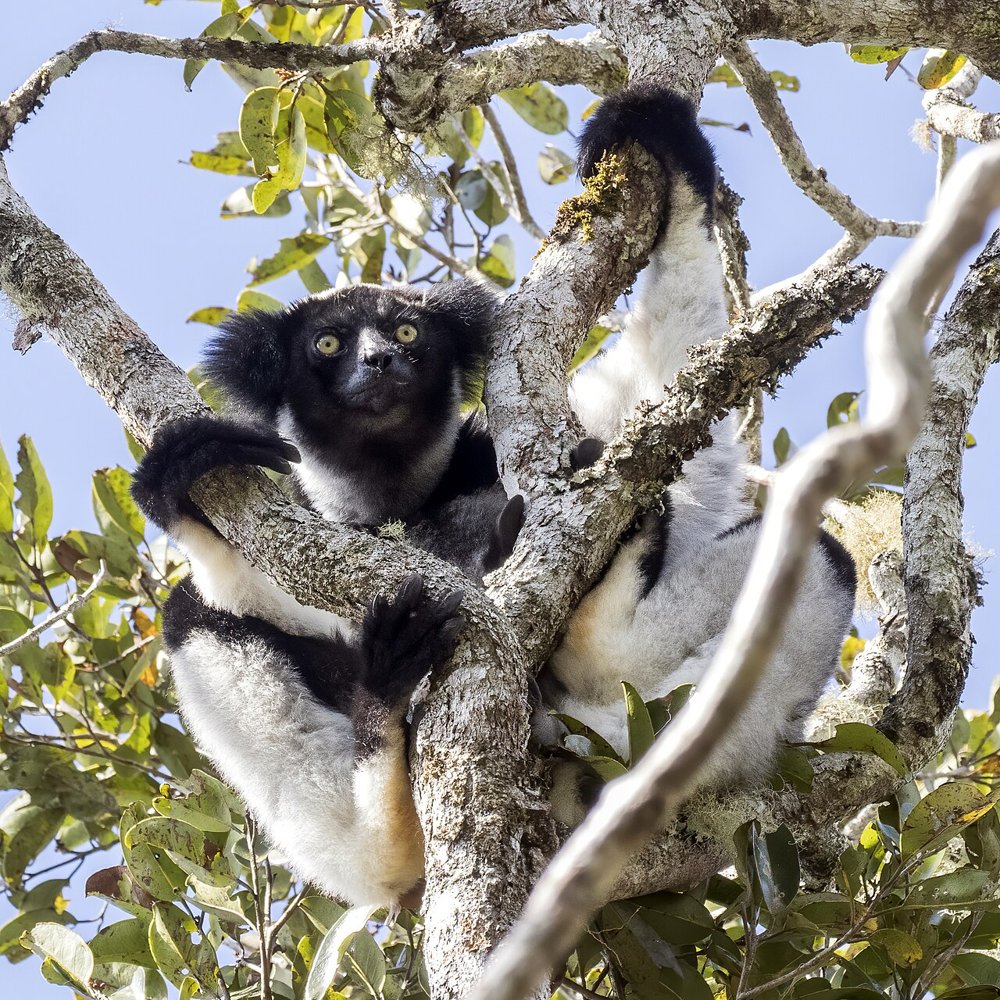
Scientists have found that Madagascar's singing indri lemurs may use a vocal trick similar to trained opera singers, widening their mouths on high notes so the sound carries farther through dense rainforest. The forest has sopranos now, and unlike the arena show, parking is still just a tree.
Indris produce long, structured songs often described as something between a wail and a siren. Male and female phrases interlock in duets instead of merely overlapping, creating calls that can travel through vegetation where animals may be only meters apart and still unable to see one another.
The mouth becomes an acoustic instrument
Researchers analyzed 83 videos of 19 wild indris in Madagascar's Maromizaha forest and Mitsinjo reserve. They tracked facial landmarks frame by frame and synchronized the movements with audio recordings.
The data showed a strong connection between pitch and mouth opening. On higher notes, the lemurs opened wider, changing the shape of the vocal tract and boosting frequencies that help the call project. Human sopranos use a comparable process known as formant tuning.
The songs replace conflict and reconnect families
Indri groups use their loudest songs to advertise territories. When neighboring groups come into visual contact, the songs tend to grow longer, reinforcing the boundary without requiring a physical confrontation.
The animals also use slower calls with longer pauses when separated. Researchers compared the exchange to “Marco Polo”: one family member calls, another answers and the group gradually reconnects through the forest.
Similar long-distance vocal adaptations appear in gibbons, wolves and even grasshopper mice. Humans and lemurs separated on the evolutionary family tree roughly 70 million years ago, suggesting that distant species independently found similar acoustic solutions to the same problem: being heard when the scenery refuses to cooperate.
Reuters reported the study on September 21, 2026.
Indris are critically endangered, and their forest habitat continues to shrink. They are extremely difficult to maintain and breed in captivity, making protection in the wild essential. The science is charming; the conservation message is not background music. Madagascar's opera only continues if the venue survives.
Facts first. Side-eye included.
DJF separates what is confirmed from what is claimed—and tells you why this particular mess is worth your time.

Wade Crowley
Strange News & Small-Town WeirdWade collects stories that begin with “You are not going to believe what happened at the Walmart.” He covers odd crime, local legends, UFOs, and reality losing the plot.
“Somewhere, a police report is already getting weirder.”