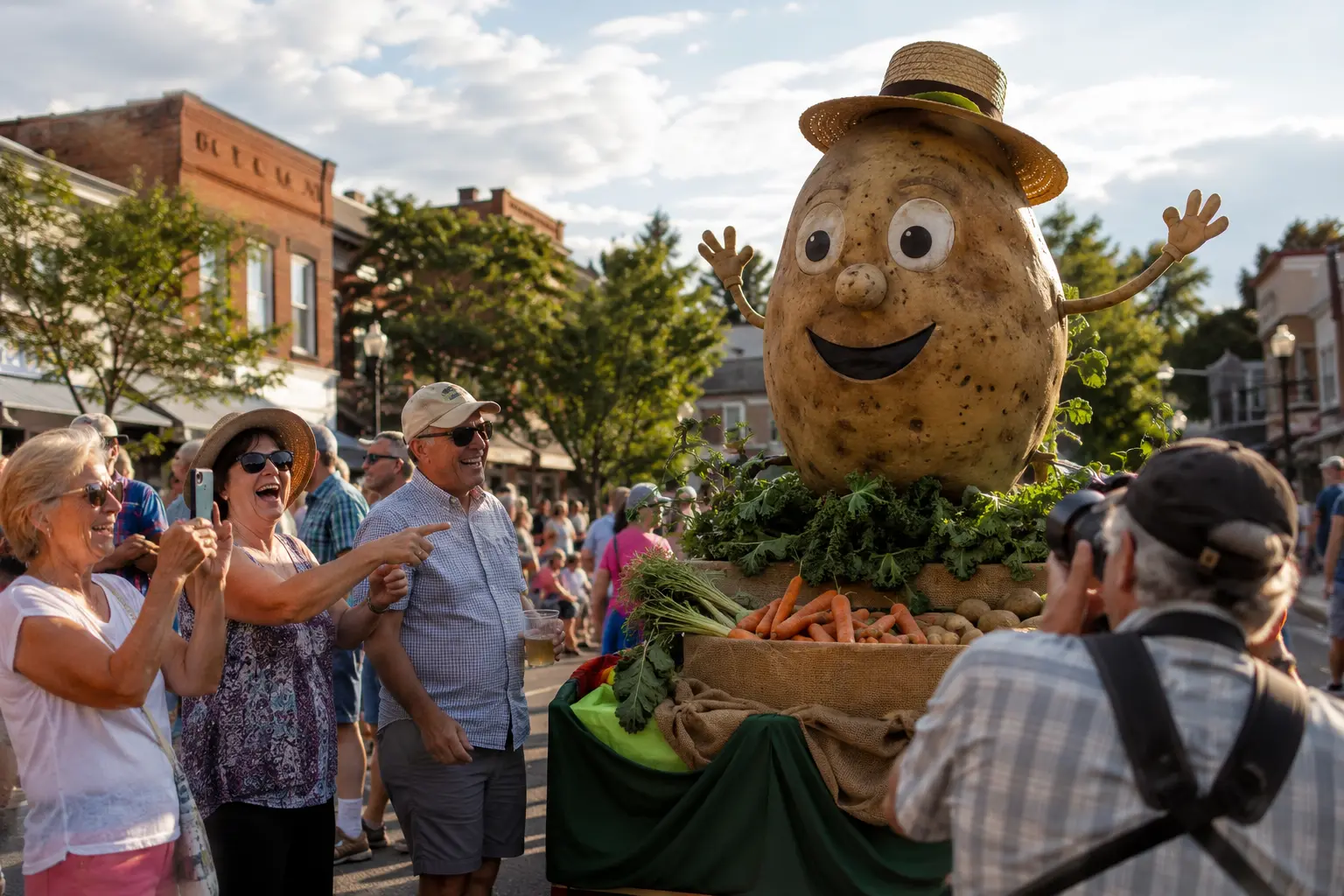
The national news can tell you what happened in government, business, entertainment, and the wider world. Small-town news can tell you why three goats delayed traffic, who painted the water tower, and whether the annual festival mascot will be allowed back after “the incident.”
There is room for both, but only one reliably includes a quote from a man named Dale who happened to be standing near the hardware store.
The stakes are understandable
Small-town stories often begin with something instantly recognizable: a missing sign, a runaway animal, a neighborhood argument, an unexpectedly large vegetable, or a public meeting that got out of hand. You do not need a background briefing to understand why people are upset about the gazebo.
The scale makes the story accessible. The consequences may be modest, but the personalities are enormous.
Local characters are undefeated
National figures arrive surrounded by media training. Local characters arrive exactly as they are. They explain what happened in complete sentences, include the relevant family history, and occasionally reveal a second, better story by accident.
The best local reporting respects those people without sanding away everything distinctive about them. It records the phrases, grudges, loyalties, and highly specific knowledge that make a place feel real.
Every town has its own mythology
Ask around long enough and you will discover that every community has a legendary storm, an unexplained noise, an abandoned building, a festival tradition, and one decision from the 1980s that remains politically sensitive.
Small-town news adds new chapters to that mythology. The escaped emu becomes a story retold for years. The misspelled banner becomes a photograph nobody is allowed to discard. The ordinary becomes folklore with remarkable speed.
The internet gave local weirdness a passport
Before social media, a strange local headline might travel one county over. Now it can reach millions of people before the town council has issued a statement.
That attention can be delightful, but it should come with care. The people inside a viral story are real neighbors, not fictional characters created for the entertainment of strangers. A funny headline is not permission to harass somebody, identify a private person, or turn a misunderstanding into a permanent label.
Good local reporting still matters
Funny stories are the gateway, but local journalism also documents decisions that directly affect people: schools, roads, taxes, public safety, development, and the conduct of local officials. The reporter covering the novelty parade may be the same person explaining a complicated budget the next morning.
That work is easy to overlook until it disappears. A healthy community needs someone willing to sit through the whole meeting, read the documents, spell everybody’s name correctly, and ask why the gazebo costs that much.
Send us the good stuff
Daily Junk Food loves a story with personality, surprise, and enough reliable information to verify what happened. If your hometown has produced a giant mascot, mysterious object, runaway animal, baffling ordinance, or oddly competitive festival, send the original local source through our contact page.
National news tells us what the world thinks is important. Small-town news reminds us what the world is actually made of: people, places, traditions, arguments, and at least one parade float built in somebody’s garage.
Facts first. Side-eye included.
DJF separates what is confirmed from what is claimed—and tells you why this particular mess is worth your time.