Reporting and labeled analysis · October 26, 2026
Reporting — a rally insult becomes a diplomatic protest
Libya summoned the U.S. chargé d’affaires on October 25 to protest Donald Trump’s remarks about the country at his Georgia rally the previous day, Reuters reports. On Sunday night, Trump subsequently praised Libyans and affirmed U.S. ties while demanding an end to Libya’s role as a route for illegal migration, according to the report.
The Libya Observer reports that the Government of National Unity’s foreign ministry delivered a diplomatic note demanding official clarification and correction. The ministry objected to remarks undermining Libyans’ dignity and to using the country in domestic electoral disputes.
The sequence is straightforward: the Perry, Georgia speech was October 24; the diplomatic protest followed October 25; this article is published October 26. A later publication date does not turn the original rally into a new Monday event.
What Trump said, and what the response means
The Roll Call Factba.se transcript records Trump calling Libya one of the “terror-infested countries” during an attack on Senator Jon Ossoff over immigration. He then recalled his vulgar description of several countries from his first term. Those words are the president’s characterization, not this article’s assessment of Libyans.
Trump also made an accusation about legislation sponsored by Ossoff. The cited speech establishes that Trump made the accusation; it does not independently establish that his description of the bill was accurate. The diplomatic protest can be reported without converting the campaign claim into a finding.
The Libya Observer also reports that the foreign affairs committee of Libya’s House of Representatives called for a U.S. clarification and emphasized mutual respect and shared interests. That is a response from another Libyan institution, not evidence that every Libyan political dispute has suddenly disappeared.
The reported summons and diplomatic note establish a formal objection. They do not, by themselves, establish an expulsion, a break in relations or a change to immigration rules. Nor does the subsequent presidential statement establish that the dispute has been resolved.
Our opinion: the microphone does not stop at the state line
A president can work a campaign crowd and still create work for the people conducting foreign relations. Those are consequences of the same job. There is no switch on the rally microphone that makes the words stop being presidential once somebody laughs.
The problem with treating whole countries as campaign props is practical as well as insulting. Officials then have to discuss what was said about their people before getting back to whatever cooperation was supposed to be on the agenda. The applause lasts a moment; the diplomatic note gets filed.
Trump’s subsequent statement, as reported, invokes respect and cooperation alongside a migration demand. Readers should judge that statement on its actual words rather than assume it contains an apology or a negotiated settlement. Praise is a statement; a resolution requires evidence of what the parties agreed.
Our take: if a rally line requires an American diplomat to explain it the next day, the line has acquired a foreign-policy cost. Voters are entitled to ask what benefit they received in exchange. “It got a laugh in Georgia” is a pretty flimsy expense report.
Related coverage
Related Georgia rally coverage: Greene and federal funding · More Politics & Power
Sources and photograph
- Reuters via ThePrint: October 25 protest and Trump’s subsequent statement
- The Libya Observer, October 25: diplomatic note and Libyan institutional responses
- Roll Call Factba.se: full October 24 Perry, Georgia rally transcript
- Official portrait: photographer, date and public-domain status

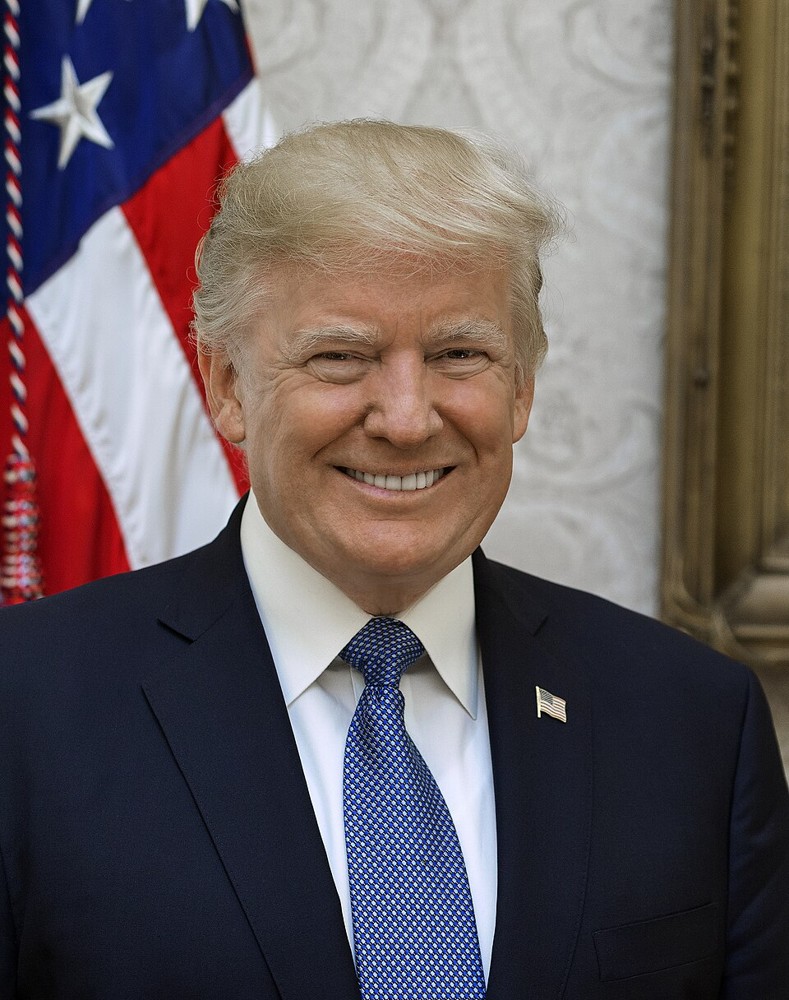
File photograph: Donald Trump’s official White House portrait, October 6, 2017. Photo: Shealah Craighead / The White House, public domain as a U.S. federal government work, via Wikimedia Commons. Display copy resized. This does not depict the October 24, 2026 Georgia rally or the diplomatic summons in Libya.
Editorial note: This article draws on the linked sources and may include clearly labeled opinion or unconfirmed reports. We have not independently verified every source claim. Publication does not establish an unconfirmed claim as fact; developing details may change.
Facts first. Side-eye included.
DJF separates what is confirmed from what is claimed—and tells you why this particular mess is worth your time.