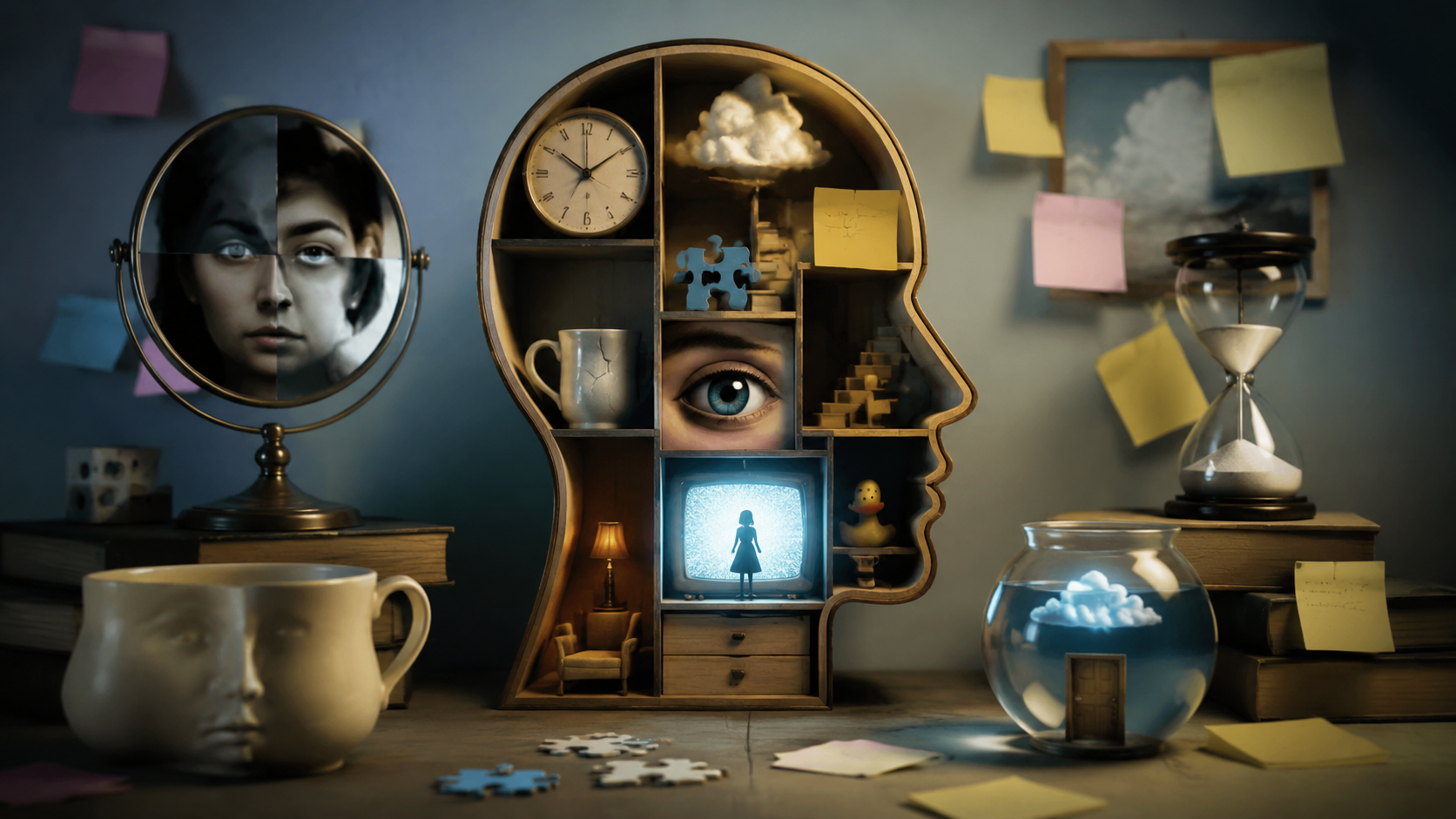
You remember the line. You can hear the actor saying it. You may even remember repeating it with friends. Then somebody plays the actual scene and the words are different.
The Mandela Effect is the name given to a shared false memory: a large group of people confidently remembers an event, image, spelling or quotation in a way that does not match the available record.
Where the name came from
The term became popular after people described remembering Nelson Mandela dying in prison during the 1980s. Mandela was released in 1990, became president of South Africa and died in 2013. The mismatch between confidence and fact gave the phenomenon its memorable name.
Internet communities later collected examples involving product logos, movie dialogue, song lyrics and book titles. Once one person posts a version that feels right, thousands of people may recognize the same mistake.
Memory is not a recording
Human memory is reconstructive. The brain stores pieces—meaning, emotion, shape, context—and rebuilds the experience when we recall it. That process is efficient, but it leaves room for familiar patterns to fill gaps.
A misquoted movie line may be clearer than the original. A misspelled brand name may follow a more common spelling rule. Two similar characters or events can merge. Every later retelling can strengthen the edited version.
Why groups make the same mistake
People share language, cultural references and expectations. If a wrong version is more intuitive, many brains can arrive at it independently. Media repetition then reinforces the error: parody, advertising and casual conversation may circulate the altered version more often than the original.
The internet adds visible agreement. Before social media, you might quietly discover your memory was wrong. Now you can find 40,000 people who remember it the same way and begin discussing parallel universes before lunch.
Confidence is not proof
The unsettling part is not that people forget. It is that false memories can feel detailed and certain. Emotion and confidence tell us how real a memory feels, not whether every detail is accurate.
That does not make memory useless. It makes memory human: adaptive, meaning-driven and occasionally committed to a movie quote nobody actually said.
Still hungry?
Daily Junk Food serves up celebrity chaos, strange headlines, UFOs, nostalgia, internet nonsense, and whatever everyone will be talking about next. Grab the newest stories or share this one with someone who appreciates news with no nutritional value.
Written by the Daily Junk Food Editorial Team.
Facts first. Side-eye included.
DJF separates what is confirmed from what is claimed—and tells you why this particular mess is worth your time.