The October 14 Roman telescope exoplanet update is a real engineering development in a mission that will study worlds beyond our solar system. NASA reports that its team completed tests of Roman’s Wide Field Instrument and refined the telescope’s focus. The observatory’s main instrument is performing better than predicted, while work continues toward demonstrating the Coronagraph Instrument’s light-blocking capabilities.
NASA says the Wide Field Instrument’s optical error is now 63 nanometers RMS, compared with a requirement of about 90 nanometers. The team also corrected the coronagraph’s focus and will continue camera and deformable-mirror calibration before the coming demonstrations. These are commissioning results. They are not a detected biosignature, a transmission, or evidence that a civilization has finally answered our increasingly embarrassing voicemail.
Analysis: a search is only as useful as the instrument and the limits attached to its measurements. Better focus does not tell us whether a planet has life. It helps create the conditions for more reliable observations. That distinction can sound disappointingly modest beside an alien headline, but it is where scientific progress actually lives: in work that changes what can be measured and how confidently it can be interpreted.
A coronagraph addresses an especially difficult observing problem: separating very faint nearby light from a much brighter source. The practical challenge is not solved by enthusiasm. Light control, calibration, optical alignment, and repeatable performance all have to cooperate. The universe remains stubbornly unwilling to improve its lighting because our species would like a cleaner close-up.
For readers following extraterrestrial-life research, the relevant connection is the expanding ability to investigate other planetary systems. Studying alien worlds is not the same thing as finding alien organisms, and neither is equivalent to identifying a UFO. Those categories become less useful every time they are tossed into one headline blender. An engineering success deserves its own accurate description.
The next thing to watch is the documented performance of the light-blocking demonstrations and the science observations that follow. A real detection would require its own evidence, analysis, and scrutiny. Today’s news is that a major observatory has sharpened its vision and moved further through commissioning. No alien confirmation is reported. The hardware is doing something more useful than arguing in a comment section.
Sources and photograph
NASA, Ashley Balzer, October 14, 2026.
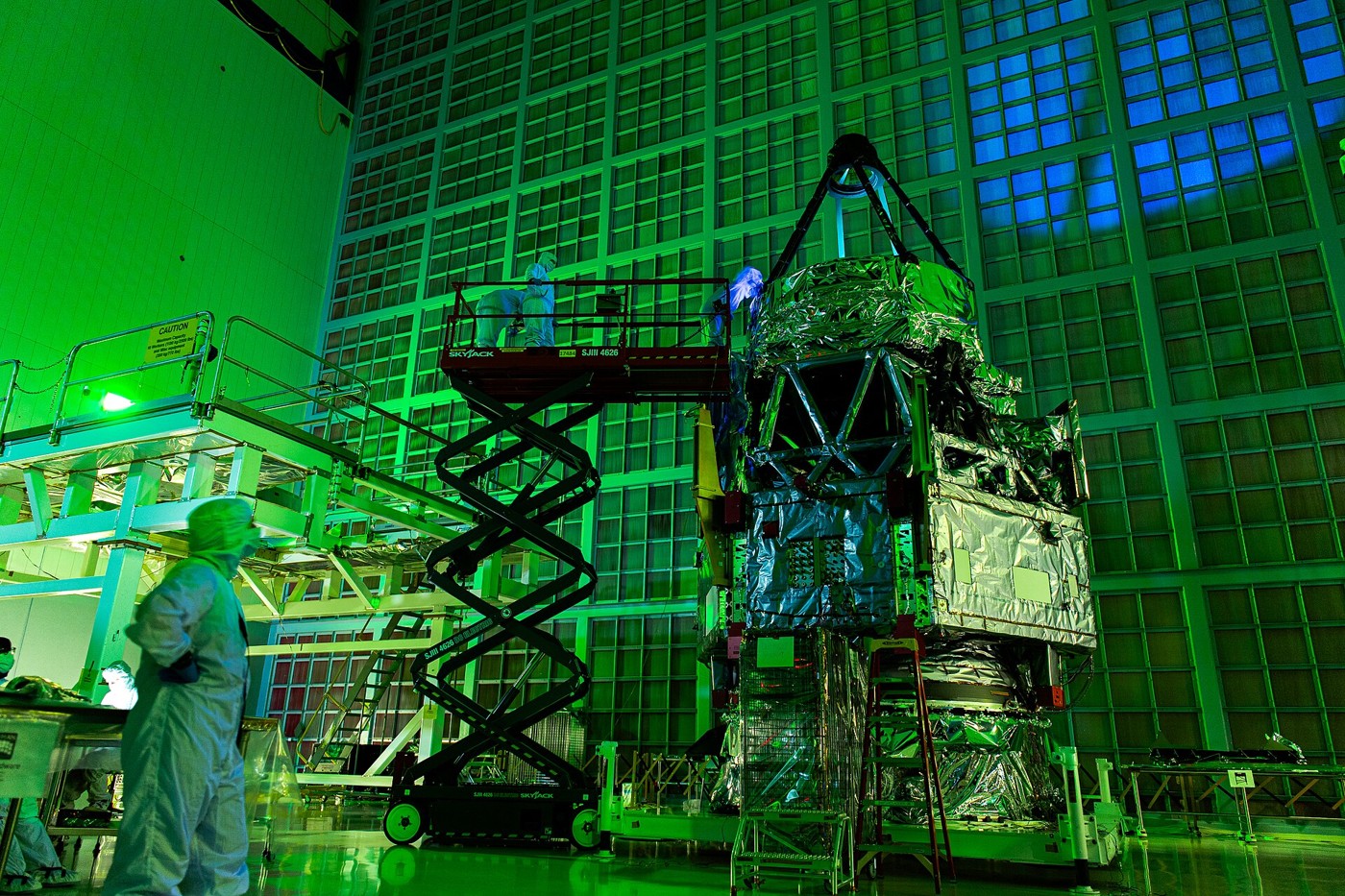
NASA file photograph of Roman’s mirror inspection on the ground; not an image of an alien planet or today’s in-space adjustment. Photo: NASA Goddard Space Flight Center / Michael Guinto; Public domain. Display copy resized. Original photograph and rights record.
.jpg)
Read more in this Daily Junk Food section.
Facts first. Side-eye included.
DJF separates what is confirmed from what is claimed—and tells you why this particular mess is worth your time.

Dana Side-Eye
Receipts, Rumors & Internet NonsenseDana reads the fine print, checks the timeline, and keeps one eyebrow permanently raised. She covers viral claims, internet pile-ons, and suspiciously convenient explanations.
“Screenshots are forever. So is the side-eye.”