Public-accountability news and analysis · October 26, 2026
The Justice Department announced a substantial crime-survey result Monday: the rate of violent victimization excluding simple assault fell 25% from 2024 to 2025. That is a specific, encouraging finding. It is not a finding that every kind of violent crime fell by a quarter, or a statistical demonstration that one administration’s policies caused the decline.
We read the Bureau of Justice Statistics’ four-page preliminary report, published October 26, rather than stopping at the DOJ announcement. The tables and methods explain what the number measures and what it does not.
What the 25% figure actually covers
The rate for violent crime excluding simple assault fell from 9.9 to 7.4 victimizations per 1,000 people age 12 or older. That category includes rape or sexual assault, robbery and aggravated assault. The report identifies the difference as statistically significant at the 95% confidence level.
Total violent victimization, which also includes simple assault, is a separate line in the table: 28.7 per 1,000 in 2024 and a preliminary 25.7 in 2025. Those figures are not the same 25% decline. Homicide is excluded because this survey is based on interviews with victims.
Property victimization is measured separately, per household. Its rate fell 19%, from 138.0 to 111.2 per 1,000 households. Mixing the personal and household rates would make a tidy-looking comparison that the report does not support.
The redesigned survey is part of the story
BJS fully transitioned to a redesigned questionnaire in January 2025. It warns that the new instrument’s estimates are not comparable with the legacy survey. That warning should not be omitted—but it also should not be misused to dismiss the report’s own year-to-year comparison.
The source notes for the tables identify the 2024 baseline as the redesign version. The report compares that baseline with the 2025 survey. It is not simply placing a legacy 2024 number beside a redesigned 2025 number and ignoring the difference.
The estimates are preliminary and may change when final 2025 results are published, expected in 2027. They include crimes reported to police and crimes not reported to police, which is one reason they should not be casually substituted for police-recorded crime totals.
The shutdown left a mark on the methodology
The report says interviews were missing in October and November 2025 during the lapse in federal appropriations. BJS applied a one-time weighting adjustment: data from July, August, September and December represented the second half of the year. The first half’s weighting was unaffected by that adjustment.
This disclosure is not, by itself, proof that the results are invalid. It is a reason to read the methods and retain the preliminary label. Statistical agencies explain such choices so the estimate can be assessed, not so readers have to guess how missing collection periods were handled.
Analysis: a result and a political explanation are different things
DOJ credits the administration’s public-safety agenda. That is its interpretation. The descriptive report presents victimization estimates; it does not isolate the effect of a particular policy or establish why the rate changed.
Politics loves a percentage with the footnotes removed. The result becomes a trophy, the category gets shortened, and suddenly a careful statistical statement is doing campaign work it was never designed to perform.
The better response is neither to wave away a decline nor to inflate it. Report the improvement the data supports, identify the measure accurately, and keep the claim of political credit separate from the statistical finding. Good news should be able to survive its own footnotes.
Explore more Politics & Power.
Photograph and credit
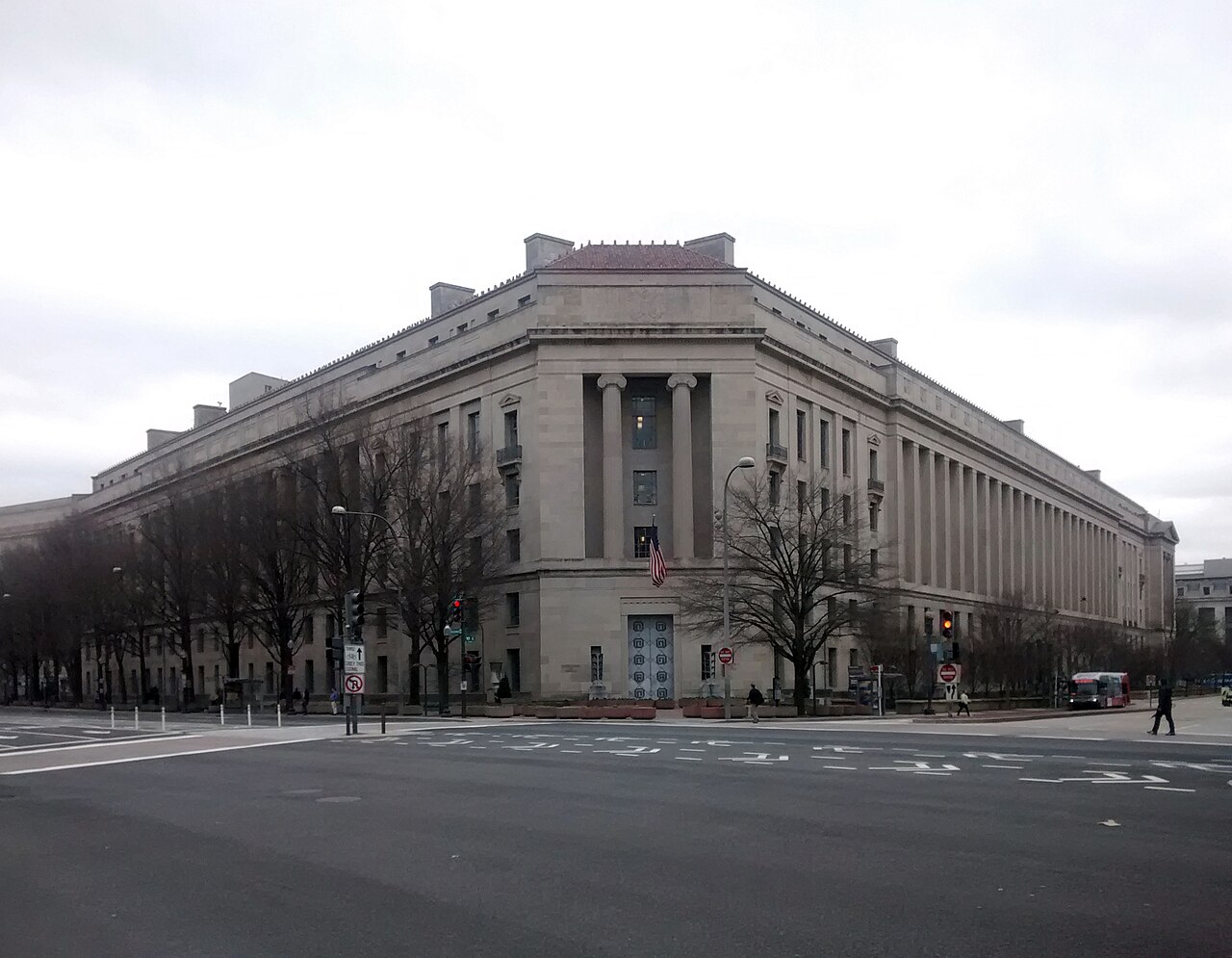
File photograph: the Robert F. Kennedy Department of Justice Building in Washington, D.C., photographed April 4, 2014. This is not a photograph of the October 2026 announcement or a crime scene. Photo: Gunnar Klack/Wikimedia Commons, CC BY-SA 4.0; resized for display. Photograph and rights record · CC BY-SA 4.0. The resized photograph remains available under the same license.

Editorial note: This article draws on the linked sources and may include clearly labeled opinion or unconfirmed reports. We have not independently verified every source claim. Publication does not establish an unconfirmed claim as fact; developing details may change.
Facts first. Side-eye included.
DJF separates what is confirmed from what is claimed—and tells you why this particular mess is worth your time.