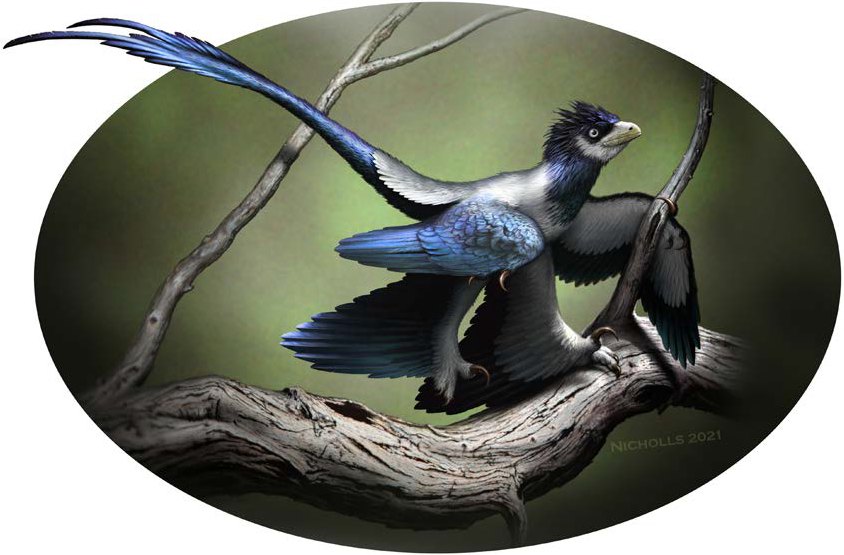
Scientists have identified a new dinosaur species from a remarkably complete fossil measuring about 22 inches long, with portions of its feathers still preserved. Paleontology usually works from a tooth, three optimistic fragments and a grant proposal, so an articulated skeleton is the equivalent of the dinosaur leaving organized paperwork.
The small animal adds detail to the evolution of feathered dinosaurs and the relationship between non-avian dinosaurs and birds. Preserved soft structures can reveal information that bones alone cannot provide.
Feathers did more than produce flight
Many dinosaurs carried feathers or feather-like coverings before powered flight evolved. Those structures may have provided insulation, display, camouflage or help with balance and movement.
A nearly complete specimen lets researchers compare limb proportions, tail anatomy and feather placement in one individual instead of assembling a composite from scattered finds.
Exceptional preservation changes the questions
Fossilization usually destroys feathers, skin and other delicate tissue. When those details survive, scientists can test reconstructions that otherwise depend heavily on related species and educated inference.
People reported the new species and preserved feathers on October 2, 2026.
The discovery does not mean every dinosaur looked like a furious chicken. It does mean the old gray-lizard illustrations should continue backing slowly toward the museum gift-shop exit.
Facts first. Side-eye included.
DJF separates what is confirmed from what is claimed—and tells you why this particular mess is worth your time.

Wade Crowley
Strange News & Small-Town WeirdWade collects stories that begin with “You are not going to believe what happened at the Walmart.” He covers odd crime, local legends, UFOs, and reality losing the plot.
“Somewhere, a police report is already getting weirder.”