The New Hampshire student ID order is an immediate election-rule development, not a final decision resolving every argument in the lawsuit. On October 22, the Supreme Court stayed lower-court relief in Scanlan v. Coalition for Open Democracy. The practical effect, as Courthouse News reports, permits state officials to reject student identification cards for the November election while the case continues.
The majority invoked the principle against lower federal courts changing election rules close to voting. Justice Ketanji Brown Jackson dissented, arguing that the district court had required accurate guidance about existing law rather than changed the law itself. The disagreement concerns whether correcting disputed instructions should count as the sort of late intervention the principle discourages.
The underlying dispute includes whether student cards can serve as secondary evidence under a safety-valve provision after their removal from the expressly accepted ID list. The stay pauses the October 2 and October 5 injunction orders during the appeal and any timely Supreme Court review under its stated terms. It should not be reported as a full merits opinion permanently settling student voting rights.
Our take: clarity is not a decorative feature of election administration. A voter needs to know what documents will actually be accepted before leaving home. A legal argument over which version creates confusion can be intellectually elaborate while the person at the check-in table still needs a usable answer. Democracy should not require an emergency-law seminar between breakfast and the polling booth.
For practical planning, consult current New Hampshire election guidance and your local election office about your circumstances and acceptable documents. A headline about one form of identification is not a complete registration guide. This article does not attempt to replace the state’s full instructions or resolve an individual voter’s eligibility.
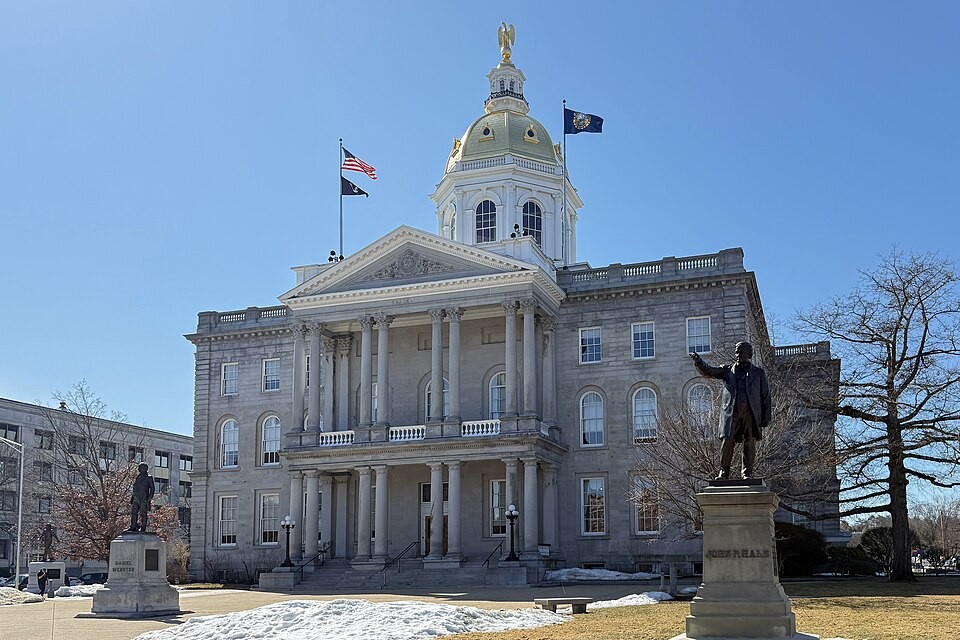
The photograph shows the State House, not voters being turned away. The news is the stay and the competing explanations of its effect. Both sides invoke orderly elections; they disagree over which intervention preserves them. Readers can assess that dispute while taking the very ordinary precaution of checking the current rules before showing up with a card that worked in a different context.
Sources and photograph
Supreme Court, October 22 order and Jackson dissent. Courthouse News, October 22 scope and state guidance.
Archival photograph of New Hampshire’s State House; not a polling place or the Supreme Court proceeding. Photo: Quintin Soloviev; CC BY 4.0. Display copy resized. Where applicable, the resized photograph retains the stated ShareAlike license. Original photograph and rights record. Image-use terms.

More from this Daily Junk Food section.
Facts first. Side-eye included.
DJF separates what is confirmed from what is claimed—and tells you why this particular mess is worth your time.

Dana Side-Eye
Receipts, Rumors & Internet NonsenseDana reads the fine print, checks the timeline, and keeps one eyebrow permanently raised. She covers viral claims, internet pile-ons, and suspiciously convenient explanations.
“Screenshots are forever. So is the side-eye.”