A new astronomy paper identifies light from a two-star system associated with a microlensing planet. It is an impressive piece of astronomical detective work. It is not a message from extraterrestrials, which means the universe has once again declined to provide the cable-news segment everyone ordered.
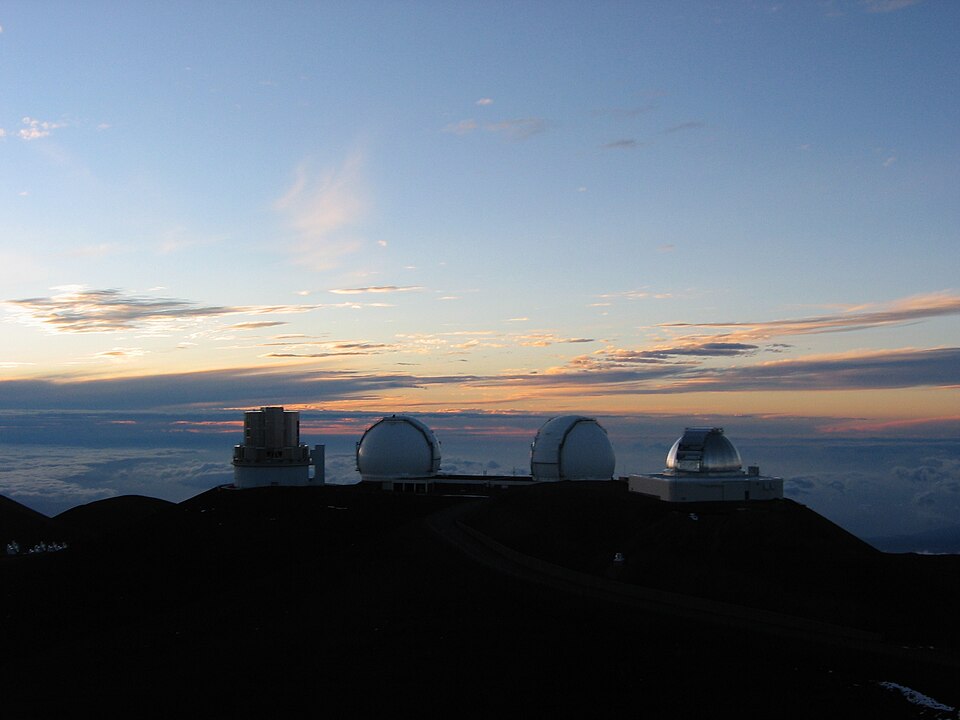
The preprint, submitted October 5, 2026 by Sean K. Terry and colleagues, examines OGLE-2006-BLG-284. Keck adaptive-optics images and Hubble data obtained more than 15 years after the original event allowed the team to identify the lens system and measure its motion.
A planetary system, with an honest question mark
The analysis estimates two host-star masses of about 0.43 and 0.12 times the Sun’s mass, with a planetary companion around 165 Earth masses. The authors describe this as the first direct detection of light from a two-star microlensing system hosting a planet.
They cannot yet determine whether the planet orbits one star or both. They propose high-precision radial-velocity measurements to help distinguish the possibilities. The paper is a preprint submitted to the Astronomical Journal; submission is not the same as completed peer review.
Why this belongs in the search beyond Earth
Microlensing uses gravity’s effect on background light to reveal foreground objects. Waiting years for the lens and background source to separate on the sky can make follow-up identification possible. This is patient observation, not the photographic equivalent of enhancing a license plate until an alien appears.
The broader relevance is planetary diversity. Understanding which stellar arrangements can host planets improves the map of environments beyond our solar system. It does not establish habitability, detect an atmosphere or demonstrate life in this particular system.
Our take: uncertainty is a strength here. The researchers identify what their measurements support and name the orbital question they cannot settle. That makes the result more useful than a dramatic claim that quietly skips the missing evidence. Two stars and a planet are already a good story. Nobody needs to add a flying saucer for garnish.
Sources and photograph

Facts first. Side-eye included.
DJF separates what is confirmed from what is claimed—and tells you why this particular mess is worth your time.