Reporting and clearly labeled opinion · October 25, 2026
The reported development
President Donald Trump campaigned in Port Huron, Michigan, on Sunday, October 25, supporting Republican Senate nominee Mike Rogers. Reuters reports that Trump invoked the September 11 attacks while urging voters to reject Democrat Abdul El-Sayed. The report describes allegations connecting El-Sayed to the Muslim Brotherhood as unsupported; El-Sayed has denied affiliation. Those are campaign allegations and a denial, not an established finding of extremist activity.
What the local reporting adds
Michigan Advance’s Ben Solis reported from the McMorran Place rally, which also backed Republican gubernatorial nominee John James. His account documents attacks on El-Sayed’s religion and loyalty alongside Trump’s praise for Rogers. MLive separately reported that Nicki Minaj appeared onstage and urged support for Republicans. The celebrity appearance happened at the same event; it does not supply evidence for the president’s allegations.
Opinion: an accusation needs more than amplification
Our view: a president connecting a political opponent to the imagery of September 11 bears an enormous responsibility to substantiate the connection. Volume, repetition and applause cannot do that work. Voters can reject a candidate’s policies, judgment or record without accepting a religious loyalty test. Treating a Muslim candidate’s faith as a ready-made threat category substitutes fear for an argument. It also makes the ordinary work of evaluating competing proposals harder.
Ask the question that survives the cheering
The useful follow-up is simple: what verifiable evidence establishes the specific allegation? A campaign should identify a document, an attributable action or another checkable basis, and give the accused person’s response room to be heard. A family name, a religious identity or a suggestion that someone looks insufficiently American cannot carry that burden. Skepticism should work in both directions: a denial is relevant, while the accusation still requires support from the person making it.
The celebrity distraction has a limit
Minaj’s appearance is legitimate campaign news. An entertainer can endorse candidates, and readers can judge that choice. But a rally recap that lets celebrity spectacle swallow the substance misses the more consequential exercise of presidential power: defining who supposedly belongs in public life. The cameras may love a famous guest. The evidence question should remain in the frame after the clip finishes and the campaign soundtrack stops.
Keep the election argument on the record
Michigan voters deserve a contest over documented positions and conduct. Officials should be pressed for specifics about what they would do, what those choices would cost and how the public could judge the result. Our objection is to replacing that argument with an unsupported association. A campaign microphone is a useful amplifier and a terrible substitute for proof. This is analysis of today’s reported speech, not a new investigation or a conclusion that El-Sayed has committed wrongdoing.
More from Daily Junk Food
More Politics & Power coverage · Our earlier coverage of Trump’s press-corps relocation comments
Sources and photograph
- Reuters / Bo Erickson, October 25 rally reporting; page initially published October 25 and subsequently updated
- Michigan Advance / Ben Solis, October 25, 5:36 p.m.
- MLive / Bradley Massman, October 25, on Minaj’s appearance
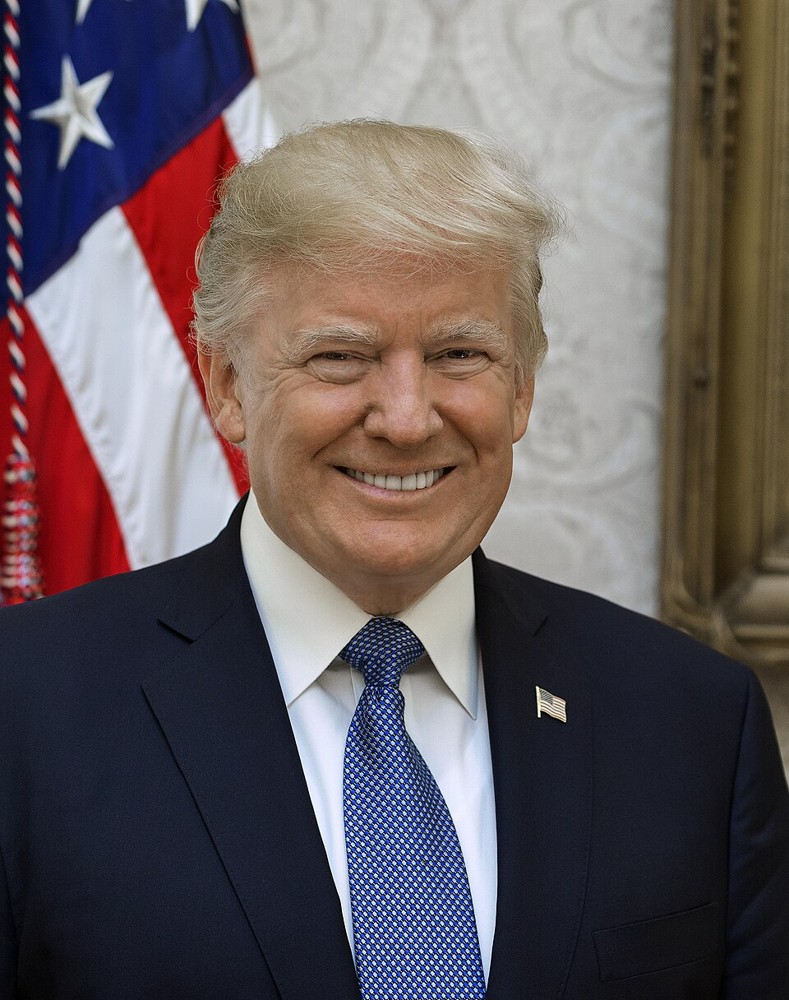
File photograph: Donald Trump’s official portrait, October 6, 2017; this does not depict the October 25, 2026 Michigan rally. Photo: Shealah Craighead / The White House; public domain as a U.S. federal government work. Display copy resized. Photograph source and rights record.

Editorial note: This article draws on the linked sources and may include clearly labeled opinion or unconfirmed reports. We have not independently verified every source claim. Publication does not establish an unconfirmed claim as fact; developing details may change.
Facts first. Side-eye included.
DJF separates what is confirmed from what is claimed—and tells you why this particular mess is worth your time.