Reported remarks with clearly labeled editorial analysis — October 28, 2026. President Donald Trump declined to rule out additional strikes against Iran after the U.S. midterm elections. His answer leaves a consequential question open. It does not establish that a new attack has been ordered, scheduled or tied to a particular election result.
In a Reuters video transcript dated October 28 at Joint Base Andrews, a reporter asked whether Trump planned further strikes after the election. Trump said he could not disclose that and added, “anything's possible.” He also portrayed the United States as being in a strong position and said Iran wanted a deal. Those are the president's characterizations, not independently established conclusions about negotiations.
A refusal to rule it out is not an announcement
The exchange is significant because it puts the possibility of further military action into the public discussion immediately before the November 3 election. But the answer supplies no target, date or decision threshold. It would be misleading to turn the exchange into either a confirmed strike plan or a promise that no additional action will occur.
The same Reuters account reports more than $47 billion in U.S. military costs for the Iran war, citing Pentagon data the news agency obtained. It says the Pentagon did not immediately respond to its request for comment on the estimate. DJF has not obtained that underlying cost document. The figure should therefore remain attributed to Reuters rather than presented as our own audit or as a complete bill for every consequence of the conflict.
DJF analysis: voters deserve more than a geopolitical shrug
Operational secrecy can explain why a president will not announce a military target at an airport. It does not answer every public question about a war. What is the political objective? What conditions would distinguish success from another round of strikes? What information will Congress and the public receive about the costs and the proposed way forward?
Those questions can be asked without pretending an ambiguous answer reveals a secret motive. The election's proximity makes the policy discussion consequential; it does not prove that an attack is being delayed or prepared for electoral reasons. That would require evidence beyond the calendar and a three-word phrase.
The spending report also calls for careful accounting. A military estimate has a scope and a cutoff date. Readers should be able to distinguish costs already recorded from proposed spending, and direct military expenditure from broader economic effects. Demanding that explanation is public accountability, not a claim that the answer is already known.
For now, the documented development is the president's refusal to close off the possibility of further strikes, alongside attributed reporting about the war's cost. The next meaningful update would identify an actual decision, a documented change in negotiations or a clearer official accounting. A campaign-season sound bite should not be asked to impersonate all three.
See the DJF Politics archive for further reporting and labeled commentary.
Photograph and source credit
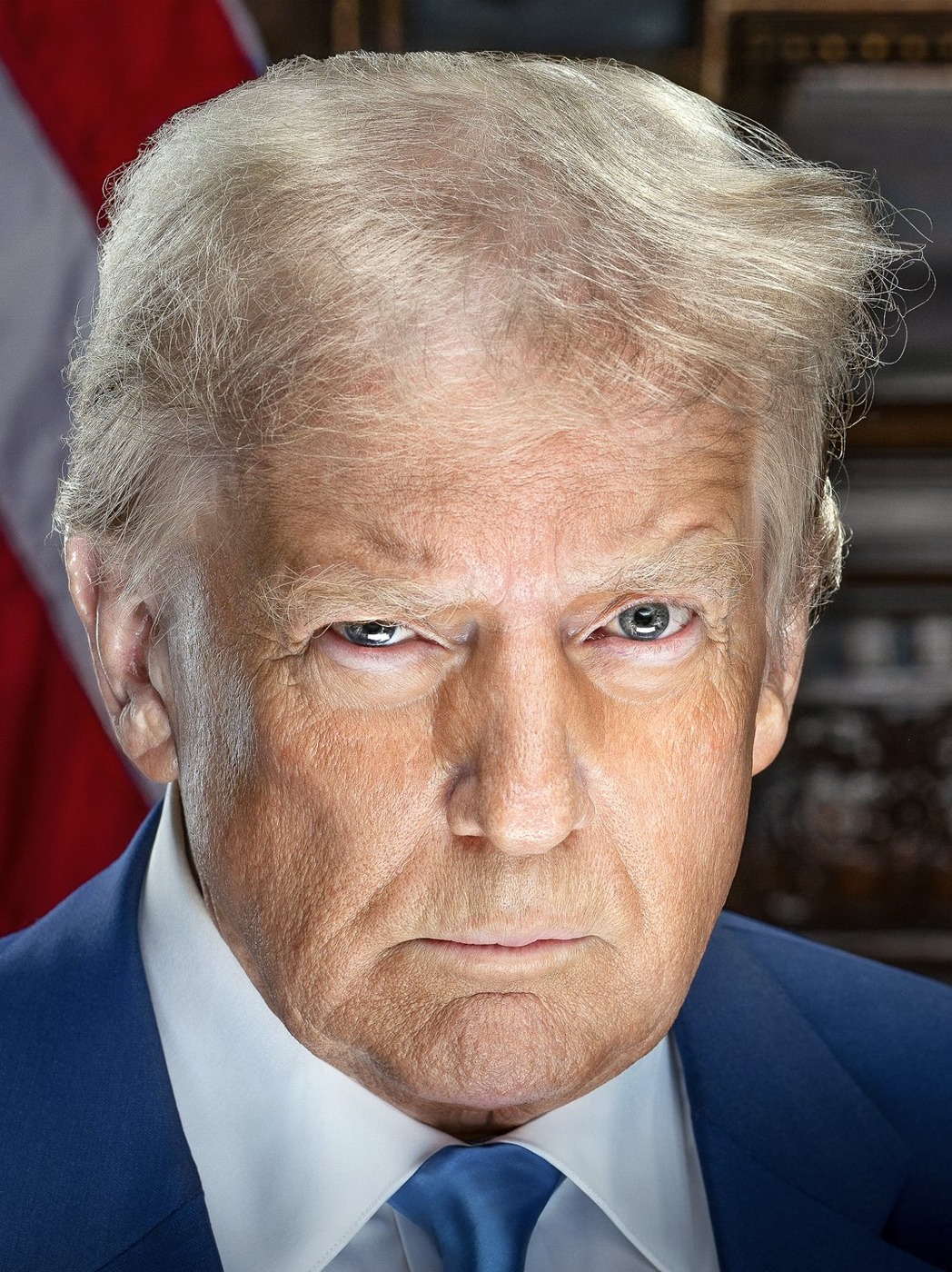
File photograph: Donald Trump's January 15, 2025 inaugural portrait by Daniel Torok. Source, identification and public-domain dedication. The source is a headshot crop; resized for display. It does not depict the October 28 remarks or a military operation.

Editorial note: This article draws on the linked sources and may include clearly labeled opinion or unconfirmed reports. We have not independently verified every source claim. Publication does not establish an unconfirmed claim as fact; developing details may change.
Facts first. Side-eye included.
DJF separates what is confirmed from what is claimed—and tells you why this particular mess is worth your time.