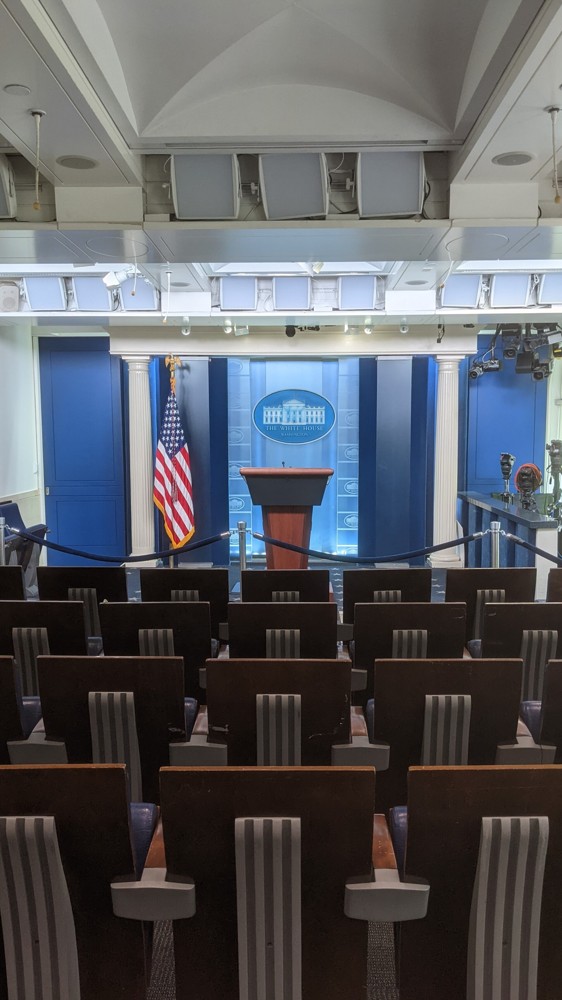
The White House press access appeal is now part of the administration’s fight with CNN, MS NOW and Politico. A preliminary injunction issued by U.S. District Judge Timothy Kelly protects the outlets’ access while their lawsuit continues. Reuters reported October 14 that the administration appealed. Apparently the preferred response to an unwelcome question remains finding a different door to close.
Kelly’s Tuesday order extends protection beyond the earlier temporary restraining order. TheWrap reports that the appeal goes to the D.C. Circuit. The administration argues that restrictions were justified; the outlets say their credentials were revoked in retaliation for coverage. The preliminary injunction is an operative court order, but it is not the final judgment resolving the lawsuit.
According to AP’s account, Kelly found the outlets likely to succeed on constitutional free-speech and due-process claims and concluded that losing access would cause irreparable harm. Reuters reports that the administration invoked national security, while Kelly found the president’s public explanations showed viewpoint discrimination. Those are the parties’ positions and the judge’s preliminary conclusions, rather than a completed appellate ruling.
Analysis: access to a government press area does not promise that an official will enjoy the reporting produced there. The useful distinction is between enforcing legitimate access rules and deciding that criticism itself disqualifies a journalist. Once the government offers access to competing outlets, removing particular ones because it dislikes their viewpoint raises a different issue from declining an interview.
This is also why the legal stage matters. An appeal challenges an order; it does not automatically mean that the order has vanished. Readers should look for a separate stay or appellate ruling before accepting claims that the access protection is already over. A notice of appeal is paperwork with a purpose, not an administrative trapdoor beneath the judge’s decision.
The public interest extends beyond affection for any of these organizations. People can criticize a newsroom’s mistakes, demand corrections, and question its judgment while still opposing government retaliation for disfavored coverage. The same principle needs to work when the outlet is one you cannot stand. Constitutional protection becomes rather less impressive when it only covers your preferred subscription.
The next consequential developments will come from the appeals court and the underlying litigation. For now, the preliminary injunction protects the specified access, and the administration is seeking to overturn it. The press room remains a workplace for reporting, not a loyalty-program lounge where favorable headlines earn priority boarding.
Sources and photograph
Reuters, October 14, 2026. TheWrap, October 14, 2026. AP, October 14 coverage.
File photograph of the White House briefing room; not the hearing or an image of journalists affected by the ban. Photo: CabbageFuel; CC BY-SA 4.0. Display copy resized. Original photograph and rights record. Image-use terms.

More from this Daily Junk Food section.
Facts first. Side-eye included.
DJF separates what is confirmed from what is claimed—and tells you why this particular mess is worth your time.

Dana Side-Eye
Receipts, Rumors & Internet NonsenseDana reads the fine print, checks the timeline, and keeps one eyebrow permanently raised. She covers viral claims, internet pile-ons, and suspiciously convenient explanations.
“Screenshots are forever. So is the side-eye.”