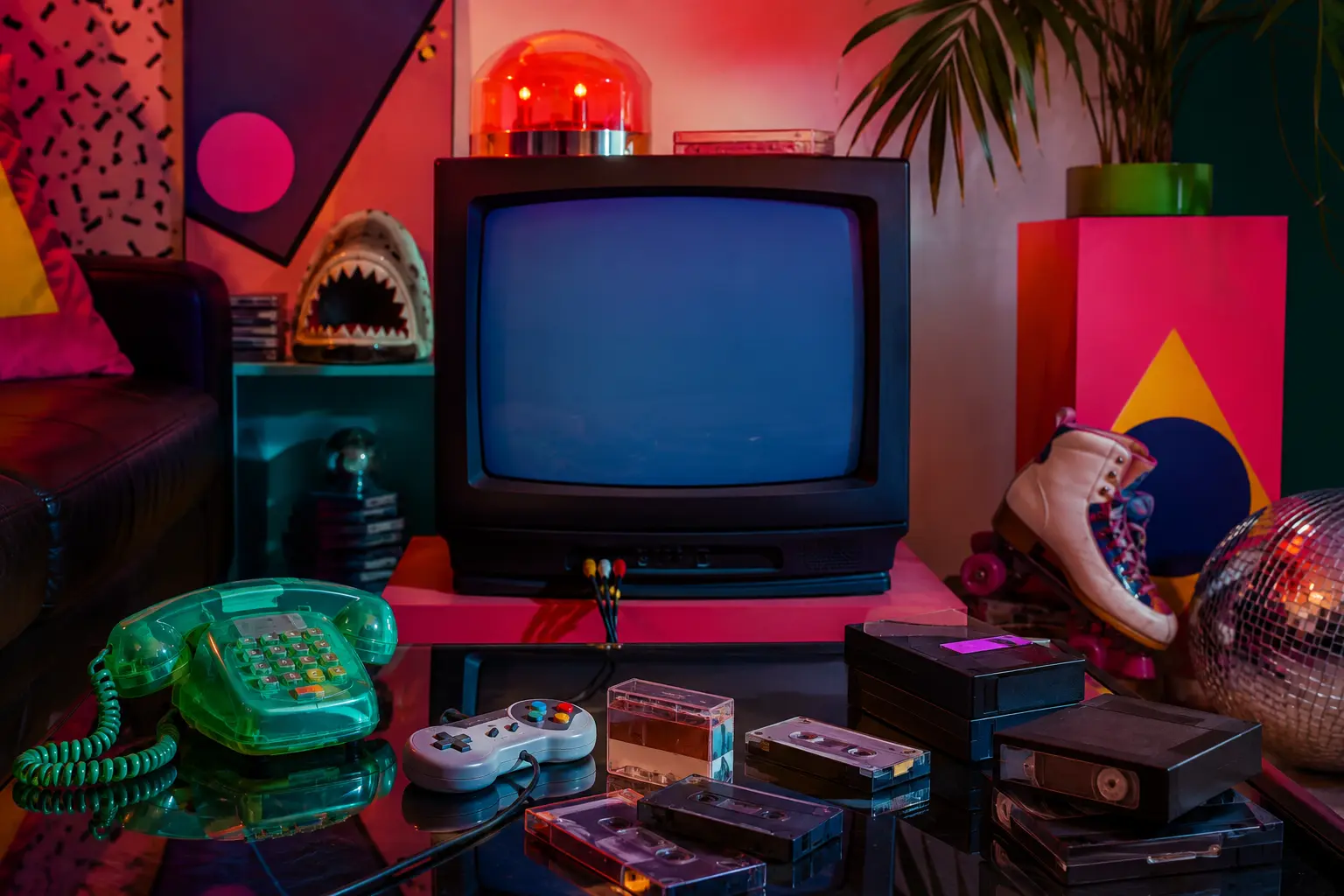
Walk into a store, scroll through social media, or glance at the newest “must-have” gadget and you may feel as though somebody accidentally hit rewind. Chunky sneakers are back. Translucent plastic is back. Compact cameras are desirable again. Young people are buying records, cassettes, and wired headphones as if we did not spend decades escaping all three.
The 1990s are not simply being remembered. They are being repackaged as new.
Nostalgia has always had a schedule
Pop culture tends to recycle itself after roughly two or three decades. That is long enough for the people who lived through an era to miss it and for a younger generation to discover it without remembering the inconvenient parts.
To someone who grew up with dial-up internet, a landline phone is a household utility. To someone raised with a smartphone, it is mysterious decor. The object did not change. The context did.
The last mostly offline decade
The 1990s occupy an unusual place in memory. Technology was everywhere, but it had not yet followed us into every room, car, conversation, and awkward pause. You could leave the house without being reachable. A photograph could remain unseen until the film was developed. A bad opinion might disappear after lunch instead of becoming a permanent screenshot.
That distance makes the decade look calmer than it really was. The 1990s had plenty of anxiety, bad fashion decisions, and machines that required a family member to smack them. What people miss is not perfection. They miss the feeling of having an off switch.
Old technology now feels physical
Modern technology is designed to disappear into one smooth rectangle. Older technology announced itself. Buttons clicked. Tapes clunked. Television sets hummed. Phones had cords that stretched across the kitchen like a domestic tripwire.
Those objects now feel tactile and specific. Using them requires a tiny ritual, and rituals are memorable. Streaming gives us nearly everything, while physical media gives us one deliberate choice. Sometimes one choice feels like a luxury.
Gen X became the nostalgia department
Every generation eventually watches its teenage years become a theme. Gen X simply got there while still insisting it does not care. The music that once worried parents plays in grocery stores. The clothes once banned from school appear in expensive fashion campaigns. The weird little objects from a childhood bedroom have become collectibles.
There is a special kind of comedy in watching another generation enthusiastically discover something you remember being discontinued for a reason.
It is not really about going backward
Most people do not actually want the full 1990s experience. They want the color, personality, music, and relative simplicity without losing navigation apps, modern medicine, or the ability to settle an argument in ten seconds.
Revival culture works by keeping the emotionally satisfying parts and quietly leaving the inconveniences behind. The result is not a return to the past. It is a remix: old shapes, new technology, better screens, and much higher prices.
The 1990s feel new because memory has edited them, younger people have reinterpreted them, and modern life has made their slower pace feel radical. Somewhere, a translucent phone is ringing. Nobody knows whether to answer it.
Facts first. Side-eye included.
DJF separates what is confirmed from what is claimed—and tells you why this particular mess is worth your time.