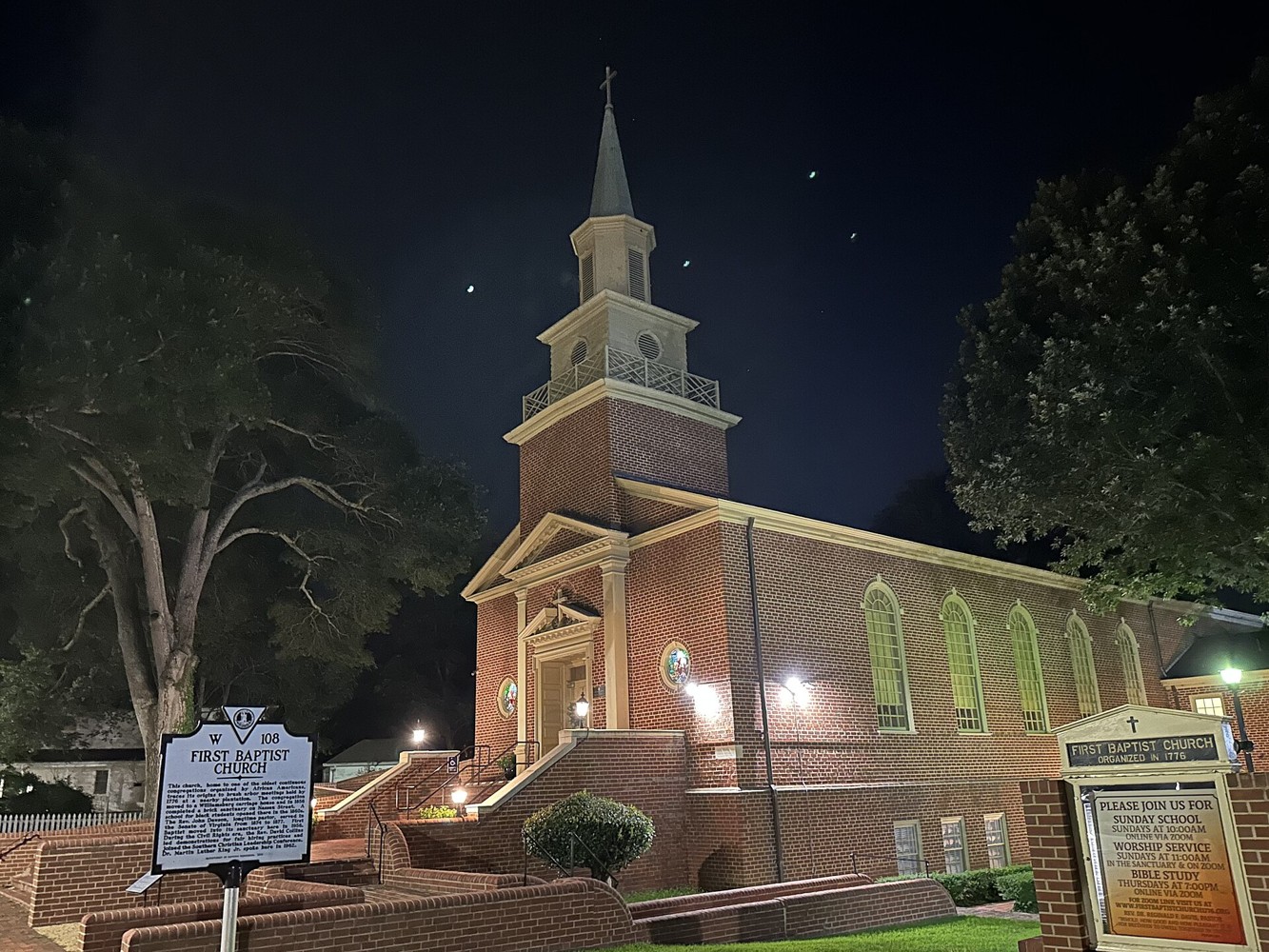
The Williamsburg Black church reconstruction is restoring more than a building. AP’s October 12 report describes a recent rededication of the African Baptist Meeting House, tied to First Baptist Church of Williamsburg. The congregation was founded in 1776 by enslaved and free Black people. Its history belongs inside the national story, rather than somewhere behind the visitor parking instructions.
The report traces the first meeting house to 1805 and a replacement building to 1856, following a destructive tornado. The site later became a parking lot under Colonial Williamsburg. Archaeologists uncovered the original foundation in 2021 and identified 62 graves associated with the congregation. The reconstruction honors that physical and community history; it is not an untouched original building miraculously rediscovered intact.
The dedication brought residents together while finishing work remained. AP reports that the project still included plans for an accessible ramp and other final details. The modern congregation continues separately at its later church. This distinction matters for visitors: a reconstructed historic meeting house, an active congregation and the completion schedule for preservation work are related, but not identical.
Analysis: historic presentation always involves choices about what becomes visible. A carefully restored street can look complete while leaving entire communities out of the account. When a congregation’s meeting place becomes a parking surface, the absence itself begins telling a story, even if nobody puts that story on a polished interpretive sign.
Reconstruction cannot undo slavery, exclusion or decades of neglect. What it can do is change what visitors are asked to recognize. The people who gathered, worshipped, built and buried their neighbors here were participants in American history, not decorative background for someone else’s founding narrative. Their faith community does not need to borrow importance from a more famous nearby building.
There is also a useful difference between reverence and accuracy. Respecting a place does not require pretending every board survived from its first construction. Clear interpretation can explain what archaeology established, what later builders recreated and what remains uncertain. That candor makes preservation stronger. A museum should be able to show its homework without feeling that the atmosphere has been ruined.
The recent celebration marks a meaningful return of visibility, with remaining construction details still to follow. The next chapter belongs to how the site is interpreted and used, and how the congregation’s continuing life is represented. History does not become more inclusive merely by adding a sentence to a brochure. Sometimes it takes removing the assumption that the parking lot was the whole story.
Sources and photograph
Associated Press / Religion News Service, Nancy Jiang, October 12, 2026.
File photograph of the congregation’s later church building; not the reconstructed African Baptist Meeting House or the October dedication. Photo: Pbritti; CC0. Display copy resized. Original photograph and rights record. Image-use terms.

More from this Daily Junk Food section.
Facts first. Side-eye included.
DJF separates what is confirmed from what is claimed—and tells you why this particular mess is worth your time.

Dana Side-Eye
Receipts, Rumors & Internet NonsenseDana reads the fine print, checks the timeline, and keeps one eyebrow permanently raised. She covers viral claims, internet pile-ons, and suspiciously convenient explanations.
“Screenshots are forever. So is the side-eye.”