Developing report and labeled analysis — October 27, 2026. A federal grand jury in Washington declined to indict Cassidy Hutchinson over her January 6 testimony, according to the Associated Press and ABC News. The decision was reported Tuesday afternoon. The testimony at issue dates to 2022; this is a new development in the effort to prosecute her, not new testimony.
What remains unverified by DJF: We have not obtained the proposed indictment or the sealed grand-jury evidence. The identification of Hutchinson as the subject of the rejected case relies on those news organizations’ sources. The precise proposed allegations were not publicly clear in the initial AP account.
The grand jury did not supply the requested indictment
CNN reported that a Justice Department lawyer told a judge Tuesday that grand jurors had submitted a non-concurrence. The lawyer did not name a defendant in that appearance; people familiar with the matter identified Hutchinson to the network.
That distinction matters. A reporter’s sourced identification and an open-court statement are different pieces of evidence. Combining them may support a careful report. It does not give us permission to invent the contents of a document we have not seen.
The disputed account still needs its context
Hutchinson worked for White House chief of staff Mark Meadows. ABC reports that Trump has strongly denied her account of his conduct in the presidential vehicle on January 6, and other White House personnel did not corroborate the particular allegation that he lunged toward the steering wheel. Her vehicle account was secondhand, rather than something she claimed to have witnessed inside the vehicle.
Hutchinson has stood by her testimony. ABC said neither she nor a DOJ spokesperson immediately provided a response Tuesday. Those are the network’s reporting efforts; DJF is not claiming to have conducted an interview or requested a comment itself.
A charging decision is not a trial verdict
DOJ’s own explanation of federal charging says at least twelve grand jurors must concur for an indictment. A grand jury considers whether charges should proceed. It is not the trial jury that decides guilt beyond a reasonable doubt.
The rejection therefore should not be inflated into a ruling authenticating every detail of Hutchinson’s testimony. Nor should critics describe the proposed charges as though they were an established conviction. The development supported by the reporting is the failure to obtain this indictment.
DJF analysis: political fury cannot sign the charging paper
Washington has a bottomless supply of people demanding that somebody else be prosecuted. The useful question is what evidence survives the actual procedure. A loud demand does not become stronger because it comes with a presidential audience.
Readers following our coverage of the latest Comey prosecution effort should apply the same discipline here: identify the filing, the procedural result and the remaining uncertainty. A setback for prosecutors is news. Turning it into an all-purpose certificate of truth would be another shortcut.
File photograph and credit
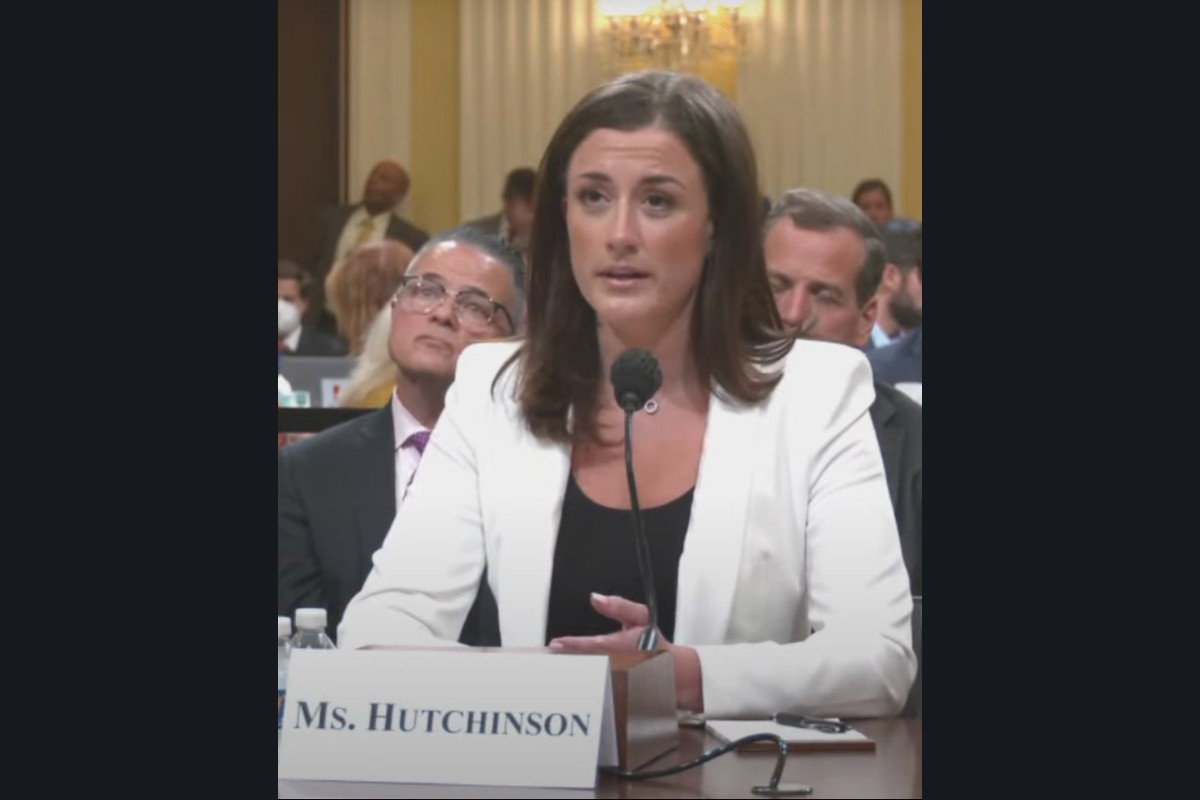
Hutchinson testifying at the June 28, 2022 House select-committee hearing, from the committee’s video. This is a historical camera image, not Tuesday’s grand-jury proceeding. Image: United States House Select Committee on the January 6 Attack; source, date and public-domain status. Resized and padded for display; the photograph’s composition is preserved.

Editorial note: This article draws on the linked sources and may include clearly labeled opinion or unconfirmed reports. We have not independently verified every source claim. Publication does not establish an unconfirmed claim as fact; developing details may change.
Facts first. Side-eye included.
DJF separates what is confirmed from what is claimed—and tells you why this particular mess is worth your time.