The California ballot constructive denial appeal begins with an unusual admission: the district judge has not ruled. In an October 22 notice, the Justice Department nevertheless asked the Ninth Circuit to review what it characterizes as the effective denial of emergency relief. Reuters reports that the underlying request seeks to prevent California from counting more than 20,000 mail ballots until the citizenship of voters the administration questions can be verified.
The primary filing in United States v. California, case 2:26-cv-12025, says the department requested a ruling by noon October 22. It argues that Judge David O. Carter’s silence, given the asserted urgency, has the practical effect of refusing an injunction. That is the government’s procedural argument. It is not a finding that the challenged voters are noncitizens, that their ballots are unlawful, or that an appellate court has accepted the argument.
Reuters reports that Carter scheduled a hearing for the following week. The distinction matters: a party asking for emergency treatment does not itself establish when the court must decide, what evidence proves, or how a reviewing court will respond. The notice initiates another procedural step; it does not supply the missing merits ruling.
Our take: the phrase constructive denial sounds like something customer service invented after leaving you on hold. In court, however, the actual issue is serious: whether waiting can have the same practical effect as refusing relief. That requires legal reasoning. Impatience, even when printed on official stationery, is not a self-executing judicial order.
The people attached to the challenged ballots also should not disappear behind a large round number. An allegation about eligibility requires evidence and an appropriate process. Reporting can explain the government’s request while keeping the status of that request separate from a determination about individual voters. Counting allegations is easier than establishing them, which is precisely why the distinction earns space.
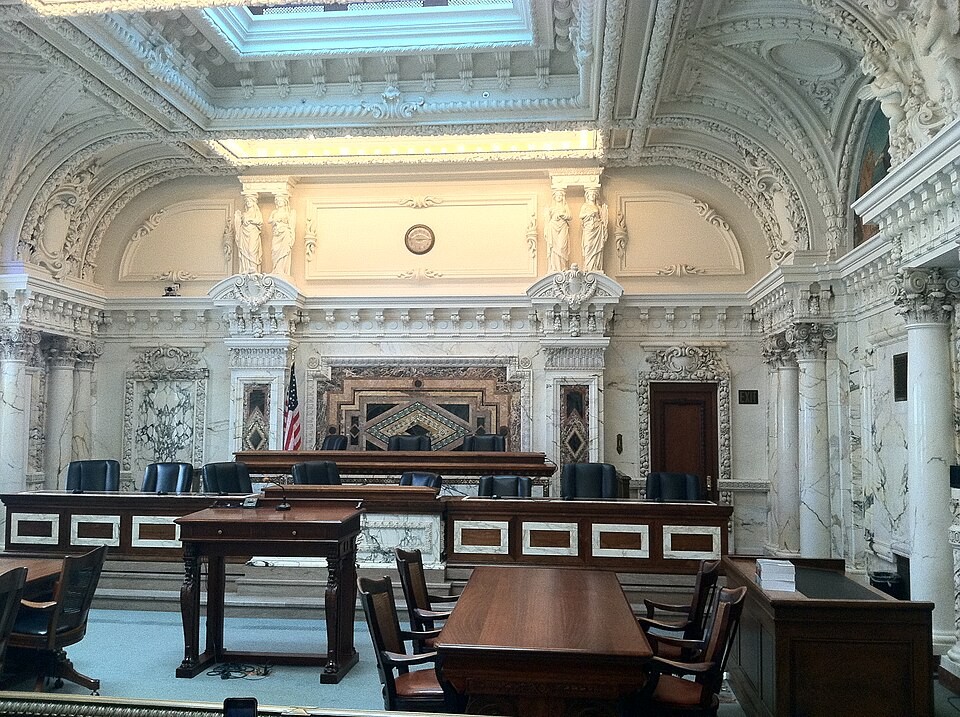
The next useful development would be an appellate response, the scheduled district-court proceeding, or an actual ruling explaining the evidence and legal standard. Until then, the confirmed story is the filed appeal and its theory of silence. The photograph shows an archival Ninth Circuit courtroom, not a hearing that has already decided whose ballots count. The paperwork has moved; the reported outcome has not magically arrived with it.
Sources and photograph
United States, October 22 notice of appeal, Document 74. Reuters, October 23 report on ballots and requested intervention.
Archival June 3, 2011 photograph of a courtroom in the Ninth Circuit’s San Francisco courthouse; not this case’s hearing. Photo: Sam Wheeler; CC BY-SA 3.0. Display copy resized. Where applicable, the resized photograph retains the stated ShareAlike license. Original photograph and rights record. Image-use terms.

More from this Daily Junk Food section.
Facts first. Side-eye included.
DJF separates what is confirmed from what is claimed—and tells you why this particular mess is worth your time.

Dana Side-Eye
Receipts, Rumors & Internet NonsenseDana reads the fine print, checks the timeline, and keeps one eyebrow permanently raised. She covers viral claims, internet pile-ons, and suspiciously convenient explanations.
“Screenshots are forever. So is the side-eye.”