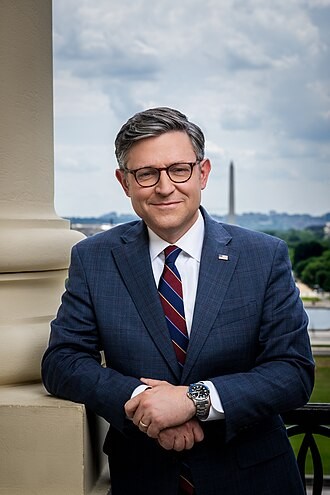
The Mike Johnson faith story in Saturday’s Associated Press profile is about how the speaker frames his campaign to retain the House majority. Reporting from an October 14 stop in Bangor, Maine, Lisa Mascaro describes Johnson’s confidence, extensive campaigning and religious outlook. The report was published October 17. It is an account of his case for optimism, not a result from the November election.
Johnson connected campaigning to a biblical imperative to compete and expressed belief that Republicans would retain a workable majority. AP also describes nearly half a billion dollars raised for House Republicans and an itinerary spanning more than twenty states and forty districts through November. Those are elements of his campaign argument. They do not independently establish how any undecided voter will cast a ballot.
The story’s religious significance lies in the relationship between conviction and political expectation. Faith can explain how a public official understands persistence, service or personal purpose. A forecast about congressional control is a different proposition. Treating the two as interchangeable would turn a statement of belief into something resembling an official weather alert, only with less agreement about the measuring equipment.
Analysis: voters can take religious language seriously without accepting that a party’s preferred outcome has acquired divine certification. The useful questions concern what the official says the belief requires and how that connects to decisions made in office. Those are questions about public conduct and stated reasoning. Mocking worshippers generally would tell readers much less than examining the specific political claim.
Campaign confidence is also a performance with an audience. Supporters, candidates and donors hear statements intended to sustain participation. That does not mean a confident statement is insincere, but it does mean readers should understand its function. A party leader speaking on the trail is making a case for continuing the effort, rather than publishing a neutral audit of every possible electoral outcome.
The date distinction matters here. Saturday’s report describes an interview during a Wednesday campaign stop. There is no need to repackage it as a fresh Saturday speech or to pretend the voting has already occurred. For readers trying to follow a busy campaign, accurate dates are not decorative garnish. They are how you avoid serving yesterday’s statement as tomorrow’s certified result.
The verified development is a new reported interview showing the speaker’s faith-inflected argument for retaining power. The public can assess that argument, and the election will supply its own result. Until then, religious conviction, fundraising and an eventual majority remain separate subjects. Even the most confident campaign bus still has to stop at the part where people actually vote.
Sources and photograph
Associated Press, Lisa Mascaro, October 17, via KSAT.
Official file portrait; not the October 14 campaign stop or AP interview in Maine. Photo: United States Congress; Public domain. Display copy resized. Original photograph and rights record. Image-use terms.

More from this Daily Junk Food section.
Facts first. Side-eye included.
DJF separates what is confirmed from what is claimed—and tells you why this particular mess is worth your time.

Dana Side-Eye
Receipts, Rumors & Internet NonsenseDana reads the fine print, checks the timeline, and keeps one eyebrow permanently raised. She covers viral claims, internet pile-ons, and suspiciously convenient explanations.
“Screenshots are forever. So is the side-eye.”