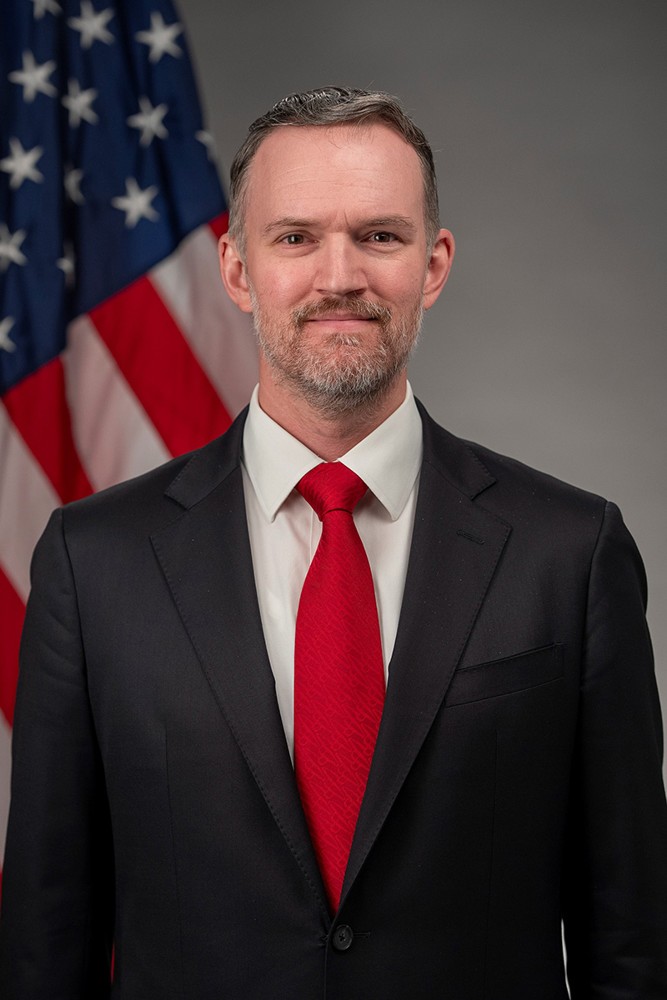
The Greer interfaith economic speech on October 16 put work, family and moral responsibility into the same discussion as government policy. U.S. Trade Representative Jamieson Greer addressed the G20 Interfaith Forum in Salt Lake City. According to Deseret News, he urged religious leaders to promote self-reliance and support policies that put families back to work. The podium apparently came with an economics attachment.
The newspaper’s account says Greer argued that governments and religions should give priority to people as producers rather than treating them principally as consumers. He also urged faith leaders to discourage addictive gambling and personal debt. These are the positions he advanced in the speech, not findings that a particular economic programme has achieved those objectives.
The forum’s October 16 announcement identifies Greer and former Australian prime minister Scott Morrison as Friday keynote speakers. It describes a call for faith communities to contribute their moral perspective and practical experience to economic and development policy. That is a useful description of the event’s ambition; it is not proof that participating religious traditions endorsed one common platform.
Analysis: a discussion of dignity at work can be more substantial than a discussion that treats every household as merely a shopping basket. But the producer-versus-consumer framing also leaves questions. What about people providing unpaid care, people unable to work or people between jobs? A policy argument needs to account for those lives rather than quietly moving them outside the frame.
Faith communities can ask those questions without becoming campaign subsidiaries. Their moral concerns may overlap with a government’s priorities in one area and challenge them in another. Inviting religious participation is not the same as receiving religious approval. The invitation becomes more meaningful if disagreement is welcome after the introductory applause has finished.
Likewise, the language of responsibility does not eliminate the need to examine outcomes. A proposal described as supporting families should still be assessed for who benefits, who bears costs and whether the promised mechanism works. A stirring sentence can explain a value. It cannot, on its own, establish a programme’s results. The spreadsheet remains stubbornly resistant to inspirational lighting.
The news here is a current official’s argument for a stronger role for faith in economic discussion, delivered October 16. Readers should distinguish that argument from either a universal religious position or an independently established economic verdict. Moral language belongs in public debate. So do specific questions, especially when a very confident person has just finished explaining the common good.
Sources and photograph
Deseret News, October 16 speech account. G20 Interfaith Forum, October 16 keynote announcement.
Official file portrait of Jamieson Greer; not a photograph of the October 16 speech. Photo: Office of the United States Trade Representative; Public domain. Display copy resized. Original photograph and rights record.

More from this Daily Junk Food section.
Facts first. Side-eye included.
DJF separates what is confirmed from what is claimed—and tells you why this particular mess is worth your time.

Dana Side-Eye
Receipts, Rumors & Internet NonsenseDana reads the fine print, checks the timeline, and keeps one eyebrow permanently raised. She covers viral claims, internet pile-ons, and suspiciously convenient explanations.
“Screenshots are forever. So is the side-eye.”