BBC religion programming cuts are part of a wider radio-reduction plan challenged by the National Union of Journalists in an October 15 statement. The union’s BBC Audio chapel says The Daily Service faces a significant budget reduction and a proposed new digital format. The immediate news is that warning about planned changes, not a claim that every religious broadcast has already disappeared.
The chapel says Radio 4 teams in Salford face 11 post closures and raises concerns about digitally excluded listeners. Its statement also identifies reductions affecting other programming, including Loose Ends and In Touch. These details come from the union, which represents affected staff. They should be attributed as such rather than presented as an independently audited final implementation plan.
The union links the changes to the BBC’s broader cost-reduction programme and calls for government intervention and sustainable funding through Charter Renewal. Religion Media Centre’s October 16 bulletin reports that there had been no BBC response to this particular statement at the time of its account. It also notes the corporation’s earlier explanation that substantial savings and growth on digital platforms were necessary.
Analysis: a digital format can be useful without being an equivalent service for everyone who currently listens. The relevant question is not whether the internet exists. Most of us have noticed. It is whether the intended audience can reliably find, access and use the replacement, and whether the programme retains the qualities that made it valuable in the first place.
Religious broadcasting occupies an awkward place in a spreadsheet. Its value is not limited to how many clips become widely shared or how efficiently a person can be moved into an app. A familiar broadcast can provide a point of connection for someone whose daily routine has few other shared moments. That is an editorial argument about service, not a claim that every existing format must remain unchanged forever.
The funding problem also deserves an honest description. Protecting a valued programme requires choices about resources, not merely declaring that the programme is important. But a saving is not fully explained until its consequences are described. Moving a service online may reduce some costs while transferring practical burdens to the audience. Those burdens belong in the discussion, not in the footnotes.
The next useful update will identify the actual decisions, timetable and access arrangements. For now, the NUJ has put religion output and excluded listeners into the public argument over cuts. “There will be a digital version” may be part of an answer. It is not a complete answer to somebody who cannot use it. Public service is supposed to notice that person before the migration email goes out.
Sources and photograph
National Union of Journalists, October 15 statement. Religion Media Centre, October 16 bulletin.
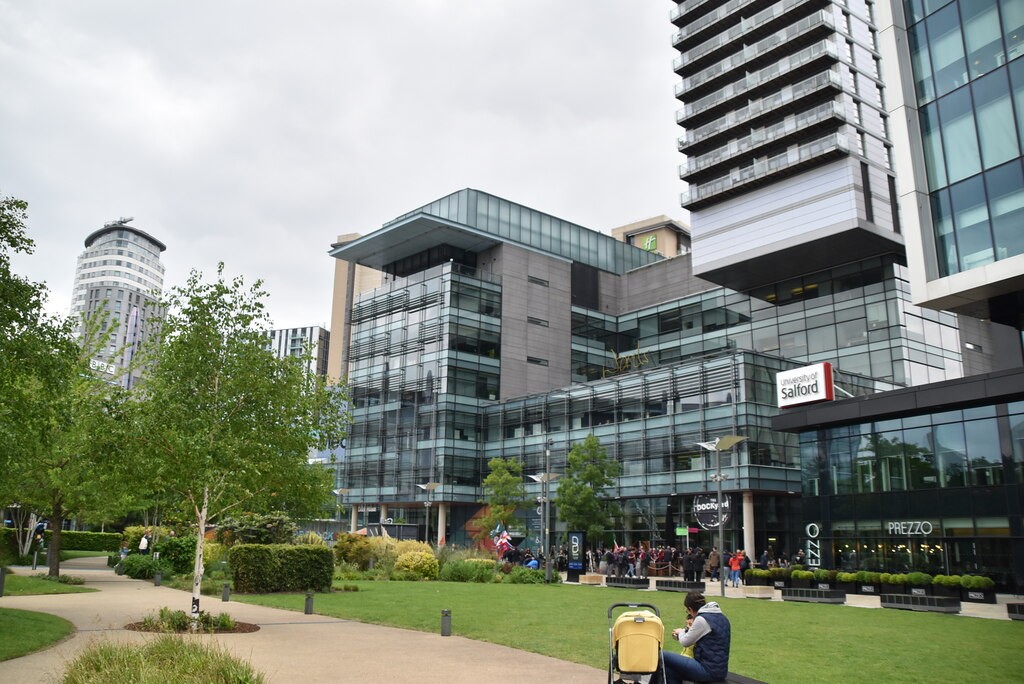
File photograph of BBC buildings at MediaCityUK in Salford; not a Daily Service broadcast or a photograph of the proposed staffing changes. Photo: N Chadwick; CC BY-SA 2.0. Display copy resized. Original photograph and rights record. Image-use terms.

More from this Daily Junk Food section.
Facts first. Side-eye included.
DJF separates what is confirmed from what is claimed—and tells you why this particular mess is worth your time.

Dana Side-Eye
Receipts, Rumors & Internet NonsenseDana reads the fine print, checks the timeline, and keeps one eyebrow permanently raised. She covers viral claims, internet pile-ons, and suspiciously convenient explanations.
“Screenshots are forever. So is the side-eye.”