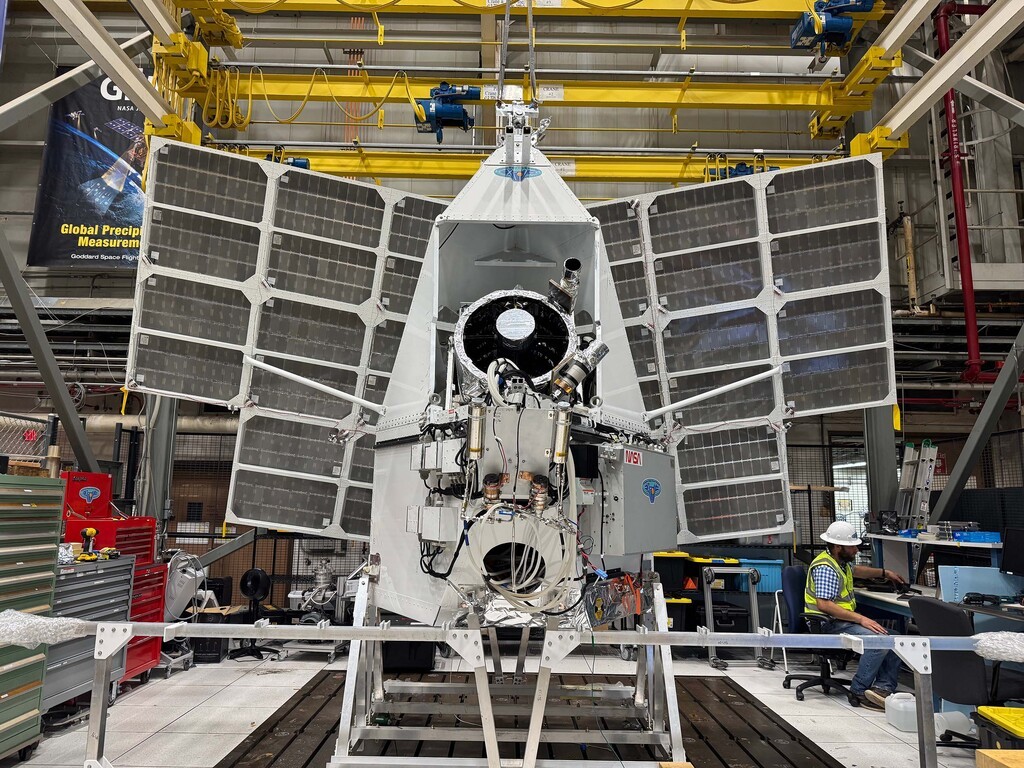
NASA’s October 14 EXCITE resource update offers a useful reason to look at a less familiar route into exoplanet research: a telescope carried high above Earth by a scientific balloon. The NASA EXCITE exoplanet mission is designed to investigate atmospheres around hot Jupiters. The newly published resource is not an announcement of a detected organism, a technosignature, or completed new science results.
EXCITE stands for EXoplanet Climate Infrared TElescope. NASA describes a helium-balloon platform intended to carry the instrument to about 132,000 feet, or 40 kilometers, above 99.5 percent of Earth’s atmosphere. That reduces interference affecting the infrared wavelengths the telescope is designed to observe. The balloon is part of the observing system, rather than a cheaper-looking spacecraft someone forgot to finish.
Its targets are gas giants on very short orbits, with the same side facing their star. NASA’s mission overview describes observations across a planet’s orbit using phase-resolved spectroscopy. Different orbital phases let scientists investigate how the atmosphere’s emission and absorption change as different portions of the planet become visible. The objective is a changing atmospheric picture, rather than a single averaged snapshot.
NASA says the measurements can help investigate heat transport by winds, temperature at different atmospheric depths, and molecules such as water, methane and carbon dioxide. Those molecules are not being announced here as fresh detections. They describe the instrument’s intended scientific questions. A mission’s capabilities and its actual findings belong in separate sentences until data and analysis connect them.
The agency’s preparation coverage documents the payload at Goddard during the first half of 2026 and shipment from the Columbia Scientific Balloon Facility in August. It describes plans for a long-duration Antarctic flight, potentially offering weeks of observing time and a favorable view for following complete planetary orbits. This article does not independently confirm a new launch date, a successful Antarctic flight, or the delivery of a new dataset.
Analysis: atmospheric research matters to the wider study of other worlds because interpretation depends on physical context. Heat redistribution, chemistry and viewing geometry can all affect what an observation means. A scorching giant planet need not be habitable to be a useful laboratory for developing and checking those tools. Learning how to read a difficult atmosphere is progress even when nobody is waving from the clouds.
Our featured photograph shows real EXCITE hardware during preparation, with the date and NASA credit retained. NASA’s October 14 resource includes an artist’s concept, which we have not used as a photograph. The factual story is a scientific mission’s design and preparation, revisited through a fresh official resource. The next substantive milestone will need its own documentation. Alien confirmation remains absent; an interesting experiment does not require it.
Sources and photograph
NASA Science resource, October 14, 2026. NASA Science, EXCITE mission overview. NASA Goddard Scientific Visualization Studio, EXCITE preparation coverage.
EXCITE hardware at NASA Goddard on June 11, 2026. Real preparation photograph, not an alien planet, a launch image, or an artist’s concept. Photo: NASA/Scott Wiessinger; NASA informational/editorial media use. Display copy resized. Original photograph and rights record. Image-use terms.
More from this Daily Junk Food section.
Facts first. Side-eye included.
DJF separates what is confirmed from what is claimed—and tells you why this particular mess is worth your time.

Dana Side-Eye
Receipts, Rumors & Internet NonsenseDana reads the fine print, checks the timeline, and keeps one eyebrow permanently raised. She covers viral claims, internet pile-ons, and suspiciously convenient explanations.
“Screenshots are forever. So is the side-eye.”