The Osaka biosignature sensor receiving fresh attention October 16 is a laboratory technique, not an alien discovery. Researchers led by the University of Osaka published the peer-reviewed work in Nature Communications on October 5. Their nanogap device uses electrical measurements to help distinguish the mirror-image forms of amino acids, a chemical property relevant to the search for life beyond Earth.
The paper reports using quantum-tunneling currents and machine-learning analysis. Its tests include extracts from the Murchison meteorite and Chile’s Atacama Desert. Those samples let researchers examine complicated material rather than only purified compounds. They do not turn the meteorite into a confirmed biological specimen or the desert into an extraterrestrial environment. Testing a method and discovering life are very different announcements.
The reported performance also needs its labels attached. Individual mirror-image forms were distinguished with accuracy above 80 percent in one test. A blind test involving 39 amino acids exceeded 50 percent for identifying both identity and handedness, while a four-amino-acid mixture test exceeded 66 percent. Those are separate tasks, not one universal accuracy score that can be pasted onto every future sample.
The authors discuss background signals, low-abundance material and the need for further work on the mechanism behind the discrimination. They also note that nonbiological processes can produce an imbalance between mirror-image forms. Such an imbalance may therefore be relevant to a biosignature investigation without independently settling whether biology caused it. The paper is an analytical advance, not a cosmic paternity test.
Analysis: the most useful part of this development is its attempt to improve a measurement that a larger investigation might need. Life detection is not usually a single dramatic instrument reading. Researchers must ask what was measured, what else could produce it and how contamination or the surrounding chemistry affects the result. A sensor can make one of those questions more tractable without answering all the others.
This also separates the study from recent Mars research about whether chemical clues could survive radiation. That question concerns preservation; this one concerns discrimination during analysis. Related scientific goals do not make the projects interchangeable. Neither paper should be converted into a claim that a spacecraft has already returned a confirmed organism or that a flight-ready version of this sensor has been demonstrated.
The verified development is an electrical approach tested on real, chemically complex samples, with specific reported strengths and limitations. Fresh coverage makes it worth explaining now, while the original publication date stays visible. The speculative part is what future instruments might eventually do with it. That possibility is interesting enough without telling the universe it has already failed a test it has not taken.
Sources and photograph
Nature Communications, Ohshiro and colleagues, October 5 research paper. University of Osaka SANKEN, October 5 research announcement. ScienceAlert, October 16 coverage establishing the current news peg.
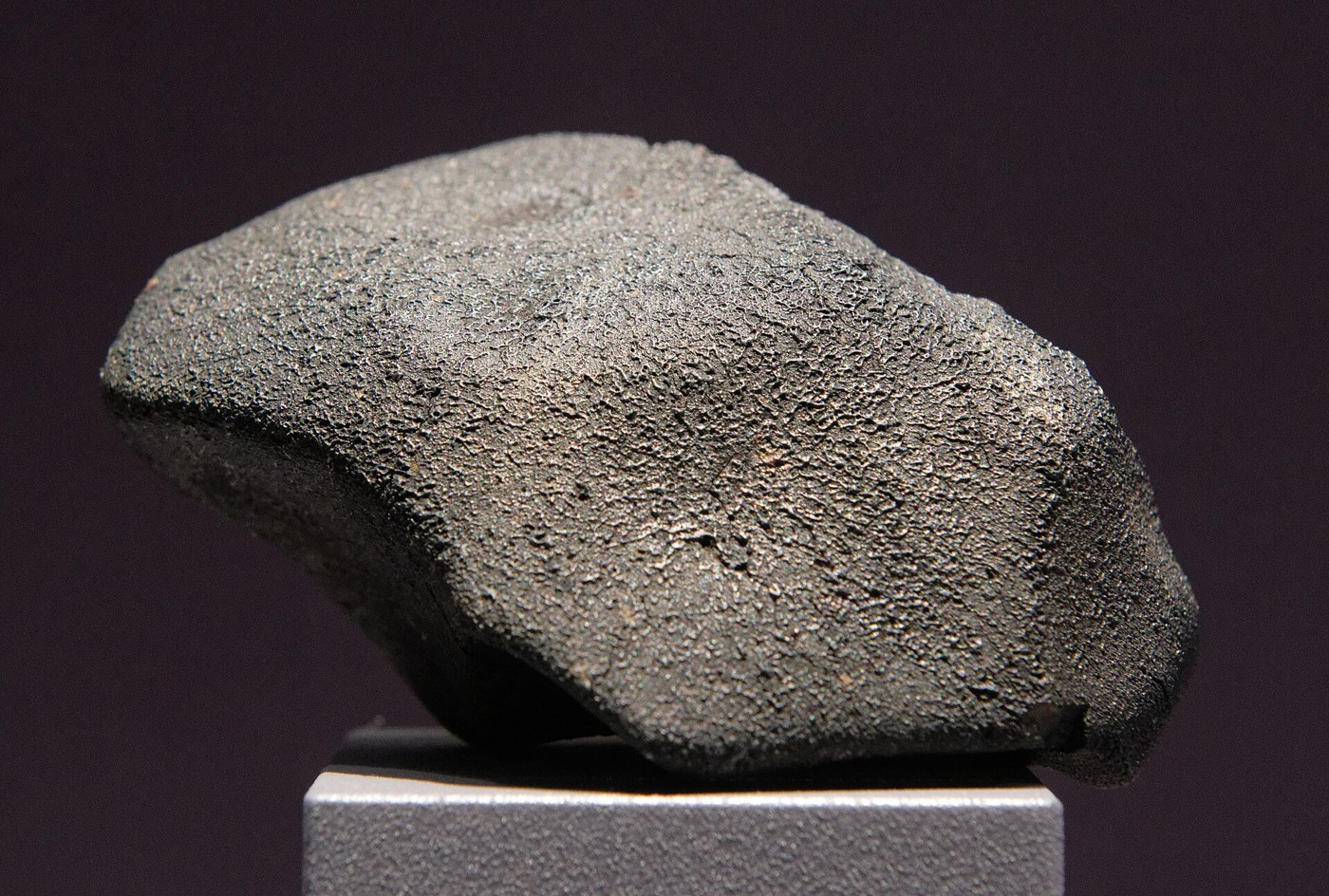
File photograph of a displayed Murchison meteorite specimen; not the microchip, the specific extract tested in the study or evidence of extraterrestrial life. Photo: Marie-Lan Taÿ Pamart; CC BY 4.0. Display copy resized. Original photograph and rights record. Image-use terms.

More from this Daily Junk Food section.
Facts first. Side-eye included.
DJF separates what is confirmed from what is claimed—and tells you why this particular mess is worth your time.

Dana Side-Eye
Receipts, Rumors & Internet NonsenseDana reads the fine print, checks the timeline, and keeps one eyebrow permanently raised. She covers viral claims, internet pile-ons, and suspiciously convenient explanations.
“Screenshots are forever. So is the side-eye.”