A new Mars life-detection preprint addresses a frustrating possibility: a promising chemical clue might retain part of its original pattern while becoming too scarce to measure usefully. Dimitra Atri’s paper, submitted to arXiv October 13, models amino-acid preservation and chirality at Oxia Planum. This is a recent research proposal about interpreting possible future measurements, not an announcement that Martian organisms have been found.
Chirality concerns molecular handedness, the existence of mirror-image forms. An imbalance between forms can be relevant to biosignature research. The paper separates two problems: whether a pattern of handedness survives, and whether enough material remains to quantify it. Preserving a potentially interesting ratio does not help much if the instrument cannot adequately measure the molecules involved.
Atri applies the model to the Mars Organic Molecule Analyzer associated with the ExoMars Rosalind Franklin rover. It combines radiation estimates with laboratory destruction behavior and assumptions about molecular interconversion. Its conclusions depend on conditions including mineral chemistry and how long material has remained in place. These are model-dependent boundaries, not a measurement of the actual original organic inventory at Oxia Planum.
NASA’s mission background explains that MOMA is intended to characterize organic molecules in samples obtained by the rover. Its broader instrument research discusses molecular handedness as a potential clue, not an automatic biological verdict. Organic chemistry and life are related research subjects; they are not interchangeable announcements. A compound can be interesting without qualifying for a tiny Martian passport.
Analysis: this is why a life search needs more than a dramatic instrument reading. Scientists must understand how a potential signal could form, survive, change and reach a detector. A failure to measure one proposed signature would not, by itself, establish that a planet never had life. A surviving chemical pattern would also need context before a biological explanation was accepted.
The arXiv record identifies the work as a preprint. This article is not presenting it as a NASA finding, a new rover observation or a confirmed peer-reviewed discovery. The useful advance is the distinction between preservation and measurability, which helps sharpen the questions researchers ask. The assumptions and limits are part of the result, not awkward footnotes to remove for excitement.
The next valuable developments would test those assumptions and connect the framework to laboratory or mission evidence. For now, this is substantive recent astrobiology research with no alien confirmation attached. Before anyone announces a second origin of life, somebody has to establish that the chemical evidence could survive and be measured. The universe remains inconveniently resistant to skipping the methods section.
Sources and photograph
Dimitra Atri, October 13 arXiv preprint, 2610.17931. NASA, ExoMars program and MOMA instrument background. NASA, molecular-analysis background on potential biosignatures.
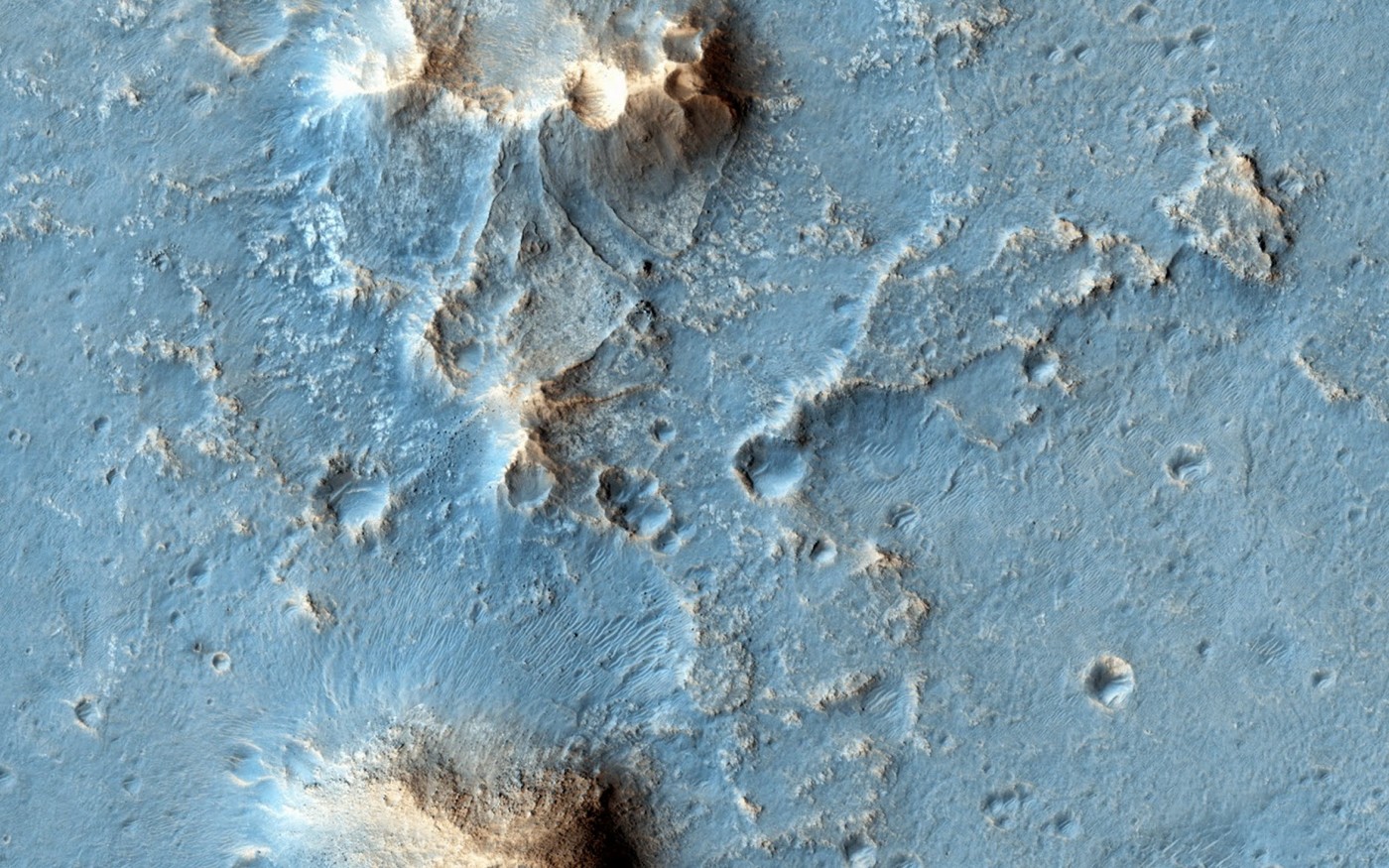
Real orbital photograph of the Oxia Planum region; not a photograph of organisms, a drill sample or a detection of extraterrestrial life. Photo: NASA; Public domain. Display copy resized. Original photograph and rights record.

More from this Daily Junk Food section.
Facts first. Side-eye included.
DJF separates what is confirmed from what is claimed—and tells you why this particular mess is worth your time.

Dana Side-Eye
Receipts, Rumors & Internet NonsenseDana reads the fine print, checks the timeline, and keeps one eyebrow permanently raised. She covers viral claims, internet pile-ons, and suspiciously convenient explanations.
“Screenshots are forever. So is the side-eye.”