Developing report — October 29, 2026. The Savannah River Site emergency ended at 9:45 p.m. Wednesday, October 28, after a fire at Savannah River National Laboratory. The fire was extinguished, protective actions were lifted and site barricades reopened, according to the site's final evening release. The cause and a detailed account of the damage remain unresolved in the material reviewed for this report.
Reuters reported October 29 that one employee suffered minor injuries and was taken to a hospital, citing a Department of Energy spokesperson. That is an attributed injury report, not a DJF examination of medical records.
The emergency ended Wednesday night
The site's News Release #3 says the emergency was declared at 5:07 p.m. Its 9:45 p.m. update reports that radiological surveys found no detectable contamination. A notice updated at 10:08 p.m. repeats the termination and tells employees to report for their scheduled work, including oncoming shifts.
Those are the event and update times given by the official source. Reading an earlier closure notice on Thursday without the later termination would leave readers with an obsolete picture. Highway 125 was reported open in the final release.
What the survey statement does—and does not—settle
The official statement about contamination is a survey result attributed to site officials. It should not be inflated into a complete explanation of what burned, how the fire started or what every instrument measured throughout the response. Nor does an alarming headline establish that contamination reached surrounding communities.
The responsible account keeps both boundaries visible: a real fire triggered a real emergency response, and the final evening notice reports that the emergency and protective actions ended. We have not obtained an independent technical assessment of the incident.
DJF analysis: the label is not the investigation
A nuclear-site headline can move faster than the update beneath it. The answer is neither to wave away the incident nor to turn an emergency classification into a disaster movie. The public needs the timeline, the testing statements, the injury information and the outstanding questions in separate, readable sentences.
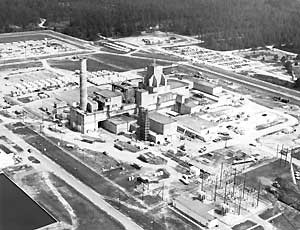
A useful follow-up should identify the cause, the affected operations, any verified damage and the scope of environmental checks. A recycled photograph of the complex cannot answer those questions. The historical image here provides location context; it does not show the laboratory fire or current conditions.
Follow our Current News archive for further documented updates. Older alerts should be read alongside the latest official notice, rather than circulated as if their restrictions remain in force.
Photograph and credit
U.S. Department of Energy; South Carolina Encyclopedia source, identification and public-domain record. The source was published in 2016; the original exposure date is not specified. Historical context only; no incident damage is depicted.
Editorial note: This article draws on the linked sources and may include clearly labeled opinion or unconfirmed reports. We have not independently verified every source claim. Publication does not establish an unconfirmed claim as fact; developing details may change.
Facts first. Side-eye included.
DJF separates what is confirmed from what is claimed—and tells you why this particular mess is worth your time.