The October 21 transgender prison care ruling keeps a lower-court block in place after the Supreme Court rejected the Trump administration’s emergency request to enforce its restrictions. Reuters reports that the challenged federal policy concerns gender-affirming treatment and related accommodations. The immediate result is procedural but concrete: the administration cannot use this request to switch the policy on while the case continues.
The brief order supplied no explanation. Justices Clarence Thomas and Samuel Alito publicly dissented. The policy was issued in February; U.S. District Judge Royce Lamberth blocked it in June, and the D.C. Circuit declined to lift his order September 18. Three federal prisoners brought the class-action challenge. This is continuing litigation, not a final opinion resolving every underlying issue.
Reuters reports that Lamberth found the policy likely violated federal requirements for reasoned agency decision-making. The administration defended its change in treatment priorities and invoked prison-management concerns. The Supreme Court’s silence does not tell us which argument persuaded each justice. Anyone producing a detailed psychological profile of the majority from this order is doing interpretive dance in a judicial robe.
Why does an emergency order matter? Because temporary rules govern the real interval before a final judgment. A policy dispute can take a long time to work through appeals, while the people affected still wake up inside institutions every morning. Preserving an injunction does not end that dispute. It determines which arrangement continues during it.
Our take: the useful distinction is between executive preference and a legally supportable agency process. A presidential policy goal does not make questions about evidence, explanation and statutory procedure disappear. Nor does an emergency denial automatically settle the constitutional future of every related policy. Both shortcuts turn an actual case into a team-logo argument.
The next development to watch is the litigation on the merits and any further appellate action. For now, the lower-court protection survives the emergency challenge. That is a meaningful outcome with a defined scope. The Court has left the pause in place; it has not supplied cable television with the complete last chapter.
Sources and photograph
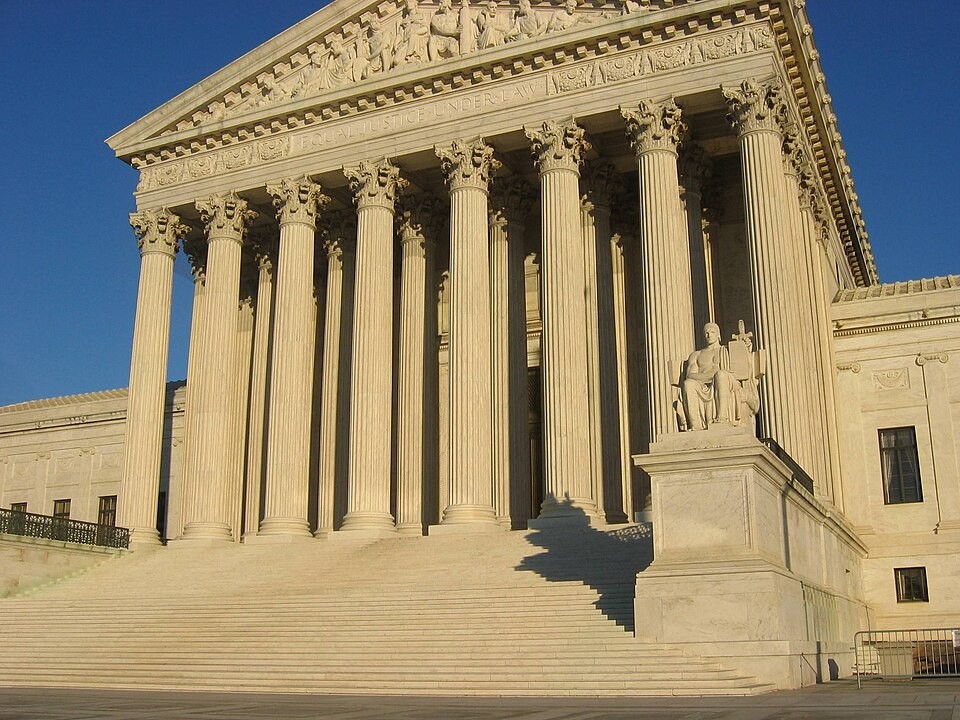
Archival photograph of the Supreme Court; not a photograph of an inmate or hearing. Photo: Duncan Lock (Dflock); CC BY-SA 3.0. Display copy resized. Where applicable, the resized photograph retains the stated ShareAlike license. Original photograph and rights record. Image-use terms.

More from this Daily Junk Food section.
Facts first. Side-eye included.
DJF separates what is confirmed from what is claimed—and tells you why this particular mess is worth your time.

Dana Side-Eye
Receipts, Rumors & Internet NonsenseDana reads the fine print, checks the timeline, and keeps one eyebrow permanently raised. She covers viral claims, internet pile-ons, and suspiciously convenient explanations.
“Screenshots are forever. So is the side-eye.”