The White House ballroom donor report has given the fundraising story something more specific than a list of impressive logos: reported dollar amounts. The Washington Post’s October 15 investigation identified major commitments, including $25 million each from Apple and Nvidia. Reuters relayed the findings while explicitly saying it had not independently verified the Post’s report. That qualification belongs beside the numbers, not under the rug.
The reports describe a project supported by companies and wealthy individuals with interests before the federal government. Reuters carried Nvidia’s statement that its support was independent of business interests, and reported that Apple declined comment. The White House rejected conflict-of-interest criticism and defended private funding. A donation is not, by itself, proof of an illicit exchange.
This is a new disclosure story about funding, not a new court order stopping construction. Earlier litigation over the project has its own procedural history. Nor should a reported commitment automatically be described as money already spent on completed work. Pledges, received funds and construction costs are different accounting categories, even when every category comes with very expensive lighting.
Analysis: private funding answers one question about a public building project: who is expected to provide the money. It does not answer every question about influence, access, selection of donors or how the arrangement is overseen. The claim that taxpayers are not paying a particular bill is relevant. It is not a universal ethics receipt.
The most useful transparency would connect names, amounts, payment status, receiving entities and any conditions attached to the contribution. Readers could then distinguish what is documented from what is inferred. Without that distinction, one side can announce generosity while another announces corruption, and the actual paper trail remains the least invited guest at the reception.
There is a difference between identifying a potential conflict and proving that a particular government decision was purchased. Reporting should investigate that relationship rather than assume it. The same discipline also means taking public-interest concerns seriously instead of dismissing every request for disclosure as hostility to the project. Oversight is not an interior-design preference.
The verified development is the publication of new donor reporting and the responses it drew. The next questions concern corroborating records and fuller disclosure, not invented conclusions about what any contributor received. A public project can be privately financed and still require public explanations. Apparently the transparency office has yet to receive its invitation engraved in gold.
Sources and photograph
Reuters, October 15, 2026, including company and White House responses. The Washington Post, October 15 investigation. The Verge, October 15 coverage.
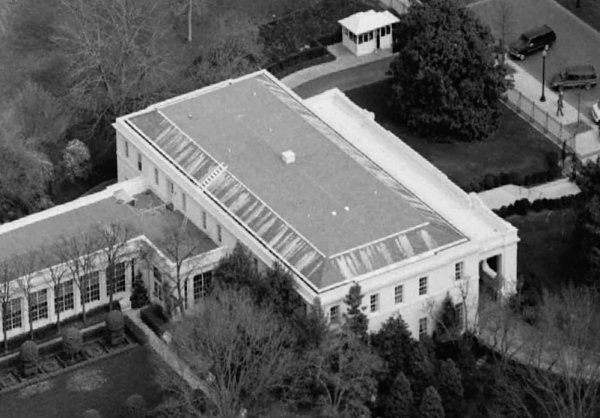
Historical photograph of the East Wing in 1992, before its demolition; not the current ballroom construction site. Photo: HABS (Jack Boucher); Public domain. Display copy resized. Original photograph and rights record.

More from this Daily Junk Food section.
Facts first. Side-eye included.
DJF separates what is confirmed from what is claimed—and tells you why this particular mess is worth your time.

Dana Side-Eye
Receipts, Rumors & Internet NonsenseDana reads the fine print, checks the timeline, and keeps one eyebrow permanently raised. She covers viral claims, internet pile-ons, and suspiciously convenient explanations.
“Screenshots are forever. So is the side-eye.”