The ALMA COMPASS chemistry survey is revealing unusual methanol and natural radio emission around young stars, with fresh October coverage bringing the results into the search-for-life conversation. The original research release dates to October 7, not this morning. The findings concern the chemical surroundings in which planetary systems develop. Nobody has announced that a molecule has introduced itself as an alien.
ALMA’s account describes a systematic survey of eleven nearby, low-mass protostars and seven initial papers in Astronomy and Astrophysics. One result is fully deuterated methanol, CD₃OD, detected around IRAS 4A2 in the Perseus molecular cloud. In that form, deuterium, a heavier isotope of hydrogen, replaces the ordinary hydrogen atoms. The observation supplies information about chemistry, not a biological identification.
The survey also detected methanol maser emission in more than half of its low-mass protostar sample. ALMA describes these as natural amplification of radiation under particular physical conditions. “Radio beacon” is therefore a descriptive metaphor here, not a report of a transmitter built by intelligent beings. Natural masers and a verified technological signal would require very different interpretations.
Analysis: studying ingredients can be important without proving that a finished process has occurred. A chemically rich environment may help researchers understand what material can enter later stages of planet formation. It does not establish that life emerged there, that a habitable planet exists around every target or that any particular organism could use the material. Each additional claim needs its own evidence.
The sample size also belongs in the story. A result in eleven surveyed objects is not a census of every young star. Comparisons can reveal questions worth pursuing, but readers should not turn a finding within the sample into a universal rule without the supporting argument. An interesting pattern is a reason for more investigation, not a license to delete the qualifying words.
The laboratory-sounding chemical names are part of the attraction because they make a distant environment measurable. Researchers can ask which molecular forms occur and compare their distributions rather than merely describe a region as promising. Those measurements are the substance of the development. The search for life advances through better questions as well as through dramatic discoveries.
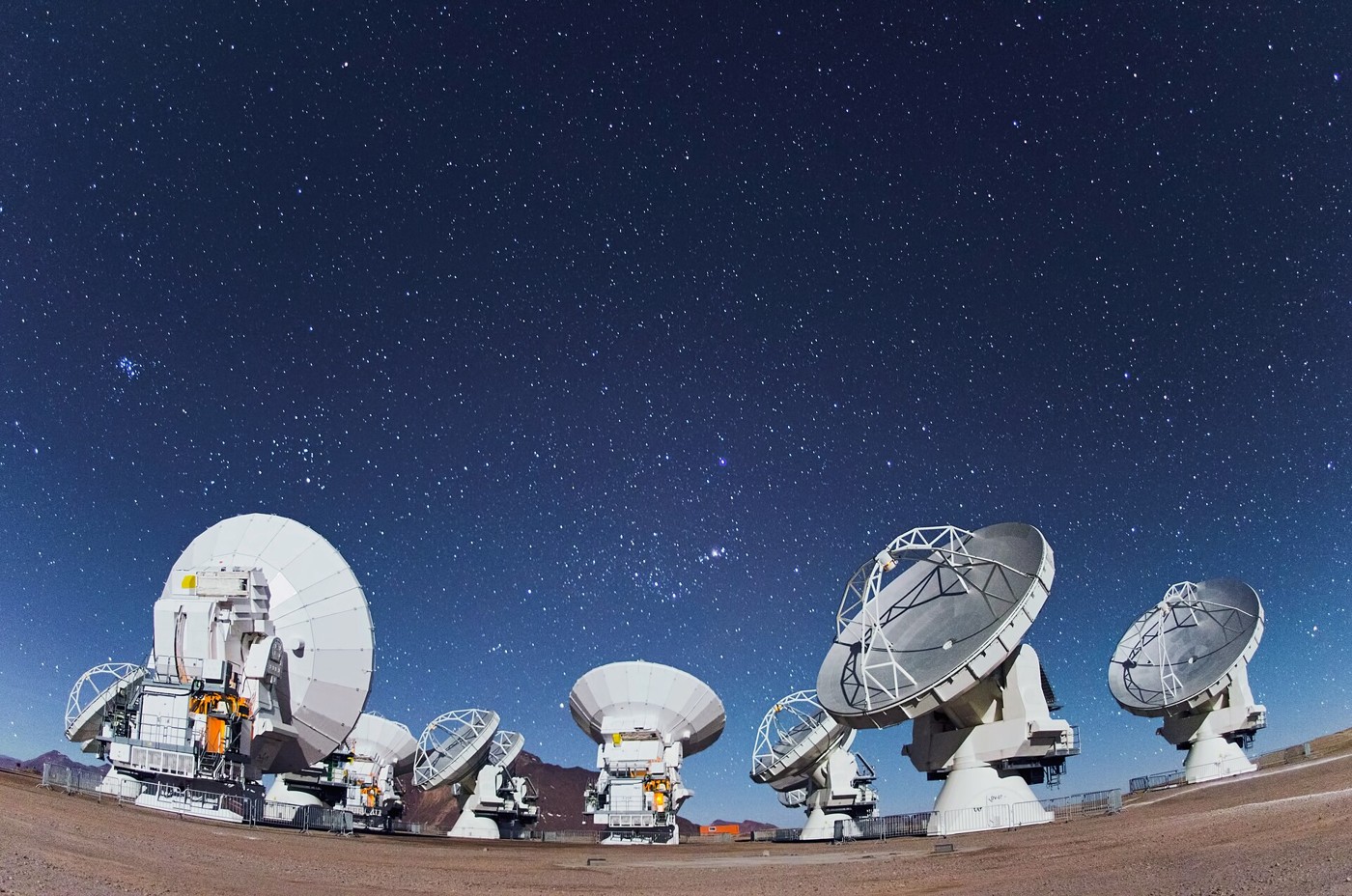
The accompanying image is a real photograph of ALMA hardware, not an illustration presented as an observation of living things. The verified research identifies chemical features and natural emission around forming stars, with no confirmed extraterrestrial life or technology. That is still a worthwhile cosmic update. A universe capable of complicated chemistry does not need a fabricated dinner guest to keep the story interesting.
Sources and photograph
ALMA Japan, October 8 account of October 7 research release. Max Planck Institute for extraterrestrial Physics, October 7. Space.com, Keith Cooper, October 15 research coverage.
Real file photograph of ALMA antennas in Chile in 2013; not a visible-light photograph of methanol, a new planet or an extraterrestrial organism. Photo: ESO; CC BY 4.0. Display copy resized. Original photograph and rights record. Image-use terms.

More from this Daily Junk Food section.
Facts first. Side-eye included.
DJF separates what is confirmed from what is claimed—and tells you why this particular mess is worth your time.

Dana Side-Eye
Receipts, Rumors & Internet NonsenseDana reads the fine print, checks the timeline, and keeps one eyebrow permanently raised. She covers viral claims, internet pile-ons, and suspiciously convenient explanations.
“Screenshots are forever. So is the side-eye.”