ALMA planet-forming disk chemistry is giving researchers a more detailed inventory of what surrounds young stars. A paper submitted October 15 by Luna Rampinelli and colleagues, highlighted in October 19 coverage, compares two disks: HD 100546 and IRS 48. The authors report observations of water, methanol and methyl formate. This is actual molecular research, not the part where somebody announces that space alcohol proves the neighbors are hosting a party.
The team detected both methanol and water in HD 100546, with a methanol-to-water ratio around 0.02. In methanol-rich IRS 48, water vapor was not detected in these observations, producing a lower bound above 0.2 for that ratio. Not detecting the vapor is not a finding that the entire system contains no water. The result belongs to the observed emission and its limits.
The researchers also report different methyl-formate-to-methanol ratios and explore what the gas reveals about the chemistry of the earlier ice reservoir. The primary paper is marked accepted for the Astrophysical Journal. It investigates a stage in star and planet formation; it reports no organisms, biosignature confirmation, technological signal or inhabited planet.
Our take: the interesting result is variation, not a universal recipe. A list of molecules can sound like a cosmic shopping bag, but the relative amounts and the conditions in which they are observed matter. Two systems need not preserve or process their material in the same way. That is a better question than whether a familiar chemical name can be made to resemble a science-fiction announcement.
The connection to the wider search for life is foundational. Understanding how chemistry changes as planetary systems form helps define the environments scientists investigate. This is a different study from the previously covered COMPASS survey of low-mass protostars: it compares two warm disks and their molecular ratios. The distinction makes the new measurements useful without turning chemical complexity into evidence of organisms.
There is another distinction worth keeping: these observations concern gas, while part of the interpretation asks what it tells us about ice. Measurement and explanation are related steps. A careful account can present the detection confidently while leaving room for the authors’ interpretation to be tested and refined. Uncertainty is not a failure of the result; it defines what remains to be learned.
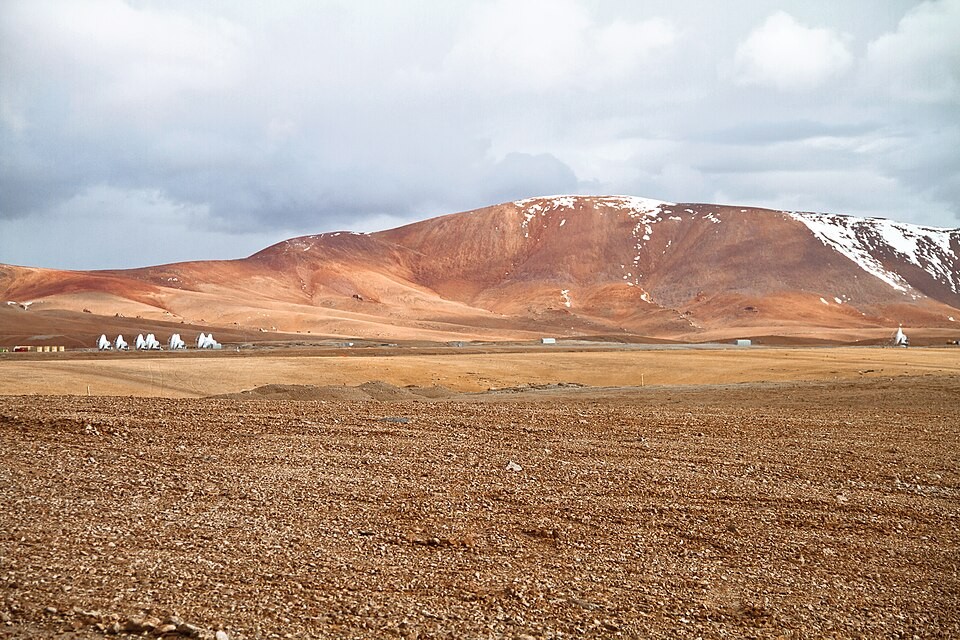
The fresh development is a specific comparative study, with identifiable targets and reported ratios. Our photograph shows real ALMA hardware during its 2011 construction period, not a picture of those molecules. The paper makes the chemical history of forming systems more interesting. It does not put an alien on the tenancy agreement.
Sources and photograph
Rampinelli and colleagues, primary paper submitted October 15, accepted for Astrophysical Journal. Astrobiology, October 19 coverage.
Archival ALMA photograph from March 2011, during construction and testing. Not the 2026 observing configuration, a disk image or evidence of life. Photo: ALMA (ESO/NAOJ/NRAO), J. Guarda (ALMA); CC BY 4.0. Display copy resized. Where applicable, the resized photograph retains the stated ShareAlike license. Original photograph and rights record. Image-use terms.

More from this Daily Junk Food section.
Facts first. Side-eye included.
DJF separates what is confirmed from what is claimed—and tells you why this particular mess is worth your time.

Dana Side-Eye
Receipts, Rumors & Internet NonsenseDana reads the fine print, checks the timeline, and keeps one eyebrow permanently raised. She covers viral claims, internet pile-ons, and suspiciously convenient explanations.
“Screenshots are forever. So is the side-eye.”