Skywatching guide · October 26, 2026
October 26 skywatching: the useful answer first
The Hunter’s Moon has reached its exact full phase, but you have not missed your entire chance to enjoy it. The U.S. Naval Observatory lists that instant as October 26, 2026, at 04:12 Universal Time. In Chicago and other Central Daylight Time locations, that was 11:12 p.m. on Sunday, October 25.
For Eastern Daylight Time, the same instant was 12:12 a.m. Monday; for Pacific Daylight Time, 9:12 p.m. Sunday. Those are different calendar labels for one event, not three separate full Moons. The sky is perfectly capable of being dramatic without our time zones making it a group project.
Monday evening, October 26, still offers a nearly full Moon. Check the moonrise time and cloud forecast for your own location, then choose a place with a clear eastern horizon. A building directly in the way remains a building, however enthusiastic the headline.
What the Hunter’s Moon name means
NASA’s October skywatching guide connects the name with seasonal hunting as autumn fields became bare and daylight diminished. It is a traditional seasonal name, not the announcement of a new kind of Moon.
The name also does not promise that the Moon will turn orange. Its appearance depends on viewing conditions. As NASA explains, light from a low Moon travels through more atmosphere, which can leave it looking yellower or redder than it does higher in the sky.
Keep the description separate from the spectacle: the astronomical phase has an exact time; the view out your window depends on where you are, the horizon and the weather. A national article cannot supply one honest moonrise time for every reader.
Why that low Moon looks ridiculously huge
The Moon near the horizon can seem enormous. NASA describes that apparent enlargement as a perceptual illusion, while noting that a complete explanation of exactly why we experience it remains unsettled. It is not evidence that the Moon suddenly moved dramatically closer as it rose.
You can test the effect with photographs: take one near moonrise and another when the Moon is higher, keeping the same zoom setting. Compare the width of the lunar disk. NASA suggests that comparison because our impression of size and the camera’s measurement need not agree.
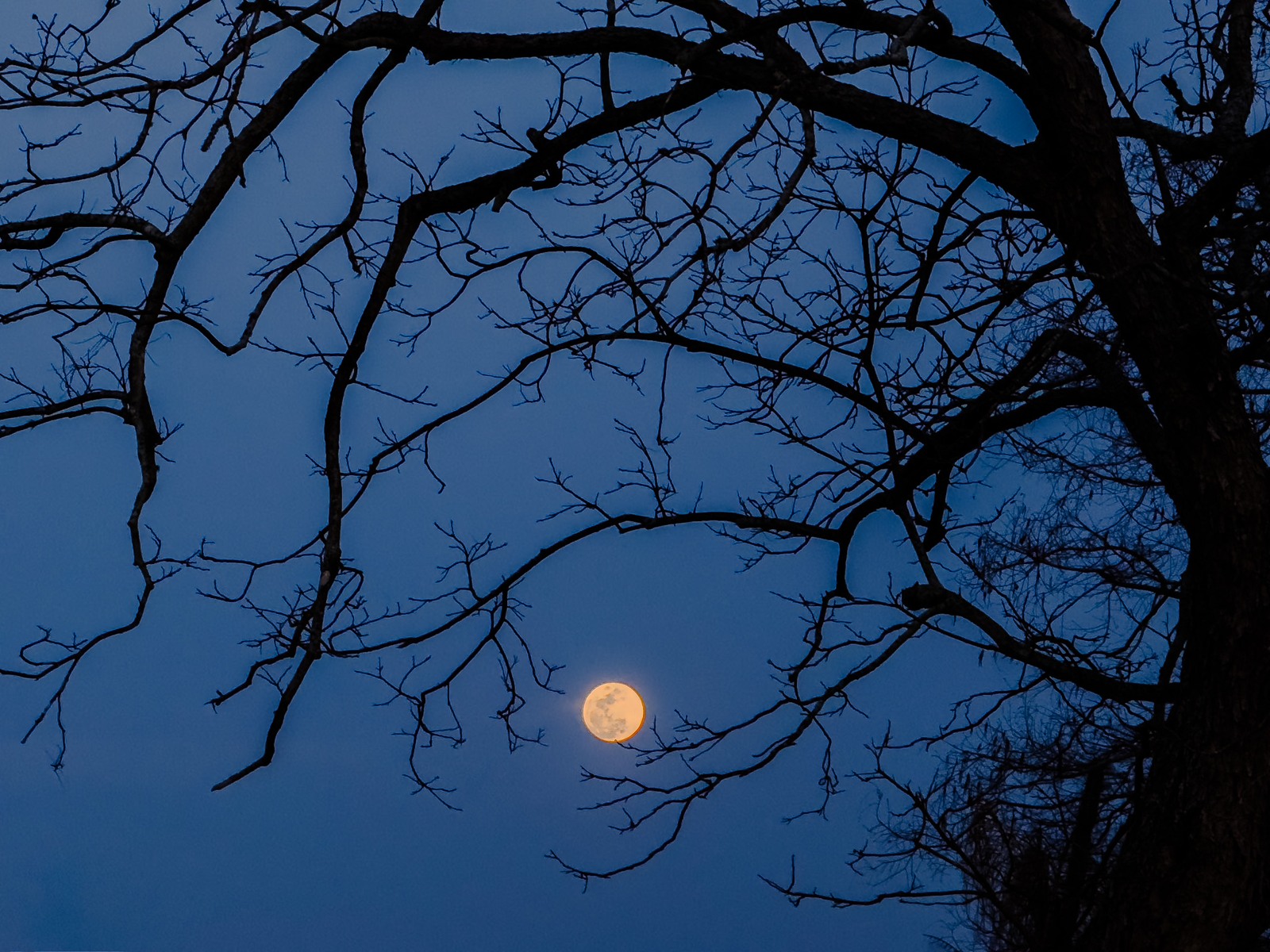
An imposing tree line or skyline makes a memorable view. It does not supply a new measurement of the Moon. Enjoy the giant-looking orb; just keep the measuring tape out of the imagination department.
Give the camera a chance, too
NASA’s lunar photography guide recommends steadying the camera and experimenting with exposure. With a phone, tap the Moon to set focus and exposure, then reduce brightness if the disk is turning into a featureless white blob. A stable support can help.
For a phone without much optical reach, consider making the scene the subject: branches, rooftops or a clear stretch of horizon with the Moon in the frame. The aim is an honest record of what you saw, not a digital enlargement with all the texture of a boiled potato.
Our take: this is a perfectly good excuse to step outside without buying anything. Find the local rise time, give yourself a view past the nearest obstruction and look. The Moon does not need a subscription tier.
Related coverage
More Science & Unexplained coverage
Sources and photograph
- U.S. Naval Observatory: 2026 primary lunar phases, Universal Time
- NASA: October 2026 skywatching and source photograph
- NASA: the Moon illusion and a photographic test
- NASA lunar photography guide
- Local moonrise calculator
- NASA image and editorial media usage guidelines
File photograph: A full Moon framed by pecan-tree branches near New Orleans, Louisiana, March 13, 2025. Photo: NASA/Eric Bordelon, used under NASA’s editorial media guidelines. This is a representative lunar photograph, not the October 2026 Hunter’s Moon. Display copy resized and recompressed.
Editorial note: This article draws on the linked sources and may include clearly labeled opinion or unconfirmed reports. We have not independently verified every source claim. Publication does not establish an unconfirmed claim as fact; developing details may change.
Facts first. Side-eye included.
DJF separates what is confirmed from what is claimed—and tells you why this particular mess is worth your time.