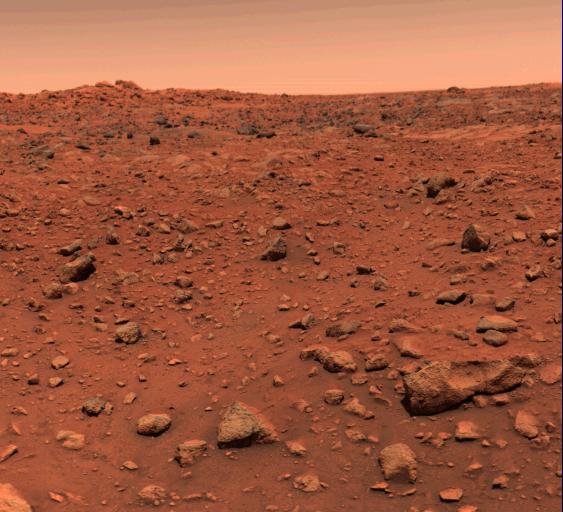
Archive / evidence review — October 27, 2026. Viking landed on Mars in 1976 and ran experiments looking for signs of life. The results did not establish that living Martian organisms had been found. That remains a much more useful starting point than “NASA found aliens and forgot to mention it.”
This article reviews historical mission records. It is not a new NASA discovery announcement, a newly released experiment or a report of a UFO sighting.
What actually went to Mars
The NASA Viking project archive records two spacecraft, each pairing an orbiter with a lander. Viking 1 touched down at Chryse Planitia on July 20, 1976. Viking 2 landed at Utopia Planitia on September 3. These were two places on a planet, not a complete biological census of Mars.
The landers photographed their surroundings, collected surface samples and investigated the environment. The mission's spacecraft and science record describes three biology experiments and unexpected chemical activity in the soil. It reports no clear evidence of living microorganisms near the landing sites and no definitive biological detection.
Three questions that should never be mashed together
What did an instrument measure? A result is an observation produced by a particular test. Before accepting a claim about what it means, ask which instrument, sample and measurement the speaker is actually discussing. “The experiment reacted” is the beginning of an explanation, not the end.
What caused the result? Moving from an observation to a biological explanation requires reasons to distinguish life from other processes. A surprising response is worth investigating precisely because its cause needs work. Surprise does not arrive carrying a microscopic alien's birth certificate.
What conclusion does the evidence justify? A possible interpretation and an established discovery occupy different places on the evidence ladder. An argument for reconsidering an old result should identify its assumptions, the competing explanation and the observation that would help separate them. Certainty delivered without those details is mostly packaging.
“Not confirmed” is not “impossible”
The mission record's limited conclusion matters in both directions. No definitive evidence at the Viking landing sites does not mean that Viking demonstrated the absence of life everywhere on Mars, throughout its history. Equally, the fact that a question remains scientifically interesting does not convert an inconclusive result into a confirmed detection.
Readers following our review of alien-life evidence and scientific confidence will recognize the distinction. Confidence depends on what the evidence can discriminate, not how exciting the proposed explanation would be.
DJF analysis: the archive is better than the conspiracy shortcut
Viking is useful because it forces a precise conversation about evidence. A serious historical claim should name the experiment, link the underlying record and distinguish the original result from a later interpretation. If a post instead jumps from “unusual chemistry” to “they hid extraterrestrials,” it has skipped the very question it needs to answer.
Our Science & Unexplained archive covers both UAP questions and the search for extraterrestrial life. They are different inquiries: an unidentified object in Earth's sky is not evidence about organisms in a Martian soil sample. Curiosity survives that distinction. Hype has a harder time.
Historical photograph and credit
The cover is a real Viking 1 camera photograph of Mars taken July 21, 1976, the day after landing. NASA's image record identifies the historical date; the page's later publication and update dates are not the exposure date. This file image does not show a recent mission or identified organisms. Image: NASA; used editorially under NASA's media-use guidelines. No endorsement is implied.
Editorial note: This article draws on the linked sources and may include clearly labeled opinion or unconfirmed reports. We have not independently verified every source claim. Publication does not establish an unconfirmed claim as fact; developing details may change.
Facts first. Side-eye included.
DJF separates what is confirmed from what is claimed—and tells you why this particular mess is worth your time.