Developing accountability report and labeled DJF analysis — November 3, 2026. This covers a lawsuit filed November 2. DePodesta's accusations are allegations, not judicial findings; the reporting reviewed here does not establish liability or a completed evidentiary hearing.
Chicago's former FBI chief Douglas DePodesta has sued after claiming he was made the fall guy for the collapsed Broadview Six prosecution. The question is no longer confined to competing accounts inside federal law enforcement. It is now in a civil lawsuit, while a separate court inquiry examines the handling of the protesters' criminal case.
What the former FBI chief alleges
WTTW's November 2 reporting describes a 38-page complaint accusing U.S. Attorney Andrew Boutros of blaming DePodesta for the prosecution's failure to divert attention from alleged misconduct in the prosecutor's office. DePodesta says he was forced into retirement during the summer. The suit names federal officials and agencies, including the FBI and Justice Department. These are the former official's contentions, not facts DJF has independently established.
WTTW reported that Boutros' spokesperson declined comment and that DOJ had not immediately replied to its Monday request. AP's account likewise says Boutros' office declined comment and the FBI and DOJ did not immediately respond. Those response statuses belong to those outlets' reporting; DJF has not conducted its own interviews. A declined comment is not an admission.
For relevant background, WTTW reports that Boutros denied knowing about the alleged prosecutorial misconduct until shortly before dismissing the case and said his office adopted reforms. The Sun-Times also reports his prior denial that politics played a role in charging decisions. These positions do not resolve the new civil allegations.
A separate inquiry concerns the prosecution
The Chicago Sun-Times' November 2 report says Boutros was ordered to testify under oath about the tainted prosecution. It identifies Judge Matthew Kennelly as handling DePodesta's lawsuit. The reporting describes DePodesta's sister-in-law as a defense attorney for a Broadview Six defendant, and his allegation that Boutros wrongly accused the pair of sabotaging the case. That family relationship is context for the accusation, not proof of a conspiracy.
The distinction between proceedings matters. A former official's civil complaint and an inquiry into representations made in a criminal case may concern overlapping events, but they do not produce one shared verdict. An order to give testimony does not establish what the witness will say or what the court will ultimately find.
DJF analysis: the paper trail needs daylight
Institutions should not get to resolve an accountability dispute by assigning a convenient villain in a hallway. Neither should a lawsuit's sharpest allegation become a substitute for evidence. The useful next questions concern the documents, the testimony and the opportunity for each side to answer specific claims. The job is to follow those stages, not announce the ending before they occur.
For readers, that means keeping three labels attached: alleged in the lawsuit, reported by an identified outlet, and found by a court. Losing those labels can turn a serious institutional story into a gossip relay. Keeping them does not make the allegations less consequential. It makes the eventual evidence easier to assess.
Our Crime & Courts archive tracks legal accountability alongside political disputes. This article will be updated when a documented response or court development materially changes the picture. A filing is the beginning of an argument, not a self-authenticating receipt for everything it alleges.
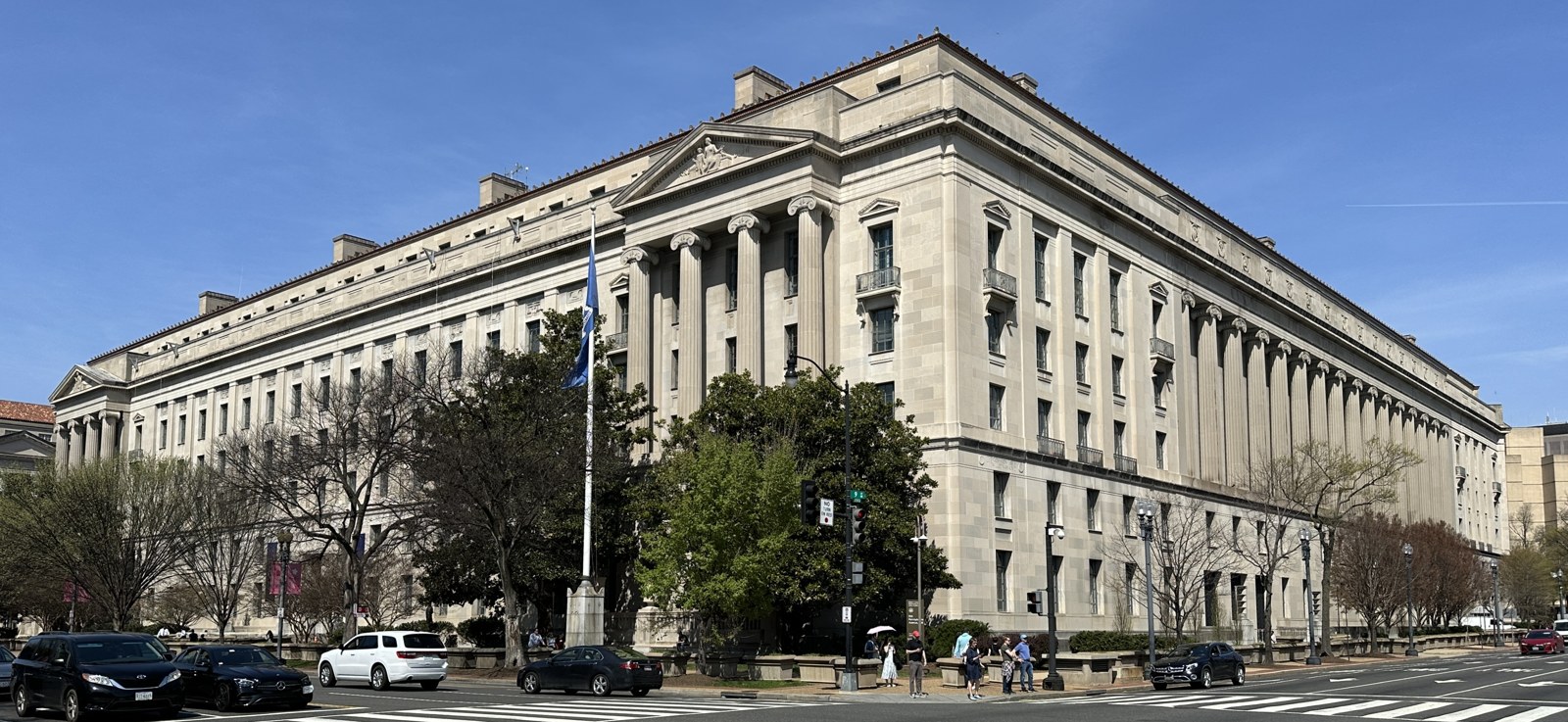
File photo: Justice Department headquarters in Washington, March 31, 2026; not the Chicago courthouse, the parties or a protest. APK / Wikimedia Commons, CC BY 4.0; resized.

Editorial note: This article draws on the linked sources and may include clearly labeled opinion or unconfirmed reports. We have not independently verified every source claim. Publication does not establish an unconfirmed claim as fact; developing details may change.
Facts first. Side-eye included.
DJF separates what is confirmed from what is claimed—and tells you why this particular mess is worth your time.