The Justice Department filed an appeal on October 31, 2026, challenging the previous day’s order restricting federal threats and demands directed at election officials. The notice is brief. The underlying order is not: it spells out what the government may not demand on the sole basis of its allegations that particular registered voters are ineligible.
This is a separate proceeding from the California ballot appeal and the Washington, D.C., voter-letter disclosure dispute. Similar subject matter does not make different judges, orders and case numbers interchangeable. The paperwork deserves better than being tossed into one enormous election blender.
Read the order and the appeal separately
U.S. District Judge Trina L. Thompson issued the October 30 temporary restraining order in Service Employees International Union, AFL-CIO, and others v. United States Department of Justice, case 3:26-cv-12800-TLT in Northern California.
The October 31 notice, docket entry 31, says the defendants appeal that order. The notice does not contain an appellate ruling or establish that the challenged restrictions have been suspended. Those would require separate records.
The restraining order prohibits coercive demands to halt ballot processing solely because the government alleges a voter is ineligible. It also addresses demands to remove specified registered voters, refuse them ballots or segregate or decline to count their ballots on that basis, and threats of prosecution tied to those demands.
The compliance requirements matter too
Thompson directed defendants to tell jurisdictions that received the relevant letters and voter lists that the demands and threats had been enjoined. DOJ must also inform the court about certain pending warrant applications, grand-jury subpoenas and other demands involving election materials or testimony linked to those lists.
The order sets an expiration of 5 p.m. November 16 and a preliminary-injunction hearing for November 13. Those are the dates in the document reviewed for this report, not a promise that subsequent litigation cannot change the timetable.
The human consequences have named sources
ABC News reported October 31 on declarations by California election officials describing anxiety, contingency planning and concern about keeping staff. Those are attributed accounts in litigation, not experiences DJF independently witnessed.
Reuters’ October 30 reporting describes the administration’s stated election-security rationale and says DOJ had no immediate comment on the ruling at that point. The newly filed appeal is a documented legal response. Its two pages do not supply a detailed merits argument, and this article does not invent one.
DJF analysis: enforcement still needs boundaries
Election security and lawful ballot administration are both matters of public interest. A threat from the federal government is not transformed into proof of voter ineligibility by printing it on official stationery. Equally, this temporary order is not a declaration that every investigation or records-preservation requirement is unlawful.
Readers can compare this case with our California ballot case and five-state voter-letter disclosure coverage. Keep the documents separate, track what each court actually orders and demand evidence before turning an allegation into a discarded ballot.
Photograph credit
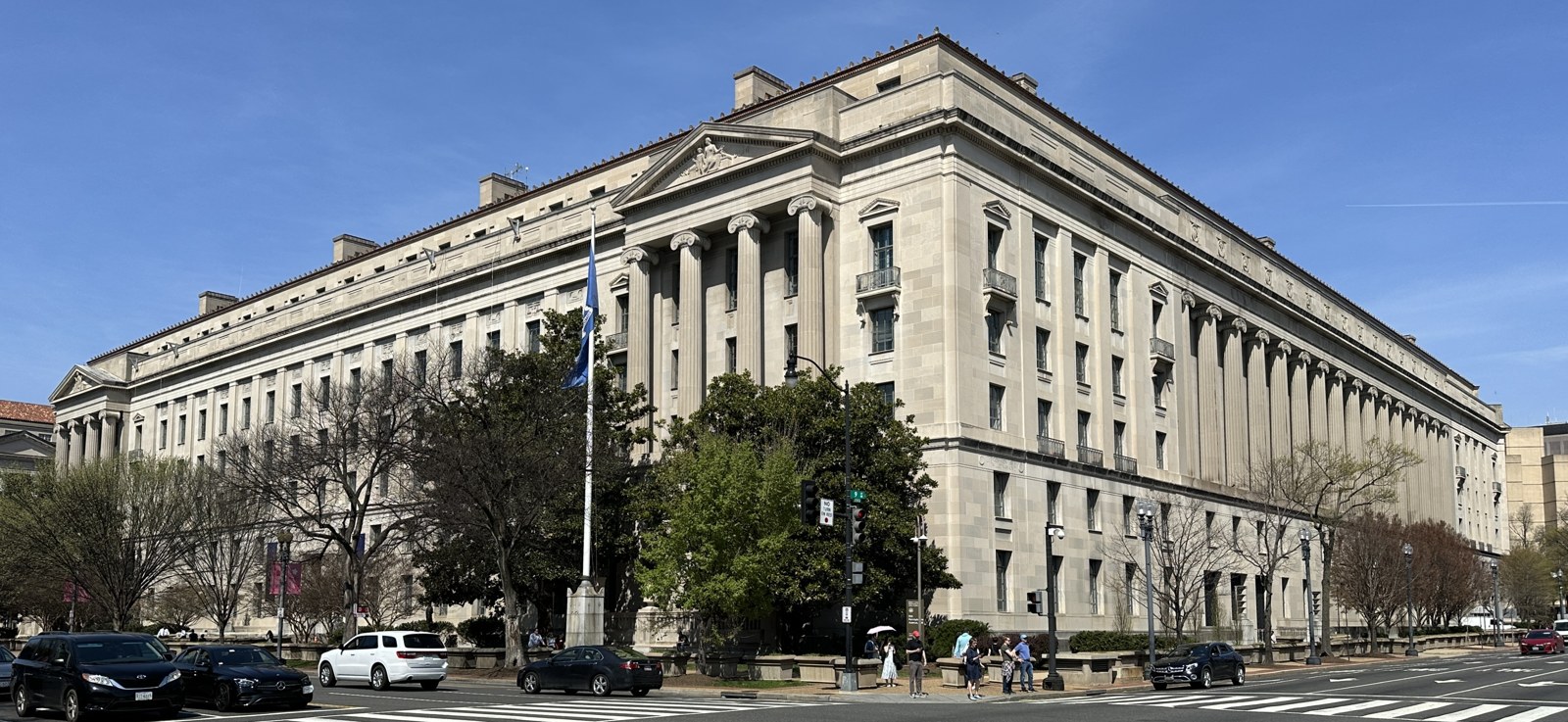
APK’s March 31, 2026 photograph, CC BY 4.0; resized. It shows the DOJ building, not the Northern California court or an election office.

Editorial note: This article draws on the linked sources and may include clearly labeled opinion or unconfirmed reports. We have not independently verified every source claim. Publication does not establish an unconfirmed claim as fact; developing details may change.
Facts first. Side-eye included.
DJF separates what is confirmed from what is claimed—and tells you why this particular mess is worth your time.