Reporting and labeled analysis · October 26, 2026
Developing — the demand and the limits of this report
This article covers a reported request for an investigation. The underlying misconduct allegations remain disputed. Daily Junk Food has obtained the full Democratic staff report and reviewed its executive summary and recommendations. Its misconduct allegations remain disputed and have not been independently verified by this publication.
House Judiciary Committee Democrats called for an independent special counsel to investigate Epstein-related matters, according to Arthur Delaney’s October 26 HuffPost report, available through AOL. The report describes Democrats’ allegations about Donald Trump and the Justice Department’s handling of the files.
The White House rejected the allegations. HuffPost reports that spokesperson Lauren Bis said none were true and described Trump as “fully exonerated.” That is the White House’s position, attributed here rather than adopted as an independent finding.
The fresh development is the reported October 26 demand for a special counsel. Readers should not treat a lawmaker’s accusation, a spokesperson’s denial or the existence of a report as a substitute for independently tested evidence.
Who would make an appointment?
The relevant Justice Department regulation is 28 CFR 600.1. It assigns appointment to the attorney general, or the acting attorney general when the attorney general is recused. The official must determine that a criminal investigation is warranted, that a departmental investigation or prosecution would present a conflict of interest or other extraordinary circumstances, and that an outside special counsel would serve the public interest.
That framework explains the next procedural question: whether the responsible Justice Department official makes the required determination and issues an appointment. A congressional demand can put pressure on the department; it does not itself perform the appointment described in the regulation.
An actual appointment would be a separately verifiable development. So would an official response explaining the department’s decision. This article does not report that either has occurred as a result of Monday’s demand.
What to watch beyond the headline
The useful next records would establish who is responsible for any review, what matters it covers and which investigative materials can lawfully be shared. Public accountability benefits from specific requests and specific answers. Readers should be able to follow the chain from a claim to its supporting record.
The same standard applies to allegations of a cover-up. That description makes a serious claim about official conduct. It needs evidence about what was withheld, by whom, under what authority and with what explanation. It cannot become an established fact simply through repetition.
October 26 update: the full report is now available here
We have obtained the committee’s full 53-page PDF. Its authors are Democratic Judiciary Committee staff, not the House Oversight Committee or a court. The document brings together witness accounts, previously released records and the staff’s arguments for further investigation. The existence of this report does not make each allegation a new disclosure or an established finding.
Its concluding recommendations, on numbered pages 51–52, call for an independent special counsel to examine potential accomplices and co-conspirators and for relevant evidence to be shared with other jurisdictions, including New Mexico and the United Kingdom. The authors also call for continuing congressional legislative and oversight work. These are specific demands that can be checked against subsequent official action.
The committee’s October 26 release accuses DOJ of obstructing accountability. Those accusations are the staff’s position. Trump denies involvement in Epstein’s crimes, and the White House rejects the report’s allegations, as described above. We have not verified a new special-counsel appointment resulting from the demand.
Accountability should outlast the news cycle
Publisher’s opinion: This should not be allowed to sit until people forget. A report is a starting point for demanding answers, not the final product. The next meaningful developments are a documented response to the recommendations, decisions about evidence sharing and records showing what Congress actually obtains.
We will distinguish a letter from compliance, an announced inquiry from its findings and a name in a file from evidence of wrongdoing. Survivors deserve sustained attention to those differences. A celebrity-lookalike sideshow should not swallow the actual accountability story.
Our opinion — keep the pressure, demand the receipts
Survivors deserve a process that takes evidence seriously after the cameras leave. That means pursuing records, protecting private information and testing claims consistently, including when the people concerned are powerful or politically inconvenient.
A special-counsel demand gives the public a concrete question to put to the Justice Department: how will it assess the request under its own rule? An answer should identify the decision and the reasoning. A partisan insult, from either side, leaves that question sitting on the desk.
Our take: keep demanding accountability, and keep demanding proof. Washington has an industrial capacity for producing statements about transparency. The public should be able to see what those statements actually produce. A press release can start the argument; somebody still has to do the work.
Related coverage
Related: Raskin’s request for DOJ evidence-access answers · Related: Democrats’ oversight plans · Related: New Mexico’s Epstein estate lawsuit
Sources and photograph
- HuffPost, Arthur Delaney, October 26: report and White House response, via AOL
- 28 CFR 600.1: grounds and authority for appointing a special counsel
- Capitol photograph: Noclip, source and public-domain permission

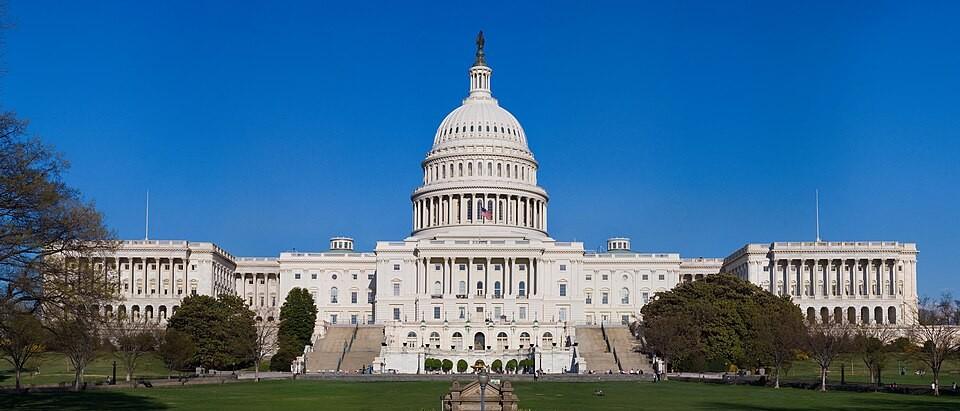
File photograph: the western front of the U.S. Capitol, from Noclip’s photograph originally uploaded in April 2007. Source: Wikimedia Commons; released into the public domain by the photographer. Display copy resized. This is a representative photograph of Congress, not an image of an October 2026 hearing or a special-counsel appointment.
Photograph and credit
File photograph: western front of the U.S. Capitol, from Noclip’s photograph originally uploaded in April 2007. Public-domain photograph, resized for display. Representative image of Congress, not an October 2026 hearing or appointment. Photograph and public-domain source record.
Editorial note: This article draws on the linked sources and may include clearly labeled opinion or unconfirmed reports. We have not independently verified every source claim. Publication does not establish an unconfirmed claim as fact; developing details may change.
Facts first. Side-eye included.
DJF separates what is confirmed from what is claimed—and tells you why this particular mess is worth your time.