Exoplanet atmosphere uncertainty is not the sexiest phrase in the alien-life conversation, which is precisely why it deserves attention. A new preprint by Bethany Burt, Kevin Heng, Alex Cridland and Shang-Min Tsai examines how reliably researchers can infer atmospheric properties from spectra. Submitted October 17 and highlighted October 21, it concerns the strength of an interpretation, not a message from another civilization.
The team compared elemental ratios such as carbon-to-oxygen with mean molecular weight using uncertainty calculations and atmospheric chemistry models for hot Jupiters and sub-Neptunes. In their hydrogen-and-helium-dominated cases, mean molecular weight had much smaller fractional uncertainty. Mixing and photochemistry could redistribute individual molecules while changing the broader metrics only modestly over the pressures sampled.
The authors still regard carbon-to-oxygen as useful for chemistry and formation history. Their warning is about carrying measurement uncertainty through to the derived number. A ratio can look tidy in a table even when the inputs leave it poorly constrained. The decimal places may have dressed for a formal event that the evidence never agreed to attend.
Why does that matter to readers interested in life beyond Earth? Claims about an atmosphere depend on interpreting faint observations through models. A proposed biosignature would need even more careful treatment of what is measured, what is inferred and what alternatives remain. This paper does not report a biosignature, a habitable world or life. Its relevance is the method used to understand distant environments.
Our take: good uncertainty work expands the value of an observation by making its limits explicit. It is not an admission that telescopes are useless. It tells researchers which comparisons are stable enough to support a conclusion and which need stronger data. A search for extraordinary things benefits when ordinary arithmetic is done with unusual care.
The result is model-dependent research presented in a preprint, with the authors’ stated scope and assumptions intact. Further observations and scrutiny will determine how broadly the suggested diagnostic helps. For now, the credible development is a closer look at how alien-atmosphere numbers are constructed. The universe has supplied no confirmation of aliens, but it continues to insist that we show our work.
Sources and photograph
Burt, Heng, Cridland and Tsai, primary preprint submitted October 17. Astrobiology, October 21 research coverage.
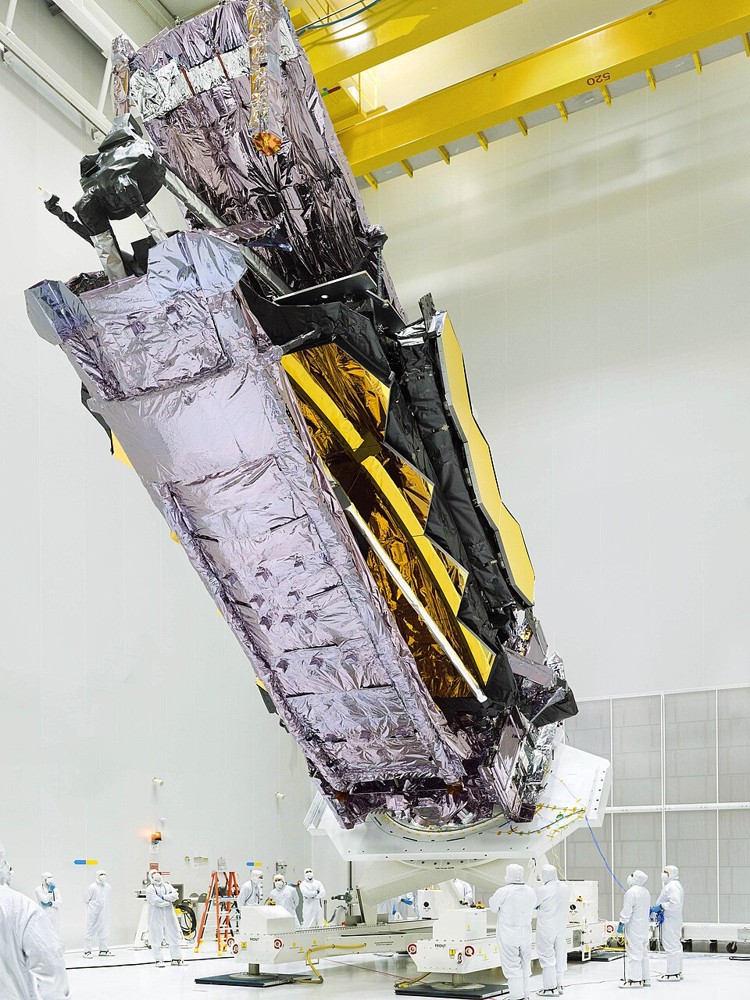
Archival NASA hardware photograph; not an image of an exoplanet atmosphere, an alien detection or data from this paper. Photo: NASA/Chris Gunn; Public domain (NASA). Display copy resized. Where applicable, the resized photograph retains the stated ShareAlike license. Original photograph and rights record. Image-use terms.


More from this Daily Junk Food section.
Facts first. Side-eye included.
DJF separates what is confirmed from what is claimed—and tells you why this particular mess is worth your time.

Dana Side-Eye
Receipts, Rumors & Internet NonsenseDana reads the fine print, checks the timeline, and keeps one eyebrow permanently raised. She covers viral claims, internet pile-ons, and suspiciously convenient explanations.
“Screenshots are forever. So is the side-eye.”