Freeze–thaw protocell research highlighted October 23 examines how dispersed molecules can become concentrated inside membrane compartments. The study described by Astrobiology reports that slow freezing gathers solutes and membrane material into remaining liquid regions. Slow thawing then produces cell-sized vesicles containing concentrated molecules. This is laboratory research about organization, not a report of organisms discovered beyond Earth.
The researchers also describe assembling a prepared transcription–translation system inside those compartments, enabling protein synthesis from diluted mixtures with little or no detectable activity in bulk solution. The linked manuscript is a bioRxiv preprint. The experiment uses supplied biochemical components; it should not be reported as creating life from nothing or demonstrating that an icy moon is inhabited.
Our take: the interesting question is how chemistry gets organized enough to do something. A pile of ingredients and a working kitchen are not interchangeable, even if both fit into an optimistic headline. Compartment formation offers a specific process to investigate. It does not supply every missing chapter between chemistry and an independently evolving organism.
This is why the methods matter more than the word functional floating above a photograph. What was supplied, what was concentrated and what activity was measured are different questions. A convincing explanation keeps those distinctions visible. Otherwise a useful experiment gets promoted into a cosmic announcement it never made, then blamed for failing to deliver the imaginary announcement.
For astrobiology, physical environments are part of the question as well as chemical ingredients. Temperature changes can be investigated as mechanisms, rather than scenery behind a speculative alien landscape. That makes the work relevant to broader origin-of-life questions while leaving the enormous distance between a controlled experiment and an inhabited world intact.
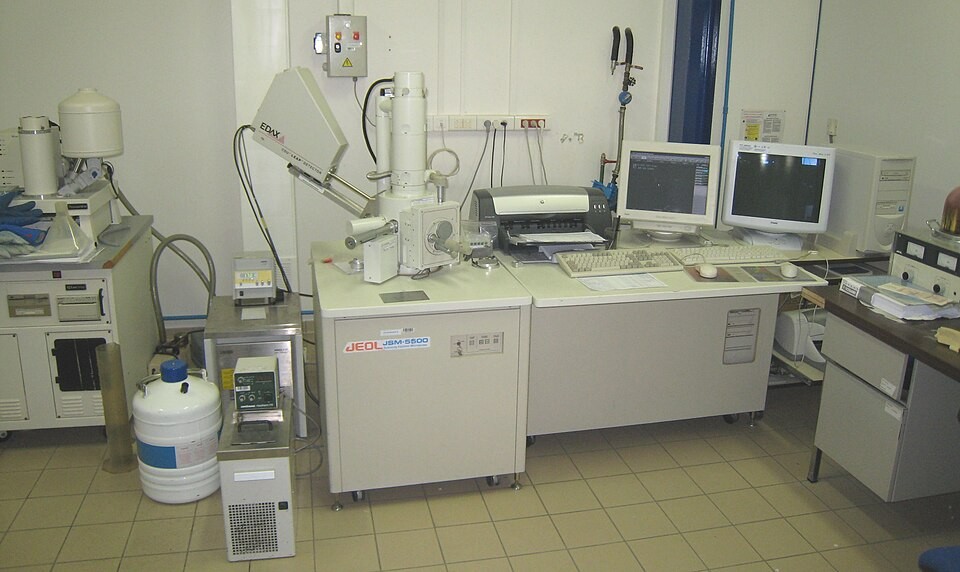
The accompanying photograph shows laboratory equipment for context, explicitly not this experiment. No extraterrestrial life has been confirmed by the report. The advance described is a possible route to concentrating components and organizing biochemical activity. Ice has acquired another scientific assignment; the flying saucer can remain in the folder labeled evidence still required.
Source and photograph
Astrobiology, October 23 research highlight. Linked preprint.
Representative laboratory-equipment photograph; not the apparatus, researchers or protocells from the reported study. Photo: Cjp24; CC BY-SA 3.0. Display copy resized. Where applicable, the resized photograph retains the stated ShareAlike license.
Photograph rights record. CC BY-SA 3.0.

Facts first. Side-eye included.
DJF separates what is confirmed from what is claimed—and tells you why this particular mess is worth your time.

Dana Side-Eye
Receipts, Rumors & Internet NonsenseDana reads the fine print, checks the timeline, and keeps one eyebrow permanently raised. She covers viral claims, internet pile-ons, and suspiciously convenient explanations.
“Screenshots are forever. So is the side-eye.”