Astronomers have identified two families of planetary systems in a study published October 13 in Nature Astronomy. The work connects the arrangements of known multi-planet systems to properties of their host stars. It is a fresh contribution to understanding how other worlds form and evolve, not evidence that anyone has moved into them. The universe has supplied a classification result, not a forwarding address.
Diego Turrini, Camilla Danielski and colleagues used comparative metrics across independently defined samples. The INAF research release describes analysis of roughly 300 well-characterized systems. The lower-mass family tends toward closely packed planets with similar masses or sizes; the higher-mass group has different stellar associations and more dynamically excited configurations. These are patterns in the observed population, not a census of every possible planetary arrangement.
The paper associates the higher-mass systems with metal-rich environments and solar-to-higher-mass stars. In astronomy, metals means elements heavier than helium, not a particularly committed Iron Maiden collection. The lower-mass family is associated mainly with stars at or below the Sun’s mass. The authors argue that formation conditions and later gravitational evolution both leave recognizable signatures.
Dynamical excitement here concerns orbital arrangements, not the literal temperature of a planet’s weather. The researchers interpret the more disturbed systems as having histories involving gravitational instability and planet scattering. Simulations help explore plausible histories. A model that reproduces an observed pattern is evidence supporting an explanation; it is not a recording of every collision that happened in a distant system.
The limitations matter. The paper explicitly recognizes observational biases: available methods more readily reveal some masses, orbital periods and system types than others. An unseen small planet on a distant orbit is not necessarily absent just because current observations do not identify it. The study tests population patterns while working within that incomplete view. The catalog is powerful, but it is not omniscient.
Analysis: this research is relevant to the wider search for potentially habitable worlds because a planet’s surroundings and history help frame what scientists should examine next. It does not establish that either family contains life, that a particular planet has liquid water, or that a technosignature has been detected. Habitability questions need additional measurements; extraterrestrial inhabitants would require stronger evidence still.
The substantive development is a peer-reviewed attempt to explain diversity among known planetary architectures through stellar properties and subsequent evolution. That is useful without a sensational upgrade. Understanding which kinds of systems form and survive can improve the questions astronomers ask of future observations. The search for other worlds progresses through results like this, even when the discovery refuses to arrive in a flying saucer.
Sources and photograph
Turrini, Danielski and colleagues, Nature Astronomy, October 13, 2026. INAF research release, October 13, 2026, via Phys.org.
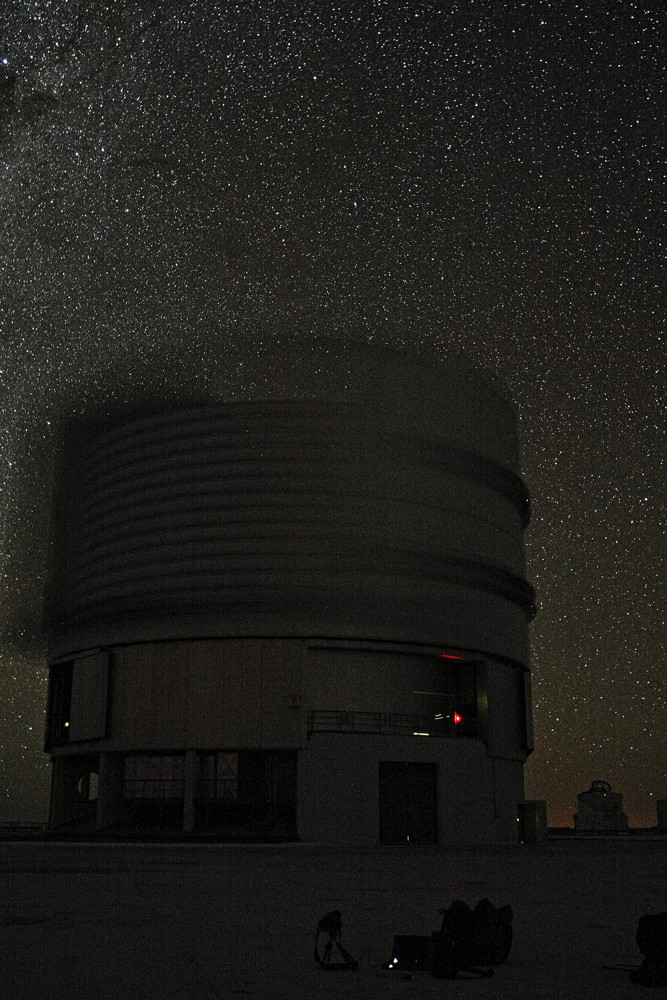
Representative photograph of astronomical observing infrastructure; not an image of the study’s planet systems or a claim that these telescopes supplied its complete dataset. Photo: ESO; CC BY 4.0. Display copy resized. Original photograph and rights record. Image-use terms.
.jpg)
More from this Daily Junk Food section.
Facts first. Side-eye included.
DJF separates what is confirmed from what is claimed—and tells you why this particular mess is worth your time.

Dana Side-Eye
Receipts, Rumors & Internet NonsenseDana reads the fine print, checks the timeline, and keeps one eyebrow permanently raised. She covers viral claims, internet pile-ons, and suspiciously convenient explanations.
“Screenshots are forever. So is the side-eye.”