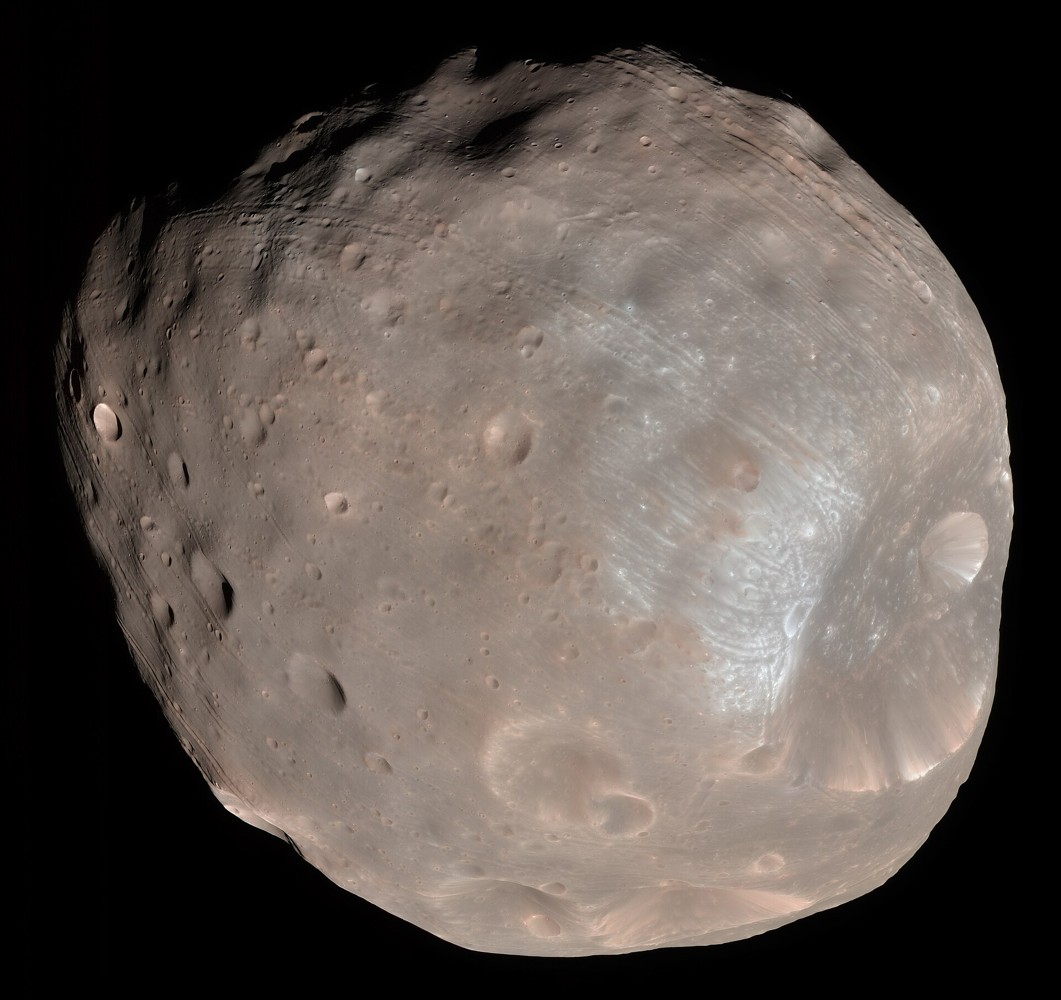
The NASA MMX briefing scheduled for October 15 puts a concrete planetary-science mission on the calendar. NASA plans a 4 p.m. Eastern, 3 p.m. Central media teleconference about its contributions to Japan’s Martian Moons eXploration mission. At publication, that briefing is still ahead. This article previews the announced mission rather than inventing remarks officials have not yet delivered.
NASA’s advisory lists launch for October 19 in the United States, corresponding to October 20 in Japan. That is a scheduled launch, not a completed one. Led by JAXA, MMX aims to study Phobos and Deimos and return a sample from Phobos to Earth. The central question is how the moons formed and what their history can reveal about the Mars system.
NASA’s mission overview describes competing origin ideas: the moons could be captured asteroids or material associated with an ancient impact at Mars. Its MEGANE instrument will measure gamma rays and neutrons to help determine surface elemental composition. Those measurements are intended to constrain origin questions; they are not photographs of hidden structures or an announcement of extraterrestrial inhabitants.
Sample return and remote observation do different jobs. Orbital instruments can investigate a broad surface while material returned to laboratories can be examined with techniques available on Earth. The plan to obtain a sample does not mean one has already arrived. Mission objectives are promises of attempted work, subject to the engineering and operational challenges between launch and return.
Analysis: the significance of a mission like this is that it can turn a long-running origin debate into questions with more measurable answers. The unglamorous words—composition, calibration, sampling and comparison—are where the scientific leverage lives. None requires a dramatic soundtrack announcing that a lumpy moon has finally agreed to explain itself.
The broader search for life benefits from a better understanding of planetary history, but that does not make every Mars-related mission a direct life-detection experiment. MMX’s stated objectives here concern the moons’ origins and evolution. Readers should resist the shortcut from another world to alien biology. A scientifically useful rock can remain a rock without disappointing anybody who understood the assignment.
The immediate update is the scheduled briefing ahead of the planned launch. Future coverage should distinguish what officials actually announce, what hardware accomplishes and what later analysis establishes. No alien confirmation accompanies this preview. What it offers instead is a real mission, named instruments and a testable set of questions about nearby worlds.
Sources and photograph
NASA, October 8 advisory for October 15 briefing. NASA Science, MMX mission overview, checked October 15.
Processed color spacecraft photograph of Phobos from 2008; not an MMX image, a new observation or an artist’s illustration. Photo: NASA / JPL-Caltech / University of Arizona; Public domain. Display copy resized. Original photograph and rights record.

More from this Daily Junk Food section.
Facts first. Side-eye included.
DJF separates what is confirmed from what is claimed—and tells you why this particular mess is worth your time.

Dana Side-Eye
Receipts, Rumors & Internet NonsenseDana reads the fine print, checks the timeline, and keeps one eyebrow permanently raised. She covers viral claims, internet pile-ons, and suspiciously convenient explanations.
“Screenshots are forever. So is the side-eye.”