Water under extreme pressure is giving planetary researchers another reminder that the familiar stuff in a kitchen glass can behave very differently elsewhere. A UNLV research release published October 20 describes a study of structural changes in solid water at pressures above 222 gigapascals. The universe continues to complicate the phrase “just add water.”
The paper, published October 15 in Communications Chemistry, reports evidence for reduced symmetry in the compressed material. The university describes samples squeezed between diamonds and examined with spectroscopy and X-rays. Its release relates the work to conditions relevant to ice-giant planets such as Uranus and Neptune, where everyday assumptions about water become inadequate.
This is laboratory planetary science, not a sample returned from an extraterrestrial ocean. The experiment helps investigate what materials may do in environments we cannot directly enter. The researchers’ interpretation of planetary relevance should be distinguished from a claim that the exact interior structure of either planet has now been photographed or fully measured.
Why put this in a section covering the search beyond Earth? Because interpreting distant environments depends on understanding their chemistry and physics. A word such as water can conceal differences in phase, temperature and pressure. Habitability discussions become less useful when they treat every appearance of that word as an interchangeable invitation to move in.
Our take: the path from interesting chemistry to evidence of life contains several steps, and a headline should not teleport across them. A structural result about compressed water does not establish organisms, a biosignature, intelligent technology or a UFO explanation. It can still be valuable research without carrying an alien passenger in its luggage.
The broader lesson is methodological. Measurements let scientists test assumptions about worlds that would otherwise remain mostly models. Further experiments and comparisons can refine those models and clarify where their limits lie. For now, the confirmed development is unusual water behavior under exceptional laboratory pressure. The wonder is real; an announcement that somebody lives there would require entirely different evidence.
Sources and photograph
UNLV research release via Newswise, October 20. Research paper, Communications Chemistry, October 15. Astrobiology, October 21.
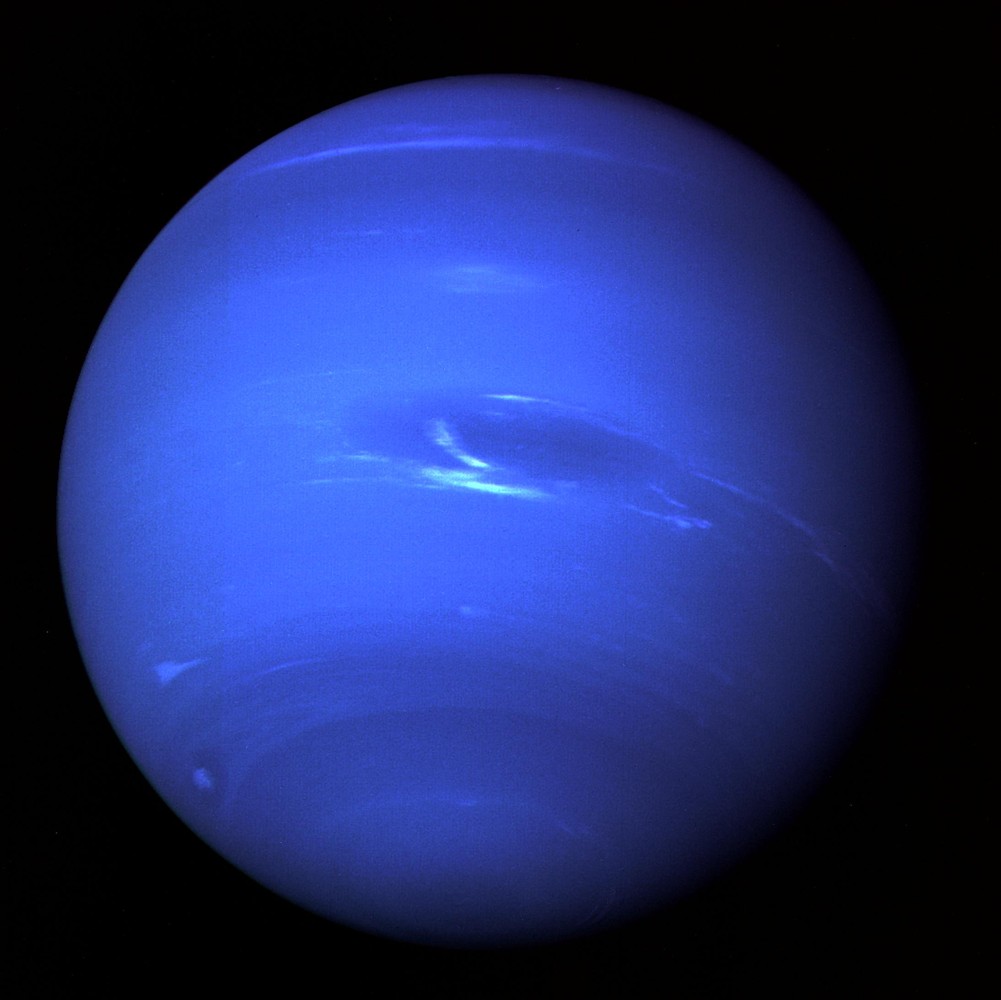
Archival processed Voyager 2 photograph of Neptune; planetary context, not a view of the experiment or Neptune’s interior. Photo: NASA/JPL; Public domain (NASA). Display copy resized. Where applicable, the resized photograph retains the stated ShareAlike license. Original photograph and rights record. Image-use terms.

More from this Daily Junk Food section.
Facts first. Side-eye included.
DJF separates what is confirmed from what is claimed—and tells you why this particular mess is worth your time.

Dana Side-Eye
Receipts, Rumors & Internet NonsenseDana reads the fine print, checks the timeline, and keeps one eyebrow permanently raised. She covers viral claims, internet pile-ons, and suspiciously convenient explanations.
“Screenshots are forever. So is the side-eye.”