A Venus cloud platform is the subject of a new scientific pitch, and the useful word is measurement. Maureen Cohen and colleagues submitted a white paper October 19 arguing for aerial platforms that could investigate Venus directly. Highlighted by Astrobiology on October 22, it includes the potential habitability of the clouds among its questions. It does not announce organisms, aliens or a mission already approved to find them.
Written for the UKSA Space Frontiers 2035 programme, the paper describes balloon technology under development and an opportunity for United Kingdom participation in bilateral missions. The authors place aerial exploration after remote-sensing missions of the early 2030s. Their science case also concerns Venus’s volcanic and geological history and its usefulness in understanding planets around other stars.
That makes this a substantive development for the search for life beyond Earth without turning a proposal into a discovery. Habitability asks about conditions in which life might persist. Detection asks whether life is actually present. A platform designed to investigate the first can help frame the second, but writing those questions in the same document does not supply their answers.
Our take: the attraction of going into the clouds is the possibility of replacing distant inference with measurements made in the environment. A persuasive mission concept must explain what information the platform could collect, how it would survive and what competing explanations its observations could distinguish. A dramatic rendering of a balloon, however attractive, cannot do that work on behalf of the instruments.
The white-paper status also matters. This is a research and mission-planning argument, not a launch announcement, funding award or published detection result. Readers should watch for concrete agency decisions and further technical development. The path from a strong scientific question to a working spacecraft contains a great deal of engineering, which has never been especially impressed by wishful thinking.
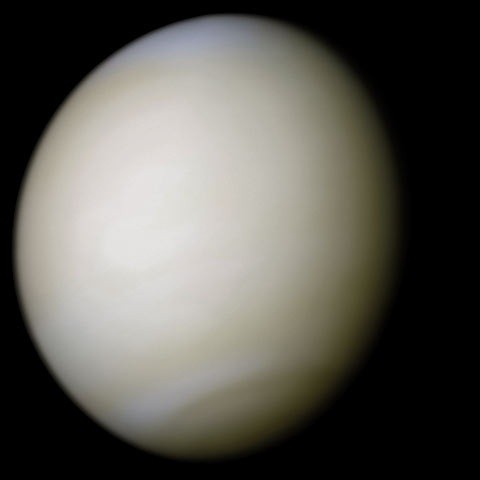
The image here is a processed archival Mariner 10 photograph of Venus, with the original mission and image-processing credit retained. It shows the real target of the proposal, not an imagined creature in its atmosphere. The credible update is that researchers are making a case for closer investigation. The planet remains interesting without the internet issuing it an extraterrestrial birth certificate.
Sources and photograph
Cohen and colleagues, primary white paper submitted October 19. Astrobiology, October 22 research coverage.
Archival spacecraft photograph, processed from Mariner 10 data; not a balloon, a new observation or evidence of life. Photo: NASA; Image processing by R. Nunes; NASA source images public domain; processing reusable with attribution. Display copy resized. Where applicable, the resized photograph retains the stated ShareAlike license. Original photograph and rights record. Image-use terms.

More from this Daily Junk Food section.
Facts first. Side-eye included.
DJF separates what is confirmed from what is claimed—and tells you why this particular mess is worth your time.

Dana Side-Eye
Receipts, Rumors & Internet NonsenseDana reads the fine print, checks the timeline, and keeps one eyebrow permanently raised. She covers viral claims, internet pile-ons, and suspiciously convenient explanations.
“Screenshots are forever. So is the side-eye.”