An AI technosignature detector can be wrong in two directions: overlooking a candidate or getting excited about interference. A new preprint by Omer Imran, submitted October 15 and highlighted by Astrobiology October 17, tests those problems using artificial signal injections in real Green Bank telescope backgrounds. This is not an announcement that aliens were detected—or that a confirmed alien transmission was missed.
Imran tested one frozen convolutional neural network with 15,000 injections spanning ten signal shapes and five amplitudes. Some stronger injections were harder for the model to recover. For one familiar narrow signal type, recall fell from 0.590 to 0.090 as brightness increased. One interference pattern produced a false-positive rate of 0.627. These are results for this experiment, not universal performance figures for every SETI search.
The tested classifier also reads target-pointing ON panels without the comparison OFF panels. The author argues that this prevents it from establishing whether a candidate originates from the target star rather than resembling its training examples. The work is an arXiv preprint, not a settled verdict on the entire field.
Analysis: the broader issue is what a successful benchmark actually promises. Recognizing familiar examples and recognizing unfamiliar evidence are different jobs. A system can look impressive on a tidy test while struggling with cases outside that test’s assumptions. Space is under no contractual obligation to send a message in the shape used during training. The universe has not accepted our template attachment.
That makes this an accountability story about a scientific tool, not an invitation to announce a cover-up. A missed injected pattern is known because the researcher inserted it. It cannot be silently promoted into a real extraterrestrial event. Likewise, a false alarm is a classification problem until further evidence says otherwise—not a visitor who refused to sign the guest book.
The useful next step is independent scrutiny and testing of the model, data and methods, with attention to what information a pipeline uses. Better searches require understanding failures as well as celebrating successes. The intriguing development here is a concrete, testable challenge to one detector’s reliability. No alien confirmation is needed to make that worth reporting; scientific caution is doing the interesting work.
Sources and photograph
Omer Imran, arXiv preprint submitted October 15. Astrobiology, October 17 coverage.
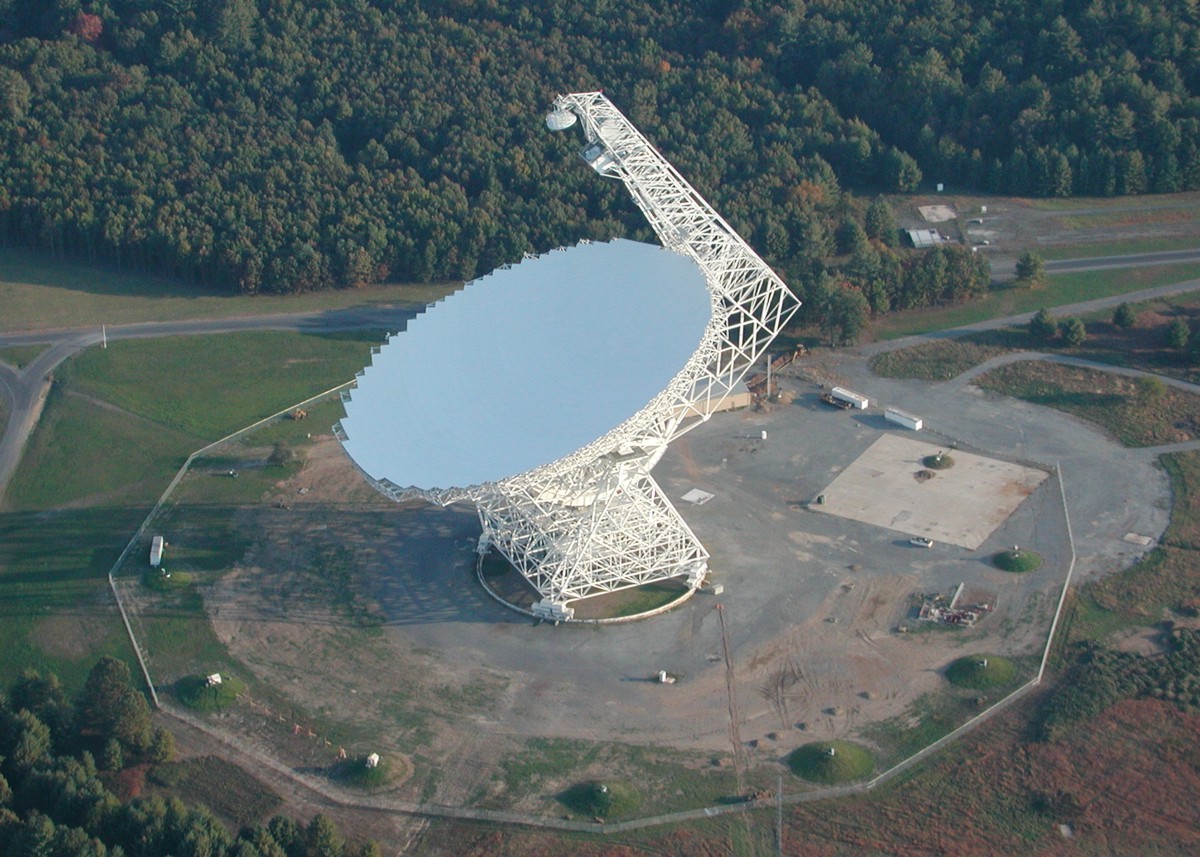
NASA/JPL file photograph of the Green Bank Telescope; not a detected extraterrestrial signal or an illustration of the study’s results. Photo: NASA/JPL; Public domain. Display copy resized. Original photograph and rights record. Image-use terms.

More from this Daily Junk Food section.
Facts first. Side-eye included.
DJF separates what is confirmed from what is claimed—and tells you why this particular mess is worth your time.

Dana Side-Eye
Receipts, Rumors & Internet NonsenseDana reads the fine print, checks the timeline, and keeps one eyebrow permanently raised. She covers viral claims, internet pile-ons, and suspiciously convenient explanations.
“Screenshots are forever. So is the side-eye.”